


Antique Revolving Arm Chair
An antique revolving arm chair brings mechanical ingenuity and enduring comfort to a home workspace or library.
Antique Revolving Arm Chair
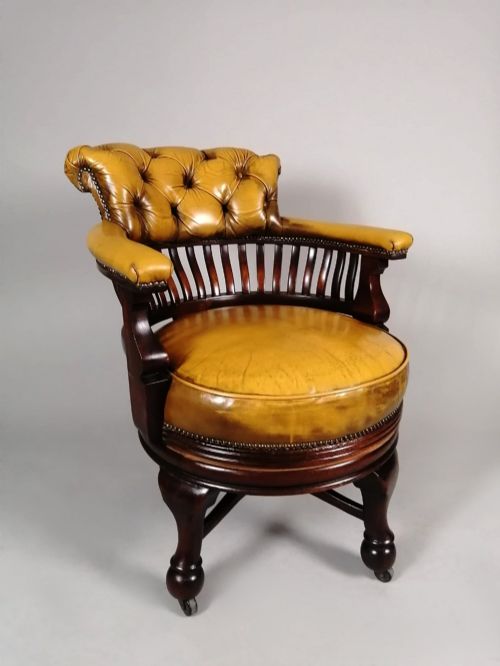
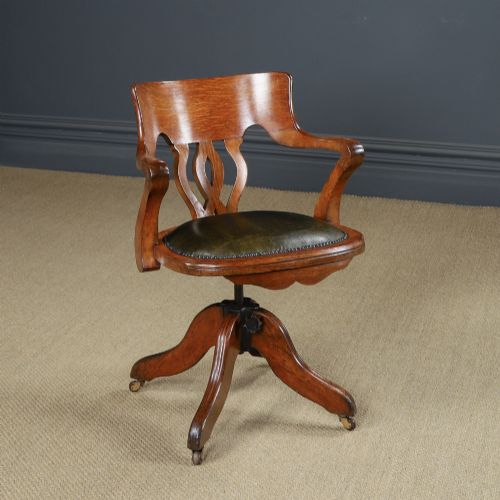
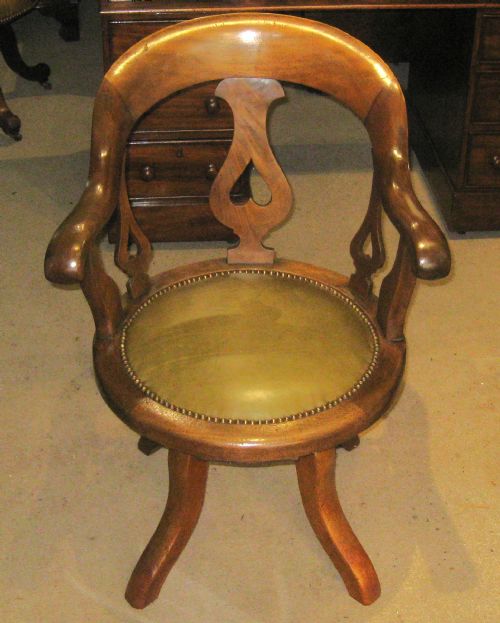
An antique revolving arm chair functions primarily as a swivel desk chair designed for offices, libraries and studies during the nineteenth and early twentieth centuries. These seating pieces combine a traditional armchair upper frame with a mechanical swivelling base to allow movement while seated.
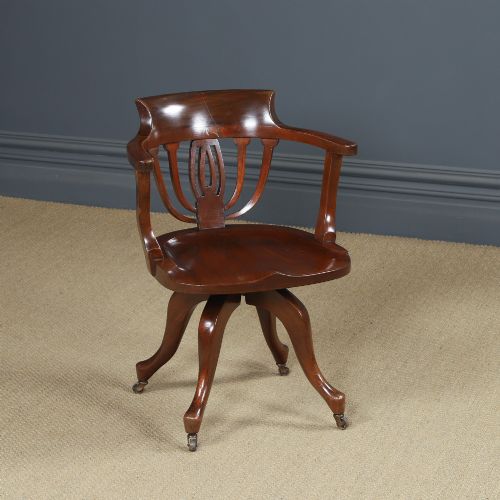
The versions most frequently encountered on this page date from the Victorian and Edwardian eras, spanning mahogany and oak constructions fitted with leather upholstery. Formats range from solidly framed captains chairs to lighter bentwood or tub designs intended for functional daily use at a desk.
Many examples incorporate height adjustment mechanisms alongside the rotational pivot, utilising central iron or brass spindles concealed beneath the seat. The stylistic influences vary from straightforward utilitarian office furniture to more decorative Victorian Gothic Revival and Art Deco interpretations.
Distinctions in quality
The sophistication of the swivelling and height-adjustment mechanism often separates standard utility office seating from finer workshop productions. Robust iron underpinnings with smooth, integrated ball-bearing pivots indicate higher grade engineering than simpler wooden screw posts.
The selection of timber grain and the execution of joinery distinguish basic commercial output from superior cabinet work. Well-figured mahogany, quarter-sawn oak with prominent medullary rays, and carefully sculpted saddle seats denote thoughtful craftsmanship and greater material investment.
Several heavy oak examples were salvaged directly from nineteenth-century ships to serve out their remaining days in dry studies.
Bell Barn Furniture·William Birchcraft
The Antique Revolving Arm Chair Glossary
- Swivel base
- A mechanical pivot assembly beneath the seat that permits rotation in a complete circle. This mechanism usually incorporates a threaded spindle for height adjustment.
- Captains chair
- A sturdy wooden armchair featuring a low, rounded back rail supported by numerous small spindles. These forms frequently appear adapted to swivel mechanisms for office use.
- Bentwood
- Wood softened through steam application and bent into curved structural components. This technique created lighter, resilient frames particularly common in Edwardian desk seating.
- Quarter-sawn
- Timber cut radially from the log rather than flat-sawn, producing stable boards with distinctive grain patterns. This method was frequently utilised on high-quality oak office furniture.
- Saddle seat
- A wooden seat base carved into ergonomic contours resembling a riding saddle. This design provided comfortable support without requiring thick upholstery.
Antique Revolving Arm Chair: Frequently Asked Questions
How do I adjust the height?
Most antique revolving arm chairs raise or lower by manually spinning the seat clockwise or counter-clockwise to wind the central wooden or metal screw up and down.
Older Victorian designs rely entirely on this threaded shaft, sometimes secured by a wooden pin or under-seat nut once the desired height is reached.
Are these comfortable for modern desks?
These chairs were built for administrative work at standard nineteenth-century writing tables, so their ergonomics differ from contemporary office furniture. Their supportive wooden frames and padded leather upholstery suit reading or writing.
Buyers should check the specific seat height dimensions against their modern desk clearance, as older writing surfaces were frequently lower than today's standard.
How do I care for the leather?
The leather upholstery benefits from occasional gentle cleaning with a damp cloth followed by a suitable leather conditioner to maintain suppleness. Avoiding direct sunlight and extreme heat sources prevents the historic hide from drying and cracking.
Preserving the original surface retains the character accumulated over decades of use.
How do I date an antique swivel chair?
Dating relies on examining the timber species, upholstery style, and the engineering of the iron or brass swivel mechanism beneath. Heavy mahogany frames with simpler iron spindles typically point to Victorian production, while lighter oak and bentwood forms frequently indicate Edwardian manufacture.
Makers' stamps or patent marks found on the iron undercarriage can also provide specific chronological markers.