



Antique Height Adjustable Chair
These antique height adjustable chairs combine clever mechanical ingenuity with domestic comfort, offering precise positioning for the piano, desk, or dressing table.
Antique Height Adjustable Chair
When you search for an antique height adjustable chair, you encounter a specialised form of seating designed to alter its vertical position through mechanical or screw mechanisms. These pieces served practical domestic functions at the keyboard, the writing desk, or the dressing table.
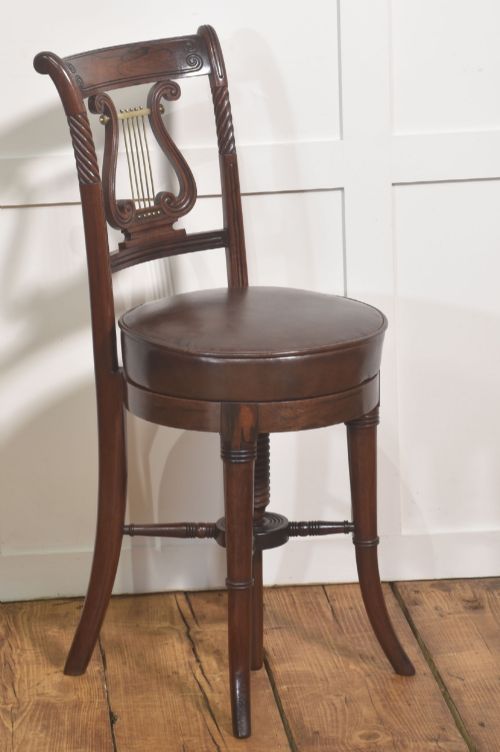
The selections available here lean heavily toward piano stools and music chairs from the nineteenth century, alongside desk chairs and dressing table seats. You find examples spanning the Georgian, Regency, Victorian, and Edwardian periods.
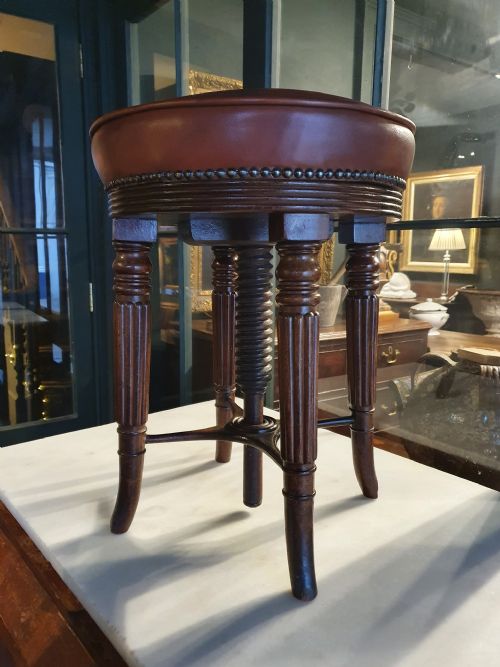
Forms vary from revolving screw-top stools to rise-and-fall designs and swivel desk chairs. Woods like mahogany, rosewood, and walnut dominate the offerings, often complemented by leather or fabric upholstery.
How they were made
Cabinetmakers utilised solid timbers including mahogany, walnut, oak, and rosewood to construct the frames and swivel mechanisms of these seats. Brass fittings frequently reinforced the screws and revolving pivots.
Upholstery techniques involved leather, fabric, and horsehair stuffing secured over wooden or iron frames. Turned wood, carved details, and brass inlay distinguished the finer aesthetic variants.
Musicians spent hours practising on revolving tops that doubled as impromptu spinning toys during boring etudes.
What varies in quality
The integrity and smoothness of the adjustment mechanism dictate much of the worth in these chairs. Heavy brass threads and well-fitted wooden screws operate with greater precision than worn or replacement hardware.
Selection of timber and the fineness of the carving or brass inlay also separate standard utility seating from high-status pieces. Sound joinery and retained original upholstery materials add substantial character.
Gillows·James Shoolbred
The Antique Height Adjustable Chair Glossary
- Rise and fall
- A mechanical action that allows the seat height to be adjusted up or down. This system often relies on a central threaded screw or ratchet mechanism.
- Revolving
- A design feature enabling the top of the stool or chair to turn through a full circle. This rotation is typically achieved via a central spindle.
- Swivel
- A mechanism allowing the seating platform to rotate independently of the base. It appears frequently on desk and music chairs.
- Patent
- A legally protected proprietary invention applied to mechanical adjustments. Makers stamped these to highlight their novel engineering.
Antique Height Adjustable Chair: Frequently Asked Questions
How do adjustable piano stools work?
Most models use a central wooden or metal screw mechanism hidden beneath the seat. Turning the top platform clockwise or anticlockwise raises or lowers the sitting height.
Some later Victorian examples employ rise-and-fall lever actions or ratchet systems for rapid adjustment without full rotation.
Where were these chairs used?
These seats belonged primarily in the drawing room at the piano, or in the study before a writing desk. Dressing rooms also housed smaller variants for grooming.
Music chairs with backrests provided support during longer practice sessions, while stools offered compact seating that tucked neatly under instruments.
How do I date a swivel desk chair?
Look to the timber species, base construction, and caster styles for chronological clues. Early examples often feature mahogany or rosewood with heavy turned columns, while later Victorian and Edwardian pieces incorporate bentwood or oak.
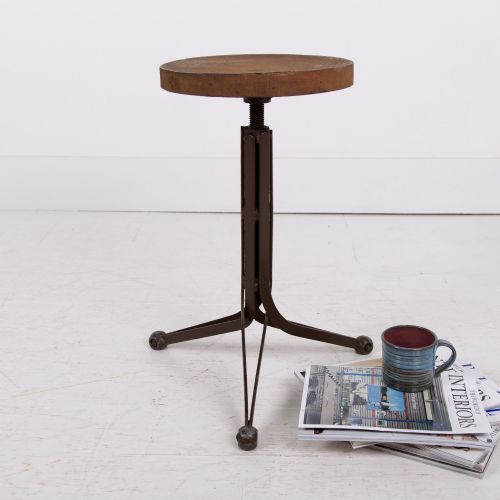
Metal undercarriages and iron swivel mechanisms generally point toward the late nineteenth or early twentieth century.
Can I use an antique music stool daily?
Regular use is entirely feasible provided the mechanical screw and frame remain stable and secure. Periodic checks of the joints and lubrication of the screw thread help preserve the movement.
Upholstery fabrics may require careful cleaning or occasional re-covering depending on their condition and fragility.