


Antique Reverse Transfer Prints
Antique reverse transfer prints are delicate works applied directly to glass from behind, offering a window into Georgian portraiture and historical subjects.
Antique Reverse Transfer Prints
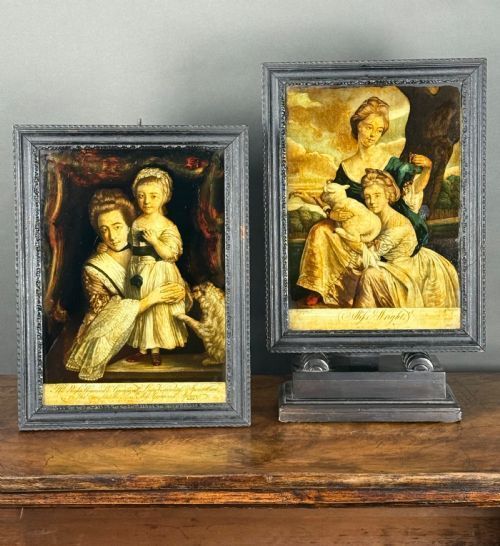
When you search for antique reverse transfer prints, you are looking at pictures transferred face down onto glass sheets and finished by hand. The examples seen on this page span the Georgian, 18th century, Regency, and 19th century periods.
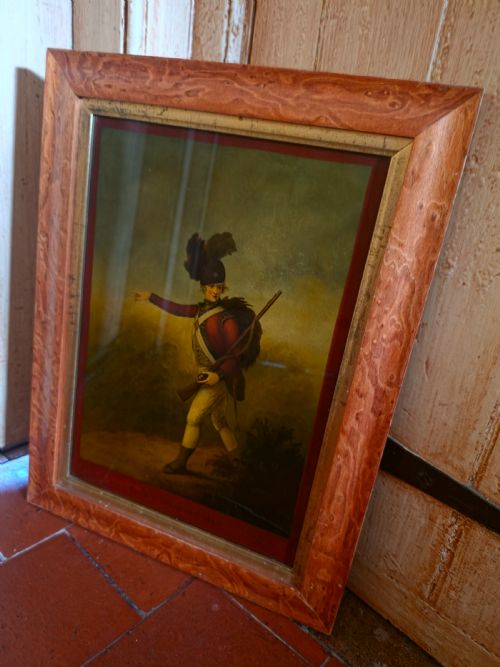
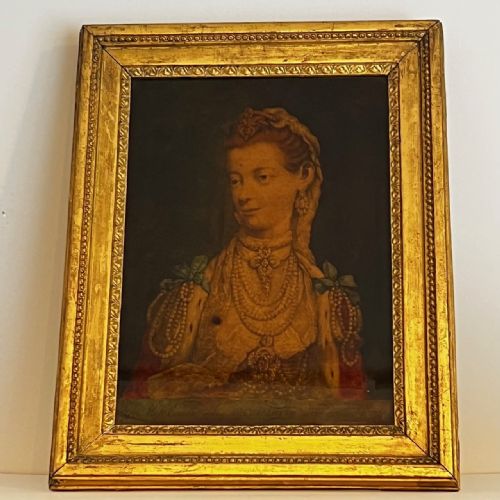
The subjects range from royal portraits and military figures like King George III and light infantrymen to genre scenes such as The Match Boy and The Lady of the Manor. These pieces primarily function as wall art, preserved within period framing.
You are most likely to meet portraits and commemorative battle scenes executed during the late Georgian and Regency eras. These works capture notable figures and events through detailed print transfers combined with pigment.
How they were made
The production method involved adhering a printed paper image face down onto a glass support and rubbing away the paper backing until only the ink remained. Artisans then applied oil paint, pigment, and occasionally gilt from behind to colour the translucent design.
Framing played an integral structural role, utilising materials such as wood, maple, and giltwood to protect the fragile glass plate from moisture and pressure. The combination of paper layers, ink, and oil paint required steady hands and precise alignment.
St Peter guards the glass while light infantrymen keep watch nearby.
What varies in quality
The preservation of the underlying paper and oil paint determines the visual depth of the piece. Superior specimens retain their original wood or maple frames and show minimal flaking of the pigments applied to the rear.
W. Bishop
The Antique Reverse Transfer Prints Glossary
- Reverse glass print
- An image transferred onto the underside of a glass sheet and viewed through the smooth front surface. This technique protects the delicate pigments from atmospheric dirt.
- Mezzotint
- A printmaking process of the intaglio family where tones are produced through roughening the copper plate rather than using lines. It creates subtle gradations of light and shade.
- Pigment
- Finely ground coloured powder mixed with a liquid medium to apply colour behind the glass. These materials give the translucent prints their vibrant hues.
- Giltwood
- Wood carved and covered with a thin layer of gold leaf. It is frequently seen on the frames enclosing Georgian wall art.
- Regency
- A period in British history spanning the early nineteenth century defined by neoclassical elegance. Pieces from this era often depict contemporary military triumphs and royalty.
Antique Reverse Transfer Prints: Frequently Asked Questions
Were these pieces originally meant for hanging?
Yes, these works were produced specifically as decorative wall art for domestic interiors during the Georgian and Regency periods. Their reflective glass surfaces helped brighten dimly lit rooms by catching candle and window light.
They were framed securely to protect the fragile rear surface and allow straightforward suspension on parlour walls.
How do I tell a Georgian print from a 19th-century one?
Georgian and 18th-century pieces frequently employ fine mezzotint techniques and depict subjects like nobility or classical literary characters. Their framing often utilises simpler wooden mouldings or early giltwood profiles.
Later 19th-century examples tend to feature broader subjects such as military infantrymen and employ slightly different pigment mixtures beneath the glass plate.
What is the difference between a painting and a print on glass?
A reverse glass painting is applied entirely by hand using brushstrokes directly onto the rear of the glass without an ink transfer guide. A reverse transfer print begins with a printed paper image glued face down onto the glass before hand-colouring takes place.
Both methods produce a glossy finished surface when viewed from the front, but close inspection under magnification reveals the underlying paper matrix in printed works.