
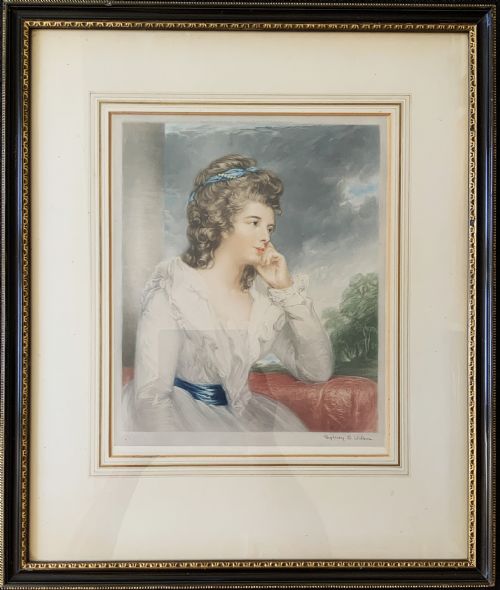
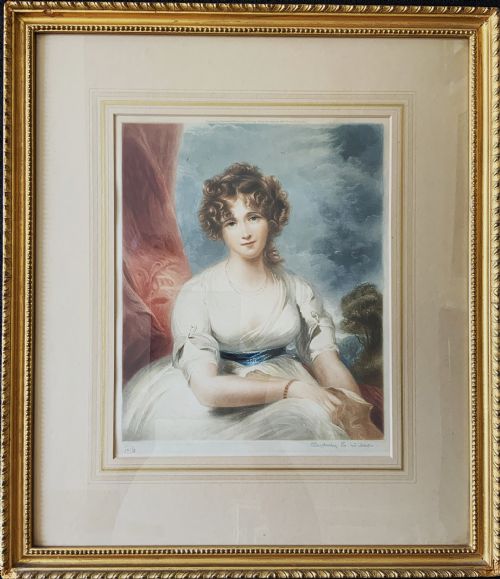


Georgian Lady Portrait Print
A georgian lady portrait print captures the elegance of eighteenth-century portraiture in ink and paper, offering a classic focal point for any wall.
Georgian Lady Portrait Print
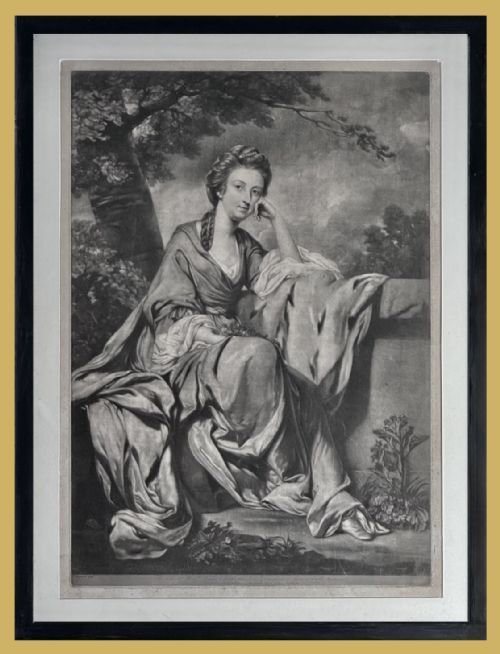
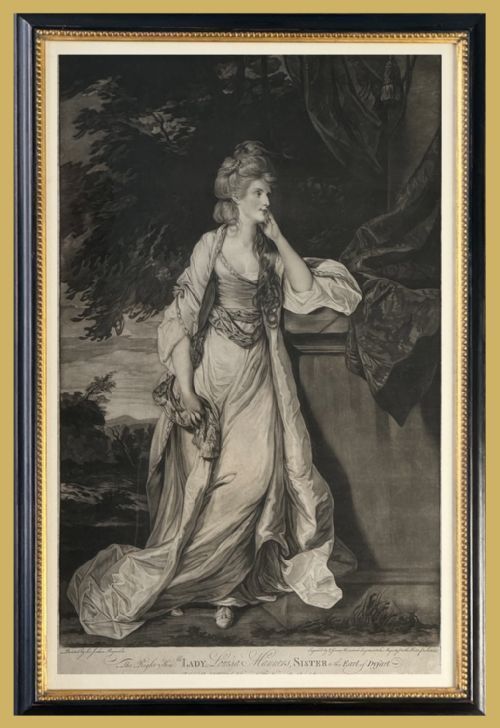
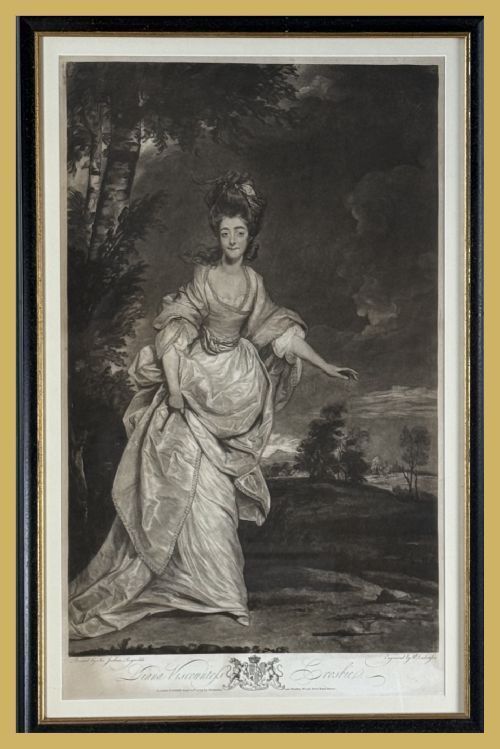
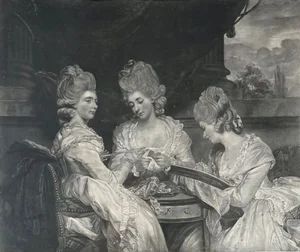
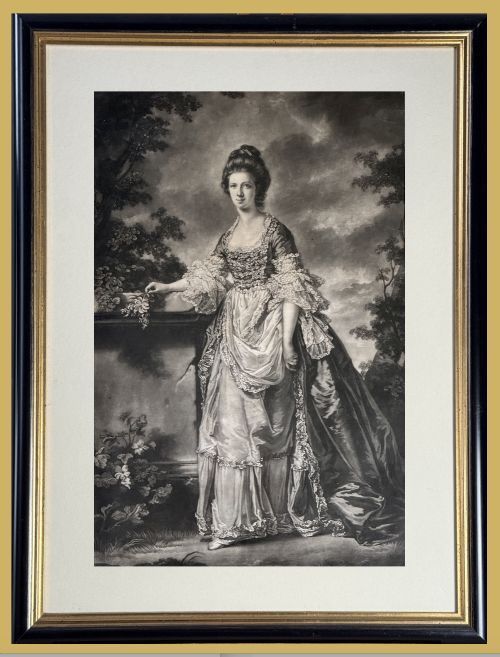
A georgian lady portrait print brings eighteenth-century society into domestic spaces through engraved and printed likenesses of notable sitters. These works frequently draw on original compositions by prominent painters such as Sir Joshua Reynolds and Thomas Gainsborough.
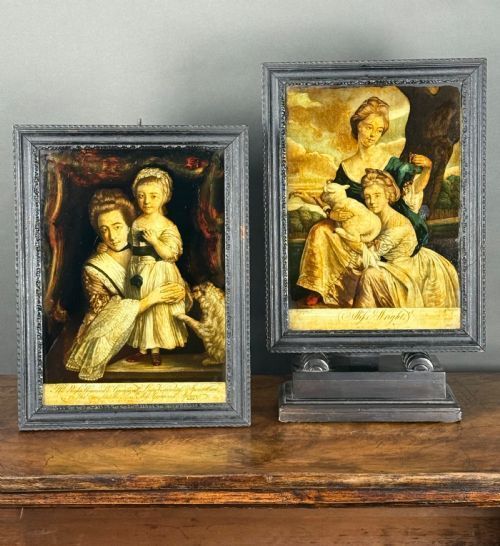
The selection here encompasses eighteenth-century originals alongside later revivals from the nineteenth and early twentieth centuries. Buyers encounter various formats, from standard framed prints to reverse glass prints and portrait miniatures housed in gilt frames.
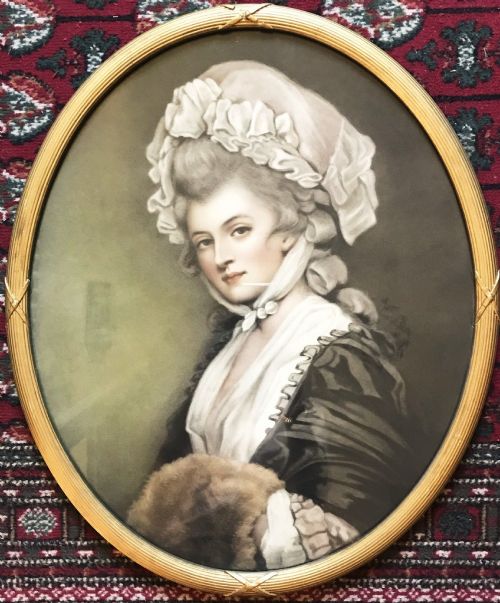
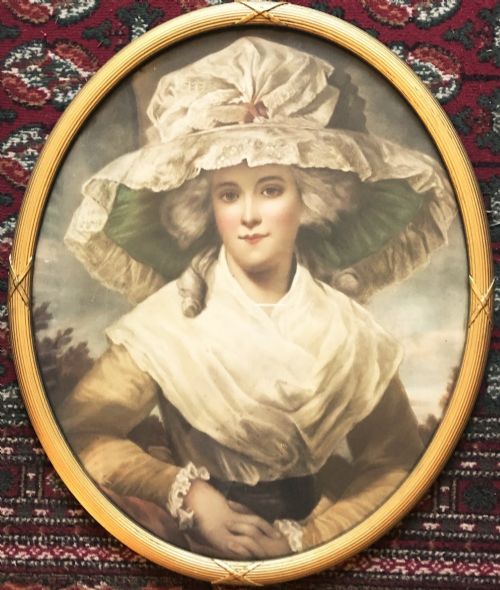
Framed prints and engravings dominate the visual landscape, often preserved behind curved or dome-fronted glass with wood or giltwood surrounds. Oval formats appear alongside rectangular plates, reflecting the framing tastes of both the Georgian era and subsequent revival periods.
Materials and methods
Printmakers of the period relied on copper plates and ink applied to paper, frequently employing the rich tonal depth of mezzotint engraving. Later revival pieces continued these graphic traditions or reproduced painted works through photographic and mechanical means.
Reverse glass prints involved applying ink and paint directly to the underside of a glass sheet, creating a glossy surface that protected the pigments underneath. Artisans then mounted these fragile plates within wooden and giltwood frames, sometimes adding gold leaf accents.
Several ladies wear elaborate bonnets, proving that historical millinery was just as capable of stopping traffic as any powdered wig.
Assessing quality and execution
Quality rests upon the crispness of the impression and the depth of the ink tones transferred from the engraved plate. Early eighteenth-century mezzotints display sharper contrasts and finer detail than worn plates or later mass-produced copies.
The preservation of the paper, the clarity of the protective glass, and the integrity of the original giltwood or wood frame significantly influence the character of the piece. Hand-coloured details and signed artist proofs represent higher tiers of craftsmanship within the available selection.
Edward Fisher·Valentine Green·W Dickinson·James Watson·Sydney Wilson
The Georgian Lady Portrait Print Glossary
- Mezzotint
- A printmaking process where the copper plate is roughened to produce dark tones, then scraped to create highlights. This technique allows for subtle gradations of light and shade.
- Reverse glass print
- An image painted or printed directly onto the reverse side of a glass panel to achieve a glossy finish. These delicate works require careful handling and specialised framing.
- Artist proof
- An impression printed for the artist's own use before the formal edition is run. These proofs often command greater attention from collectors due to their early state.
- Giltwood
- Wood carved and coated with gold leaf or metallic paint to create a decorative surface. It is commonly found on traditional frames enclosing eighteenth and nineteenth-century works.
Georgian Lady Portrait Print: Frequently Asked Questions
How do I date a print?
Dating relies on examining the paper quality, the printing technique, and the style of the framing materials. Eighteenth-century impressions often show distinct plate marks and hand-laid paper.
Later revivals from the Victorian or Edwardian periods utilise machine-made paper and different framing conventions that distinguish them from period originals.
What is a reverse glass print?
A reverse glass print is an image where the design is applied directly to the back of a glass sheet rather than paper. This technique produces a luminous surface quality unique to certain eighteenth and nineteenth-century works.
These pieces are typically housed in dome-fronted or flat glazed frames to protect the fragile pigment layer from atmospheric damage.
How should I hang these portraits?
These framed works suit traditional room settings, particularly when grouped on panelled or neutral walls. Avoid placing them in direct sunlight to protect the ink and paper from fading over time.
Maintaining a stable room temperature helps preserve the wooden frames and the glass plates against moisture fluctuations.
Are these works original period pieces?
The selection includes both authentic eighteenth-century engravings and later revival pieces produced during the Edwardian era and the early twentieth century. Each listing indicates the specific period associated with the item.
Reviewing the material descriptions and artist signatures helps clarify whether a piece is a contemporary eighteenth-century print or a later interpretation.