


Antique Repeater Clock
An antique repeater clock is a portable mechanical timepiece that sounds the hours and quarters on demand, prized for its intricate brass work and portable precision.
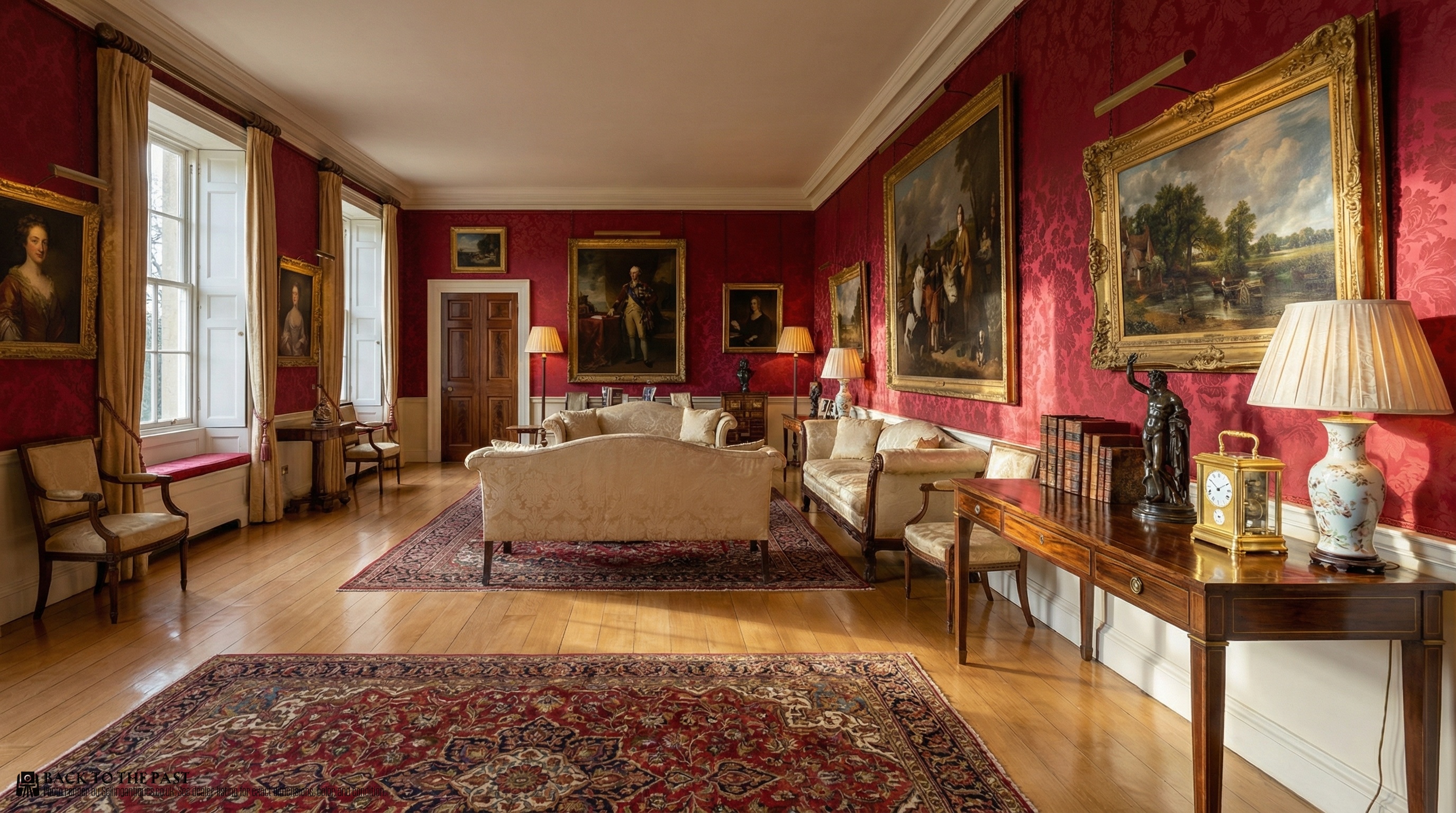
Antique Repeater Clock
When you search for an antique repeater clock, you find mechanical timepieces designed to travel with their owners during the nineteenth and early twentieth centuries. These pieces originate predominantly from French workshops and retail outlets across Britain, spanning the Victorian and Edwardian eras.
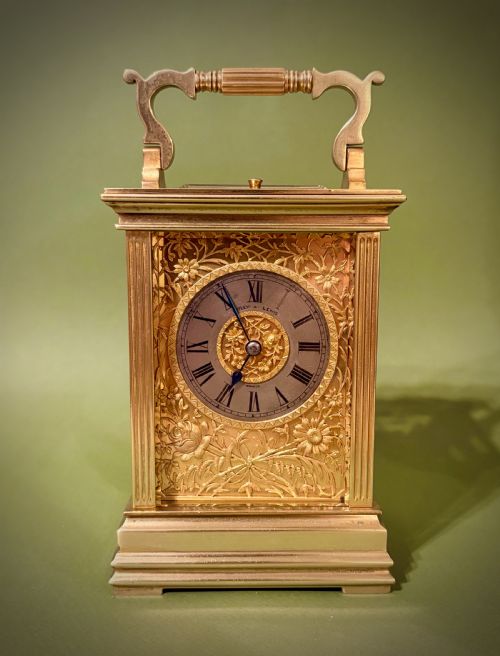
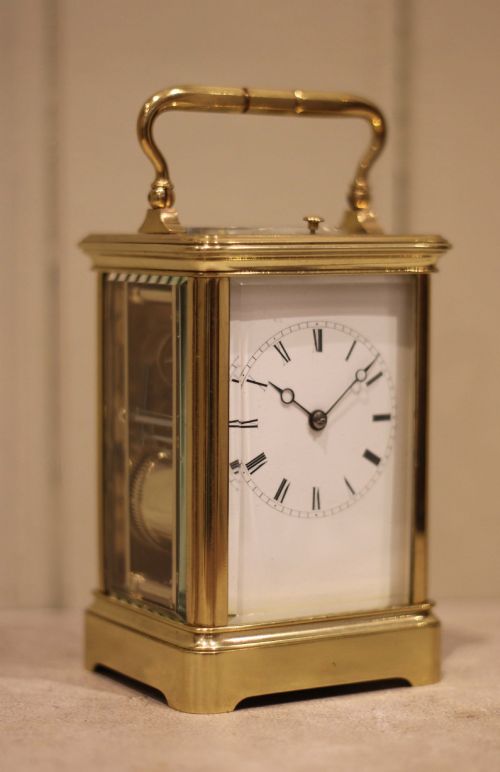
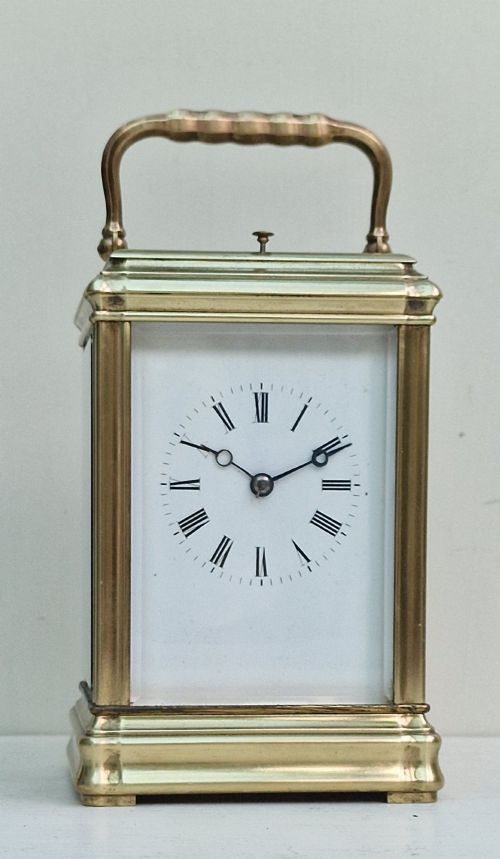
The most common form on this page is the carriage clock, housed in a rectangular brass frame with glass panels that display the escapement and movement. Examples often feature white enamel dials, sometimes enhanced by painted floral motifs or enamel scenes on the top and side panels.
Many specimens include additional complications such as alarms or grand sonnerie striking mechanisms, alongside standard timekeeping. Makers housed these heavy brass movements in distinct case shapes, including standard gorge cases and rounded oval designs.
How they were made
Craftsmen built these mechanisms using robust brass and gilded brass for the plates, wheels, and framing, while housing the gear trains within substantial metal cases. Glass panels fitted into the top and sides to protect the delicate motion while allowing light into the interior.
Dial faces utilised white enamel fired onto metal discs, painted with Roman or Arabic numerals and fitted with delicate steel hands. Makers frequently added fire gilding or polished finishes to the exterior brass work to create a lasting sheen.
Specialised workshops produced engraved cases by hand, scoring intricate foliate or geometric patterns directly into the brass or silver-gilt surfaces. Movements incorporated steel arbours, balance wheels, and coiled gongs or bells to generate the repeater strike.
The majority of pieces catalogued under this phrase originate from French workshops, with several bearing retailer signatures from London.
What varies in quality
The sophistication of the movement dictates much of the distinction between standard pieces and high-end examples. Clocks featuring grand sonnerie striking, alarms, or five-minute repeating capabilities require vastly superior engineering compared to simple hour repeaters.
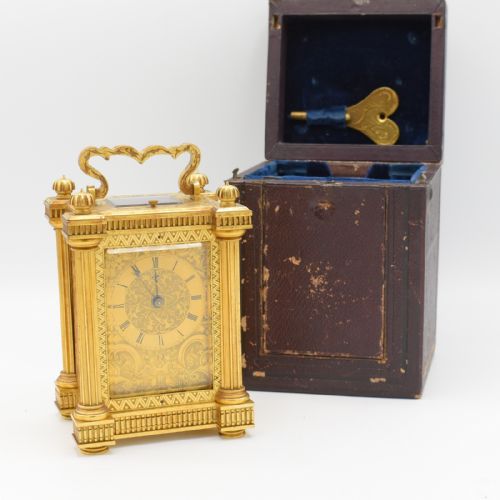
Case construction and decoration set individual pieces apart, ranging from plain polished brass housings to heavy gorge cases with detailed hand engraving. The presence of original fitted boxes, matching keys, and signed maker movements elevates the standing of a piece.
The artistry found on the dial and panels creates further separation in the range. Simple white enamel dials contrast with complex mask dials, painted enamel flower designs, and figurative scenes executed by skilled hands.
Howell & James London·Brunelot·L Epee·J. F. Bautte Et Cie·Bourdin Paris·Drocourt·Henry Jacot·Le Roy et Fils
The Antique Repeater Clock Glossary
- Repeater
- A mechanism that sounds the last elapsed hour and quarters when a button or pendant is depressed. This function allowed owners to check the time in total darkness.
- Gorge case
- A stepped brass carriage clock case style featuring a distinctive moulded handle and pillars. It represents a classic French housing design from the nineteenth century.
- Grand sonnerie
- A complex striking train that chimes the hours and the quarters automatically as they pass, as well as repeating on demand. Such movements represent the height of carriage clock engineering.
- Escapement
- The internal mechanism that controls the release of power to regulate the movement. Platform escapements replaced pendulums to allow portable timekeeping.
Antique Repeater Clock: Frequently Asked Questions
How do I operate the repeater mechanism?
Press the button or plunger located on top of the case firmly downwards to activate the striking train. The mechanism will sound the last hour and the quarters on its internal gongs or bell.
Avoid forcing the button if the sequence resists, and ensure the clock has run its full wind before testing the strike function.
Why does the clock have an alarm?
Travellers used the alarm function to wake them in unfamiliar lodgings before the widespread availability of reliable hotel timepieces. Setting the auxiliary hand operated a separate gear train connected to the bell.
Most carriage clock alarms share the main spring barrel or utilise a dedicated smaller spring wound via the back plate.
How should I clean the brass case?
Dust the glass and metal surfaces gently with a soft, dry microfibre cloth to prevent the buildup of grime. Avoid liquid polishes, as abrasive compounds can damage the delicate fire gilding or remove hand engraving.
Professional conservators should handle any deep cleaning of the case or polishing of the exterior metalwork.
How do I wind an antique repeater clock?
Insert the winding key into the arbours on the back plate and turn gently until you feel resistance. Do not overwind the mainspring, as this can snap the internal steel components.
Separate arbours control the timekeeping train, the striking train, and the alarm where fitted.