

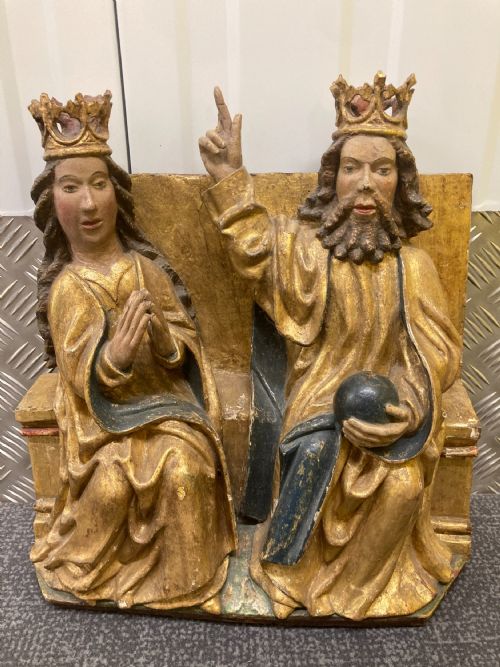


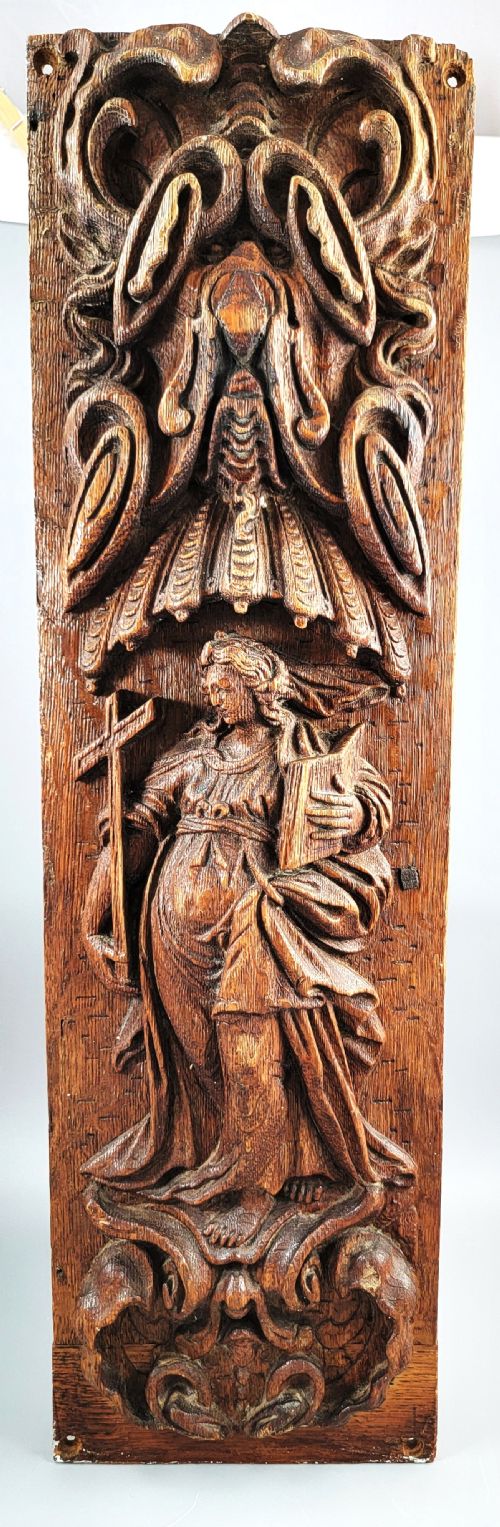

Antique Religious Wood Panel
An antique religious wood panel brings centuries of devotion, carved symbolism and sacred artistry directly into your interior.
Antique Religious Wood Panel
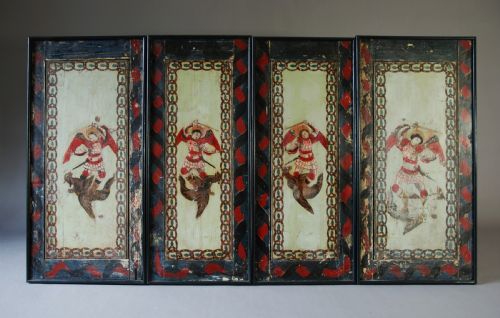
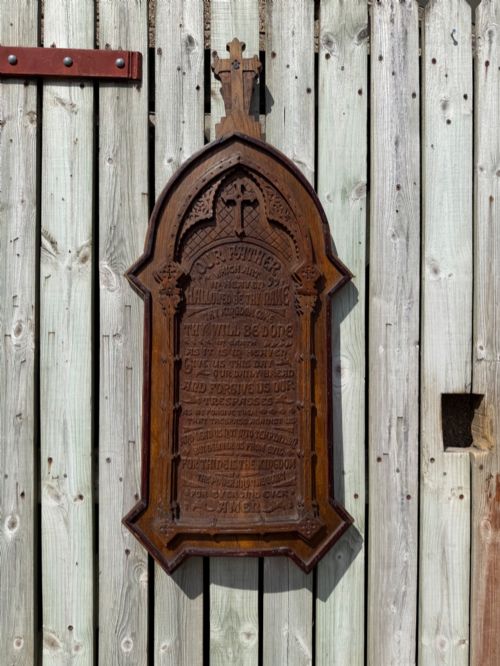
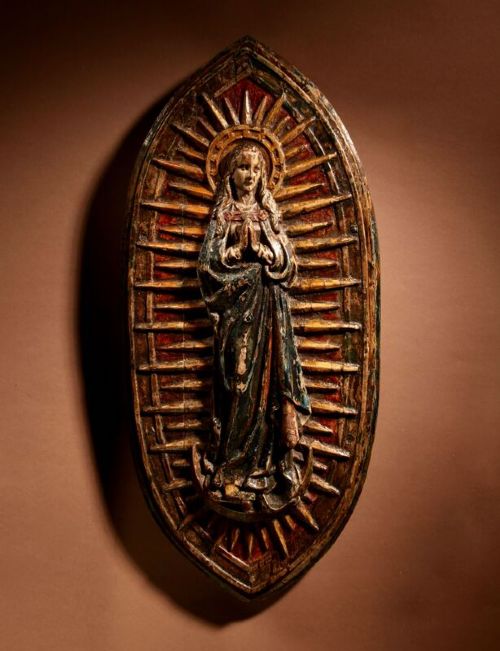
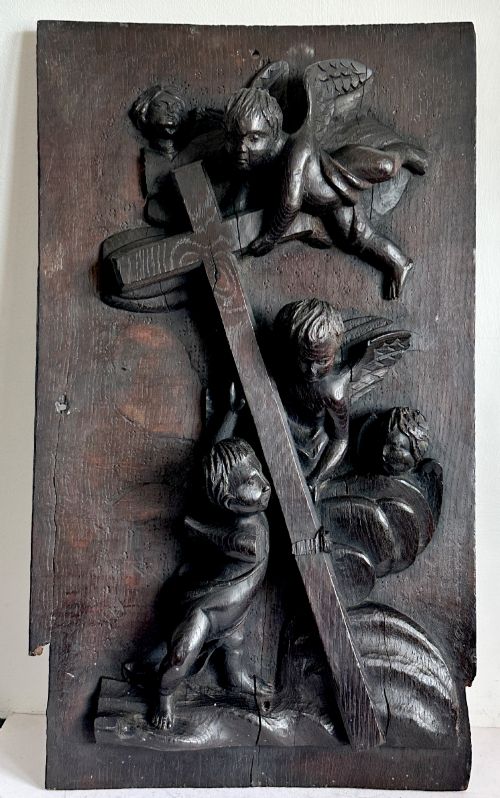
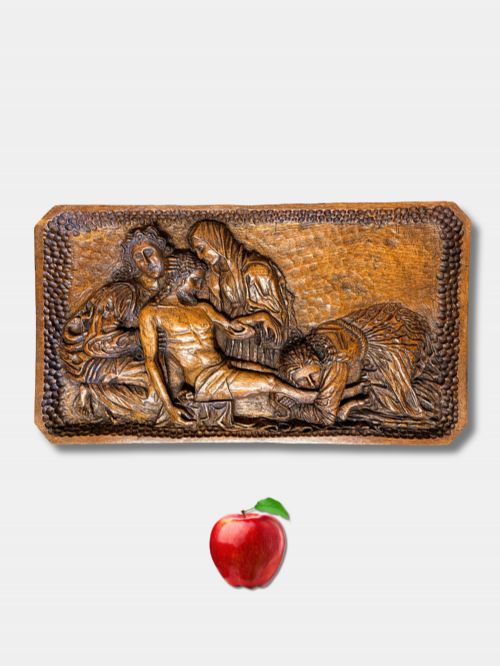
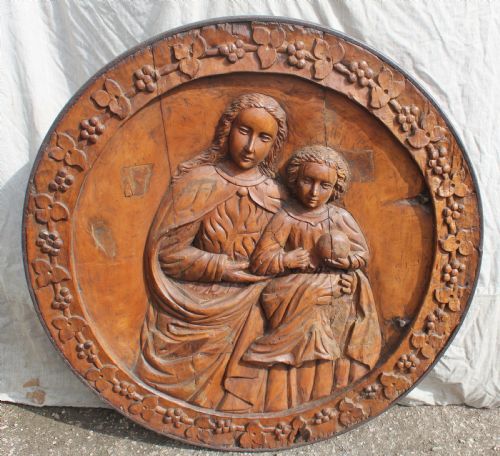
An antique religious wood panel encompasses devotional wall art, carved reliefs, icons and painted panels originating from domestic and ecclesiastical settings. Buyers search for these pieces to bring historic craftsmanship and spiritual narrative into their homes. The selections span centuries of European and Russian workshops, ranging from medieval altar fragments to folk art creations.
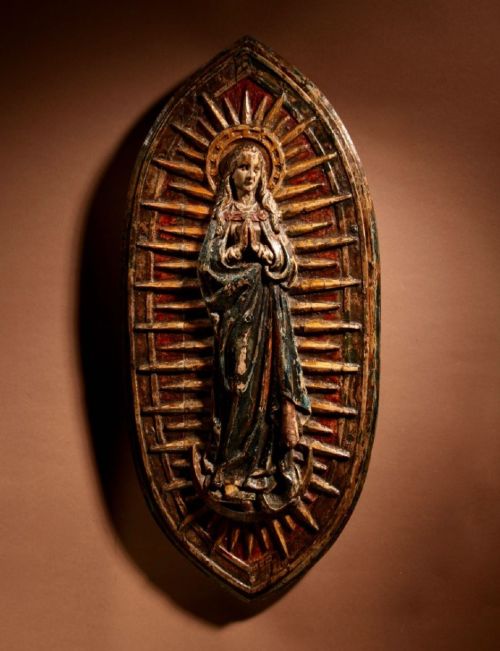
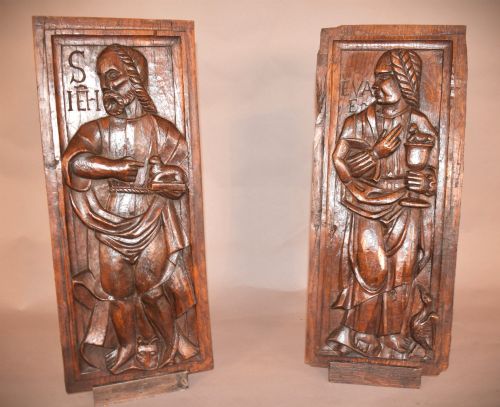
The most common examples on this page are carved oak and pine panels dating from the seventeenth and eighteenth centuries. These items frequently depict biblical figures, saints and allegorical scenes such as the Madonna or the Passion of Christ. Pieces range from small domestic plaques to large architectural wall reliefs.
Regional styles vary widely, encompassing Russian Orthodox icons, Italian Baroque interpretations and Flemish or German Gothic woodcarvings. Buyers encounter both painted surfaces and raw carved timber, each format reflecting the distinct devotional traditions of its origin.
Materials and Techniques
Wood serves as the foundational substrate for these works, with oak, pine, fruitwood and chestnut utilised by makers across different periods. Carvers worked directly into the timber to create high and low relief sculptures, while painters applied oil and tempera onto wooden boards.
Surface preparation involved gesso applied directly to the wood to receive gold leaf and polychrome paint. Pigments brought figures and narratives to life, often enhanced by silver leaf accents or detailed pyrography and needlework on select pieces.
Stare closely at seventeenth-century cherubs and you will occasionally spot an earnest local carver giving an angel the exact facial expression of the village baker.
Assessing Quality and Execution
Quality rests upon the depth of the carver's anatomical understanding and the finesse of the chisel work. Master carvers render drapery, facial expressions and hands with naturalistic grace, whereas lesser workshop pieces rely on stiff, repetitive motifs.
The survival of original polychrome paint and gilding elevates a piece, as does the integrity of the timber. Depth of relief and the complexity of the theological narrative distinguish standard decorative panels from monumental altarpiece fragments.
The Antique Religious Wood Panel Glossary
- Polychrome paint
- Multiple colours applied to sculpture or wood to create lifelike decoration. This technique was widely used in medieval and baroque ecclesiastical art.
- Gesso
- A plaster mixture applied to wood panels to create a smooth surface for gilding and painting. It provides the essential base for traditional icon boards.
- Relief sculpture
- Carving where figures project from a flat background surface. High relief projects significantly, while low relief stays closer to the plane.
- Icon
- A sacred image representing holy figures, traditionally painted on wood panels within Eastern Orthodox Christianity. These often incorporate gold leaf and silver elements.
- Altarpiece
- A large structural work placed behind an altar, typically comprising multiple carved or painted panels depicting sacred narratives.
Antique Religious Wood Panel: Frequently Asked Questions
How do I hang a heavy wood panel?
Heavy wooden panels require secure wall fixings suited to the weight of the timber and gesso. Metal brackets or concealed French cleats distribute the load safely across studwork.
Avoid hanging panels in rooms with fluctuating humidity to protect the ancient wood from warping or splitting.
Are these panels from churches?
Many examples originated inside European churches, abbeys or domestic chapels as parts of larger altarpieces, screens or private devotional shrines. Others were created specifically for home prayer and contemplation.
Workshop production methods often bridge the gap between ecclesiastical commissions and domestic folk art.
How do I clean an old painted panel?
Dust surfaces gently with a soft, dry brush without applying moisture, pressure or cleaning solutions. Delicate tempera, oil paint and gold leaf flake easily if disturbed.
Professional conservators should handle any deep cleaning or stabilization of flaking gesso and pigment.
What wood types are most common?
Oak appears frequently in Northern European, Flemish and German carvings due to its durability and strength. Pine, fruitwood and chestnut also feature in Italian, Russian and folk art panels.
Substrates often reflect the native timber available to the carver in a specific region and century.