



Antique Regency Tea Service
An antique regency tea service brings the elegance of the early nineteenth century to the table, offering a complete set of matching vessels for formal entertaining.
Antique Regency Tea Service
An antique regency tea service consists of related drinking vessels and serving pieces created during the Georgian and Regency periods. These groupings typically include teapots, coffee pots, sugar bowls, cream jugs, and teacups with saucers.
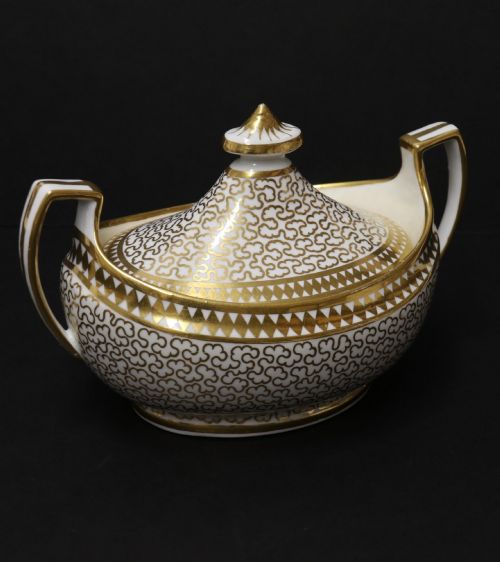
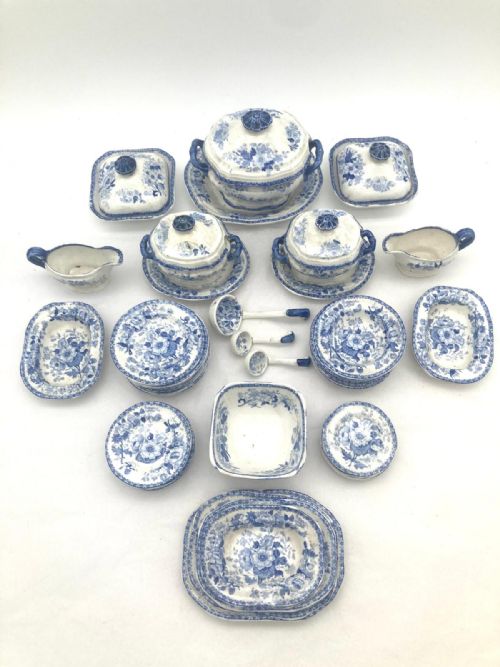
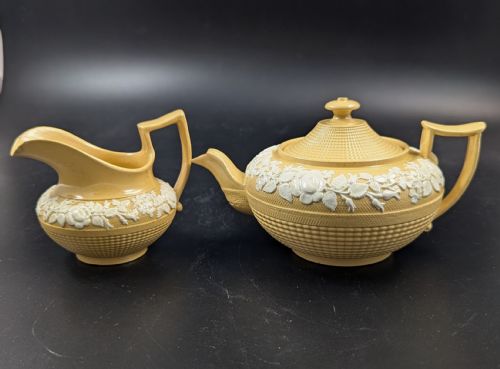
The objects seen here reflect the output of early nineteenth-century workshops, spanning porcelain, earthenware, sterling silver, and Old Sheffield plate. Forms range from full-sized matching sets to child's toy tea sets and individual sucriers.
The version most likely to be met on this page is a porcelain tea service decorated with hand-painted patterns or transfer prints, often associated with prominent English potteries of the era.
How they were made
Pottery and porcelain pieces were shaped using local clays and soft-paste or bone china bodies, then hand-painted with enamel colours or decorated using blue and white transfer printing. Gilding with gold leaf was frequently applied to accentuate handles, rims, and borders.
Metal services were fashioned from sterling silver or formed by fusing a thin sheet of silver to a copper base in Old Sheffield plate. Smiths shaped these metals by hand, adding chased or engraved details such as grape vines and leaves.
Listings feature 19th Century, Regency, and Georgian periods, utilising materials such as porcelain, sterling silver, and Old Sheffield plate.
What varies in quality
The standard of an antique regency tea service is largely determined by the refinement of its materials and the skill of its decoration. Finer porcelain bodies, crisp transfer printing, and delicate hand-painted enamel work distinguish superior examples from standard production pieces.
In silver and plated wares, quality rests on the depth of the metalwork and the crispness of decorative motifs like embossed foliage. The harmony between individual vessels in a composite set also influences the overall cohesion of the grouping.
Chamberlains Worcester·Spode Porcelain·Flight Barr and Barr·Thomas Wolfe·Benjamin Smith·Thomas Harley
The Antique Regency Tea Service Glossary
- Sucrier
- A covered sugar bowl designed to hold lump or loose sugar during tea service. This vessel usually matches the teapot and cream jug in material and pattern.
- Old Sheffield plate
- A composite material made by fusing a layer of silver onto a copper core, common in tea sets before electroplating was invented. It allows for substantial metal items at a lower cost than solid silver.
- Pearlware
- An improved earthenware introduced in the late eighteenth century with a bluish glaze that pooled in recesses to mimic Chinese porcelain. It served as a popular canvas for black and blue transfer-printed tea wares.
- Transfer printing
- A method of applying detailed designs to pottery surfaces by pressing paper from an engraved copper plate onto the fired clay body. This technique allowed complex floral and figurative patterns to be reproduced consistently.
- Felspar porcelain
- A durable ceramic body developed in the nineteenth century using felspar as a flux to improve vitrification. It provided a sturdy base for elaborate enamelled patterns.
Antique Regency Tea Service: Frequently Asked Questions
What pieces comprise a complete set?
A complete tea service typically brings together a teapot, sugar bowl, and cream jug, sometimes accompanied by matching cups and saucers or a coffee pot. These groupings provided everything needed for serving hot beverages.
Over time, many original sets became separated or were assembled from matching individual components produced by the same factory.
How do silver and porcelain sets differ?
Silver and Old Sheffield plate sets offer durability and heavy metal craftsmanship with engraved or embossed decoration. Porcelain services provide colourful enamel paintings and transfer-printed motifs.
Both materials reflect the prevailing aesthetic tastes of the Regency period, though silver was used more often for formal dining and porcelain for drawing-room hospitality.
Can I use these sets for tea?
While these pieces were designed for functional use, antique ceramics and plated metals require careful handling. Modern dishwashers and microwaves can damage historic glazes and gilding.
Many collectors prefer to use them for occasional display or gentle service to preserve the fragile enamel and metal surfaces.
How do I identify the period?
Dating relies on maker's marks, pattern numbers, and stylistic markers such as neoclassical shapes or floral transfer designs. Silver pieces often carry hallmarks indicating the assay office and year of production.
Comparing the form and ceramic body to documented factory patterns helps narrow down the decade of manufacture.