




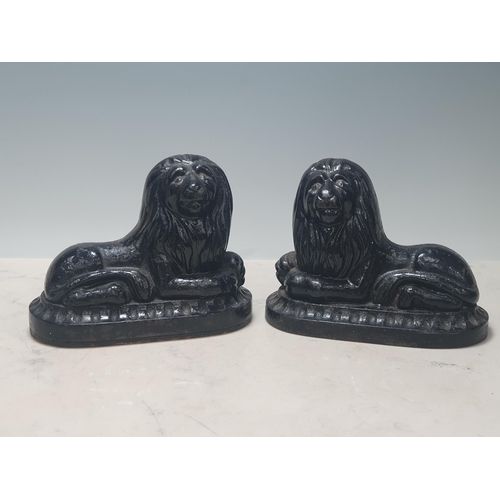


Antique Recumbent Lion Pair
An antique recumbent lion pair brings neoclassical gravity and quiet sentinel strength to a hall, desk or garden wall.
Antique Recumbent Lion Pair
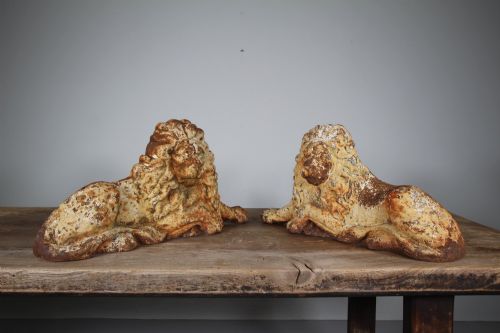
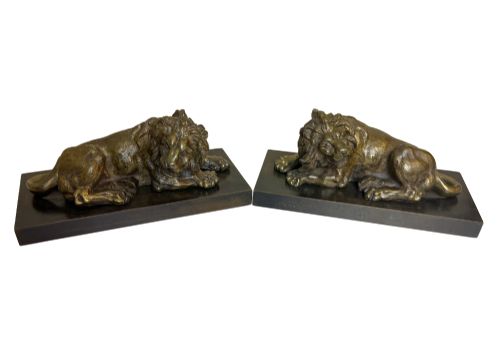
An antique recumbent lion pair comprises two resting beasts modelled in matching or mirrored poses, drawn from classical statuary traditions. These sculptural pairs appear across the nineteenth century in various domestic and outdoor scales.
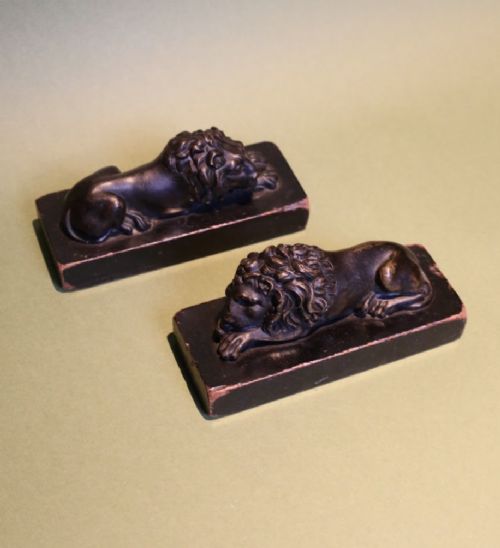
Buyers encounter smaller desk objects such as bookends and decorative statuettes alongside heavy garden statuary, gate post ornaments and sturdy boot scrapers. Many examples channel the famous Canova lions associated with Italian Grand Tour souvenirs and classical revival taste.
Materials range widely from cabinet bronzes mounted on marble to large terracotta garden figures, glazed pottery, cast iron and Staffordshire ceramic pairs. The nineteenth century yields both refined Regency bronze interpretations and robust Victorian earthenware or terracotta versions.
Materials and Construction
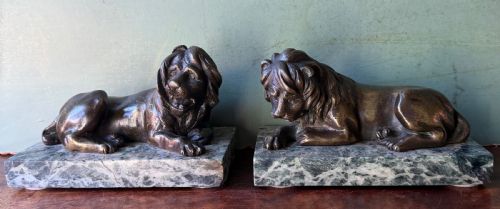
Foundry cast metals dominate the finer bronze and cast iron pairs, capturing muscular detail and textured manes before undergoing chasing, patination or black paint application. Bronze figures frequently sit upon polished stone bases such as antico verde marble or serpentine.
Ceramic and terracotta pairs rely on moulded earthenware or clay bodies fired in kilns, sometimes finished with salt glaze or earthenware glazes. Larger garden pieces utilise thick buff terracotta walls designed to withstand outdoor placement while retaining crisp sculptural definition.
Antique Recumbent Lion Pair Retail Price Guide 2026
Typical asking prices for recumbent lion pair among the pieces listed under this phrase on Sellingantiques today, from the lower quarter to the upper quarter. They describe what is for sale here now, not the wider market.
Listings span the nineteenth century, featuring materials from bronze and cast iron to terracotta, earthenware and serpentine marble.
Distinctions in Quality and Finish
Quality rests upon the sharpness of the casting or moulding, where superior examples preserve the deep musculature, facial expression and claw detail intended by the sculptor. Softer or worn surfaces indicate secondary casts or excessive mould wear.
The selection of materials and base mountings also sets tiers apart, such as heavy green marble plinths paired with finely chased bronze against standard cast iron or simple glazed pottery.
The Antique Recumbent Lion Pair Glossary
- Recumbent
- Lying down or resting with the head raised, a traditional sculptural pose for heraldic and guardian animals. This posture provides stability for functional items like bookends and doorstops.
- Canova Lions
- Sculptural lions based on the monuments designed by Antonio Canova for the tomb of Pope Clement XIII in Rome. These specific reclining figures heavily influenced nineteenth century Grand Tour souvenirs and garden ornaments.
- Grand Tour
- A cultural journey of Europe undertaken by wealthy young Englishmen during the eighteenth and nineteenth centuries. Travellers frequently returned with small bronzes and marble carvings.
- Antico Verde
- A dark green ornamental marble featuring lighter veining, frequently utilised for classical sculpture bases during the Regency and Victorian periods. It provides a rich geological contrast to patinated bronze.
- Terracotta
- Fired unglazed clay of a brownish red colour, used extensively for large garden figures and architectural ornaments. Buff terracotta exhibits a lighter, paler yellowish tone.
Antique Recumbent Lion Pair: Frequently Asked Questions
Where should I place a heavy pair?
Smaller bronze or ceramic pairs suit mantelpieces, desk ends or library shelves where they can function as decorative statuettes or bookends.
Larger cast iron, terracotta or stone versions belong on stone piers, gate posts, entrance walls or garden terraces.
How do I care for bronze figures?
Dust bronze sculptures gently with a soft dry cloth and avoid harsh chemical cleaners that might strip the original patination.
Maintain marble bases by keeping them dry and free from abrasive contact.
Can terracotta lions stay outside?
Terracotta garden statuary is designed for exterior display, but severe winter frost can damage porous earthenware if moisture penetrates the clay.
Shelter outdoor pieces during freezing weather or move them under cover.
What indicates a Grand Tour piece?
Grand Tour bronzes typically exhibit fine chasing, dark patination and specific classical subjects like the Canova lions mounted on distinctive marble plinths.
These decorative sculptures reflect neoclassical taste from the mid nineteenth century.