

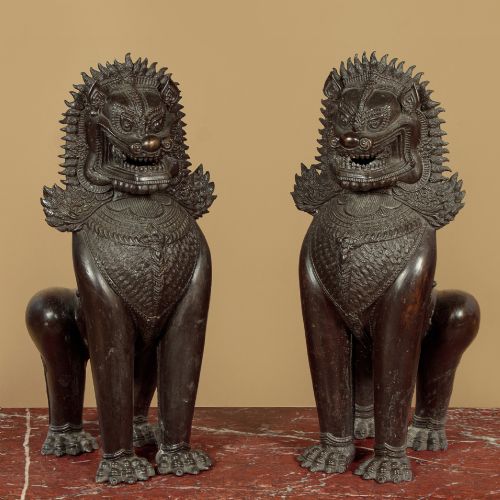
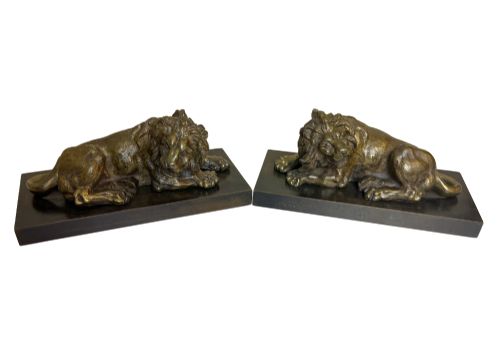
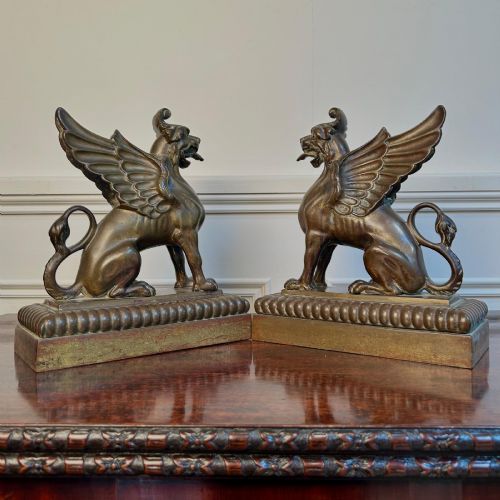
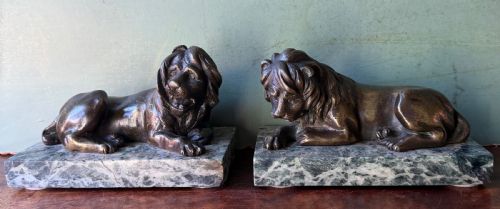
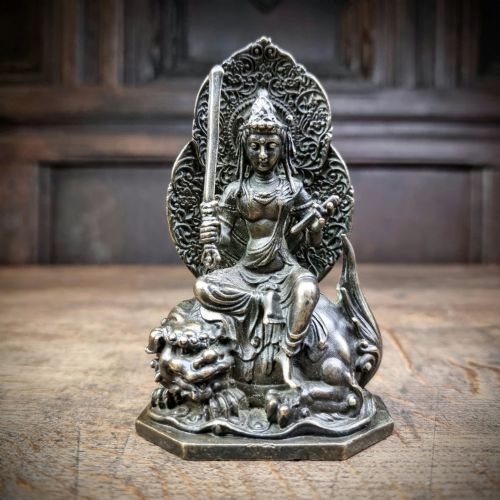


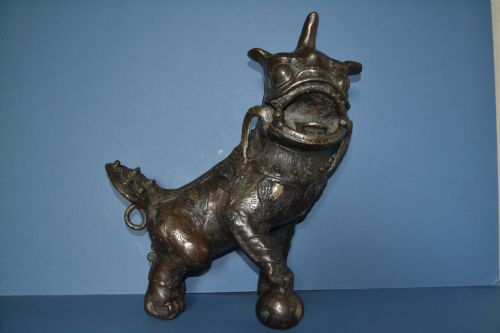


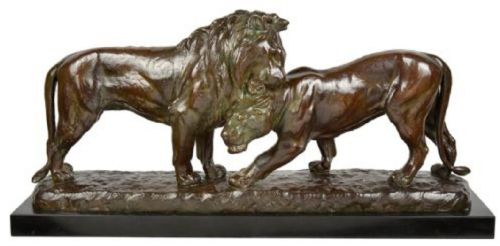


Dark Bronze Lion Figures
Dark bronze lion figures bring weight and classical presence to a room, appearing in forms from Regency mantel ornaments to temple guards.
Dark Bronze Lion Figures
Dark bronze lion figures encompass everything from small Grand Tour souvenirs and Regency desk ornaments to massive temple guardians from Asia. When searching for dark bronze lion figures, buyers most frequently encounter 19th-century animalier studies, Grand Tour casts, and pairs mounted on marble bases.
The selection ranges across several centuries and stylistic traditions, including Georgian Regency pieces, Victorian Gothic revivals, and distant regional aesthetics such as Burmese trade weights and Japanese iron okimono. Forms include seated pairs, resting beasts, and fountain heads.
Origin and period heavily influence the character of each piece, shifting from European neoclassical interpretations to Southeast Asian temple bronzes. These objects serve primarily as decorative sculptures or architectural mantel highlights.
How they were made
Makers utilised traditional casting methods, predominantly working with bronze, cast bronze, and patinated iron, sometimes enriched with gold inlay or mounted on antico verde marble bases. Some larger sculptures rely on wood or plaster compositions given a bronzed finish.
Surface patination defines the dark appearance of these figures, achieved through chemical treatments applied to the metal after casting to simulate age and depth. Details such as manes and facial expressions were often hand-chased following the removal from the mould.
Dark Bronze Lion Figures Retail Price Guide 2026
Typical asking prices for dark bronze lion figures among the pieces listed under this phrase on Sellingantiques today, from the lower quarter to the upper quarter. They describe what is for sale here now, not the wider market.
Materials documented across the inventory include bronze, antico verde marble, cast bronze, patinated iron, and gold inlay.
What varies in quality
The integration of the sculpture with its base also dictates standard; heavy antico verde marble or fitted stone plinths elevate the integrity of a pair. The depth and stability of the dark patination further indicate the care taken by the foundry or workshop.
Unno Shomin·Louis Riche·Al Barye·Barbedienne
The Dark Bronze Lion Figures Glossary
- Animalier
- A term for 19th-century art focusing on the realistic portrayal of animals. Sculptors in this genre studied anatomy closely.
- Grand Tour
- A cultural journey undertaken by wealthy Europeans, acquiring souvenirs such as classical bronze lion sculptures along the way. These items reflect ancient Roman models.
- Okimono
- Japanese decorative statues designed for display in a household alcove. They are often cast in iron or bronze with remarkable naturalism.
- Patination
- The surface coloration and finish acquired by metal over time or through chemical application. It protects the metal and creates deep dark tones.
- Tical
- A traditional unit of weight used in Southeast Asia, relevant when identifying animal trade opium weights cast in bronze.
Dark Bronze Lion Figures: Frequently Asked Questions
How do I clean dark bronze lion figures?
Dust gently with a soft, dry brush to preserve the patination. Avoid harsh chemical cleaners or abrasive cloths that strip the dark surface.
Applying a microcrystalline wax occasionally helps protect the metal from atmospheric moisture.
Where should I place these heavy bronze sculptures?
Ensure the supporting surface, such as a mantelpiece or heavy desk, can handle the considerable weight of solid metal and marble bases.
Keep them away from direct heat sources and excessive humidity to protect the metal and any stone mountings.
How do I identify a Grand Tour bronze?
Grand Tour pieces typically replicate famous ancient monuments or sculptures seen by travellers in Italy during the 18th and 19th centuries.
They often feature dark patination designed to mimic excavated antiquities and may be mounted on distinct coloured marble.