

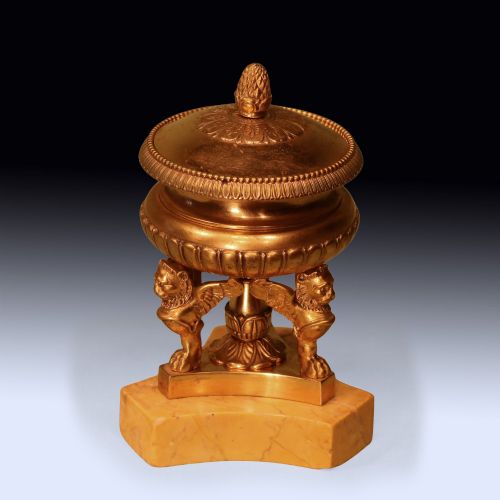


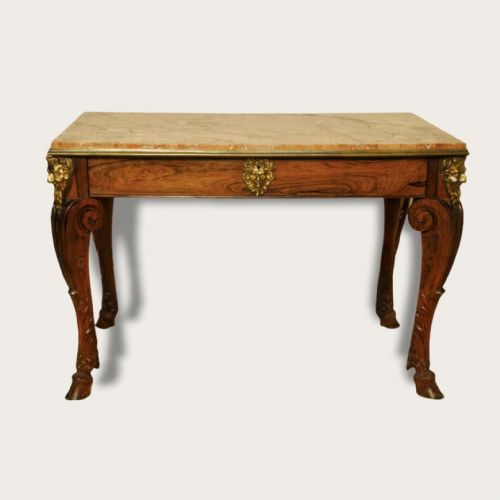
Regency Bronze Lion
These regency bronze lion pieces combine sculptural weight with classical severity, offering buyers a distinct focal point rooted in the early nineteenth century.
Regency Bronze Lion
A regency bronze lion search brings together heavy desk ornaments, mantel sculptures, and fitted door hardware produced across the nineteenth century. These objects draw heavily on classical antiquity and the French Empire style, often cast with significant detail.
The versions most commonly met on this page are small mantel sculptures and seated pairs mounted on marble plinth bases. They reflect the grand tour aesthetic and the Regency period taste for assertive animalier forms in domestic interiors.
How they were made
Maker workshops shaped these items primarily through metal casting, utilising both patinated bronze and fire-gilded ormolu. The metalwork frequently interacts with stone components, notably Sienna marble and verde antico plinths.
Finishing techniques involved careful chasing of the cast bronze surface to articulate the mane and musculature. Artisans combined these patinated or gilt elements with stone bases and occasional parcel-gilt highlights to achieve depth and contrast.
Listings feature pieces utilising patinated bronze, gilt bronze, ormolu, Sienna marble, and verde antico across the nineteenth century.
What varies in quality
The choice and finish of the accompanying material also dictate grade, particularly the selection of marble plinths and the preservation of the original patination. Heavier metal gauge and meticulous mounting mark the higher tiers of the range.
George Smith
The Regency Bronze Lion Glossary
- Ormolu
- Gilded bronze produced by applying a mercury and gold amalgam to a bronze object before heating. It creates a rich yellow surface finish characteristic of Regency and Empire decorative arts.
- Patinated bronze
- Metal treated to produce a darkened or coloured surface layer through chemical means. This treatment emphasises the sculptural contours of the cast lion forms.
- Verde antico
- A dark green serpentine breccia marble often used for decorative plinths and bases. It provides a contrasting dark foundation for mounted bronze sculptures.
- Grand tour
- The traditional trip of Europe undertaken by upper-class young men of the eighteenth and nineteenth centuries. It generated a demand for classical sculptures and architectural bronzes brought home as mementos.
Regency Bronze Lion: Frequently Asked Questions
Where were regency bronze lion pieces displayed?
These pieces occupied prominent positions on library desks, mantelpieces, and entrance doors. Wealthy homeowners used them to project classical authority and refined taste.
Pairs of seated lions typically anchored either end of a mantel or served as desk weights, while door knockers announced visitors with imposing sculptural presence.
How do I identify the Regency period?
Regency items date from the early nineteenth century, drawing inspiration from Greek, Roman, and French Empire design. Look for clean classical proportions combined with robust casting.
They often incorporate specific marbles like Sienna or verde antico beneath patinated or gilt bronze figures.
How should I clean my bronze lion?
Dust the surface gently with a soft, dry cloth to prevent the accumulation of grit. Avoid harsh chemical cleaners or polishes that can strip the original patina.
Preserving the historic finish maintains both the visual depth and the long-term character of the metal.
What is the difference between bronze and ormolu?
Bronze is a copper and tin alloy used for the structural body of the sculpture and finished with a dark patina. Ormolu refers specifically to the application of gold leaf or mercury gilding over bronze.
Many Regency pieces combine both finishes to create visual contrast between the gilded highlights and the dark fur of the lion.