




Antique Lion Doorstop
These heavy metal guards keep heavy doors in place while bringing unmistakable presence to a hallway.
Antique Lion Doorstop
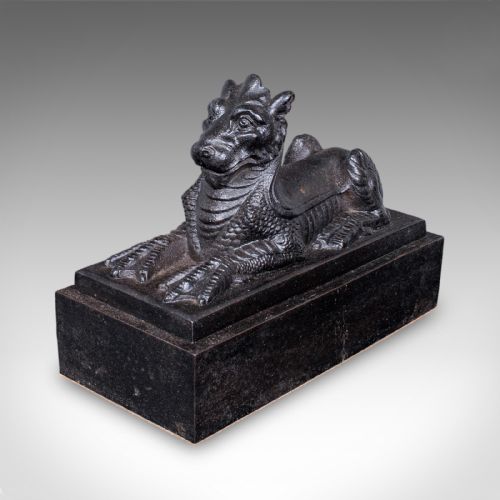
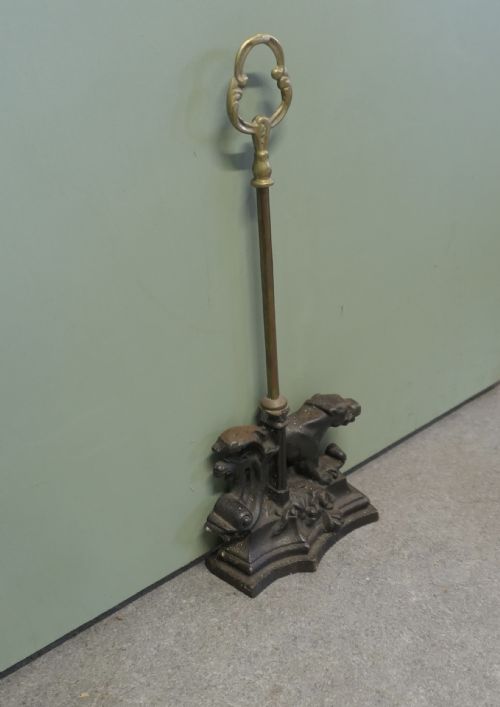
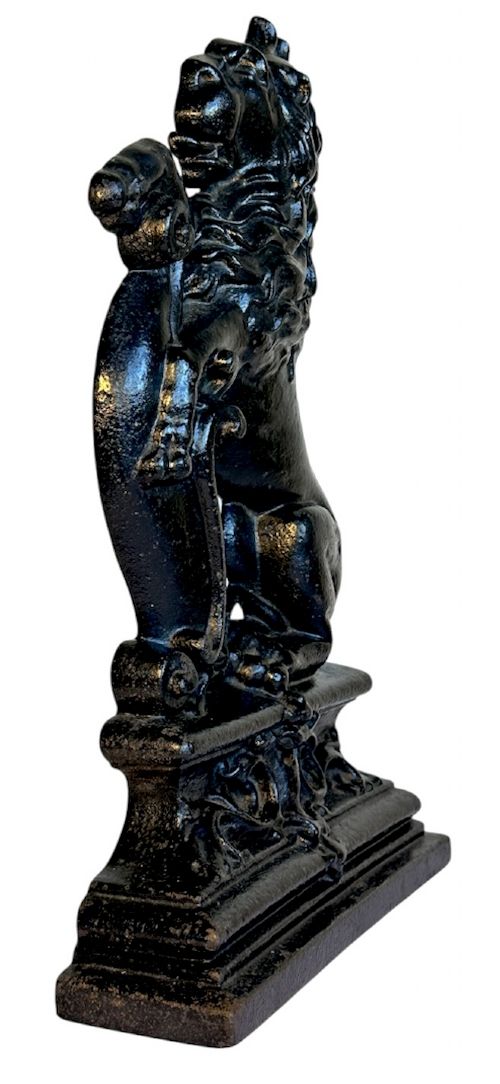
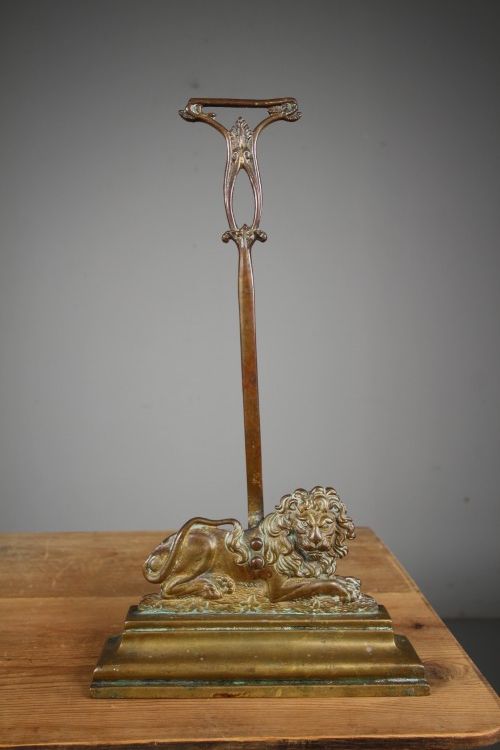
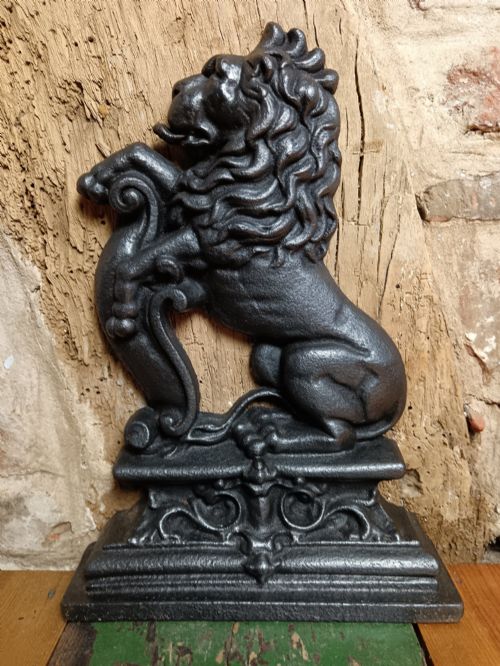
An antique lion doorstop is a heavy functional sculpture designed to hold interior doors open, most commonly found in cast iron or brass from the nineteenth century. These pieces take the form of rampant lions, recumbent beasts, or heraldic guards standing ready in domestic hallways.
The Victorian era dominates the selection, though earlier Georgian examples and mid-Victorian designs appear frequently. The form merges practical utility with domestic ornamentation, serving as both a functional door porter and a decorative sculpture.
How they were made
Foundries produced these pieces primarily through sand casting in iron, brass, or bronze, pouring molten metal into moulds to achieve solid, heavy forms. Iron versions often received a black paint finish for protection and visual definition.
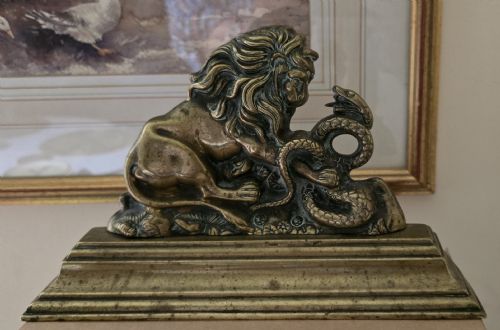
One signed nineteenth-century example includes a serpent companion alongside the lion.
What varies in quality
Substantial weight and the presence of original painted surfaces or patination elevate certain examples above later or stripped pieces. The artistic vigour of the sculpture itself, particularly in rampant or heraldic poses, dictates the overall character.
The Antique Lion Doorstop Glossary
- Door porter
- An alternative term for a heavy doorstop designed to be lifted and moved easily by an integrated handle or top loop.
- Rampant
- A heraldic posture where the animal stands on one hind leg with forelegs raised aggressively, frequently seen in iron castings.
- Recumbent
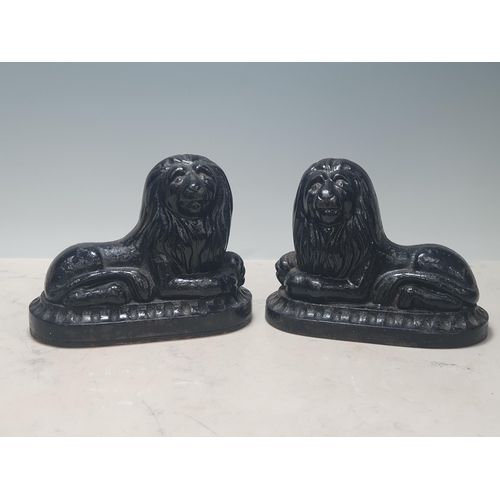
- A resting or lying posture with the body horizontal, commonly utilised for pairs of lions flanking a hearth or doorway.
- Cast iron
- A heavy, hard iron-carbon alloy poured into moulds, providing the dense weight required to hold doors against draughts.
Antique Lion Doorstop: Frequently Asked Questions
How heavy are these doorstops?
These metal sculptures possess significant weight, typically several kilograms, ensuring they hold heavy interior doors securely without sliding.
Their substantial mass derives from solid cast iron, brass, or bronze construction intended for daily domestic utility.
Can I use them on modern doors?
These pieces function effectively on modern doors, provided there is sufficient clearance between the bottom of the door and the floor.
Their traditional heft holds doors open just as reliably today as it did in nineteenth-century hallways.
How do I clean cast iron pieces?
Dust gently with a dry cloth and avoid harsh chemical cleaners that strip original painted finishes or protective patination.
Light application of wax can help preserve iron surfaces without attracting moisture or dust.
Are pairs common?
Pairs of matching lions or recumbent figures appear frequently, often intended to stand symmetrically by double doors or fireplaces.
Single rampant figures also occur regularly as standalone door porters for narrower entrances.