



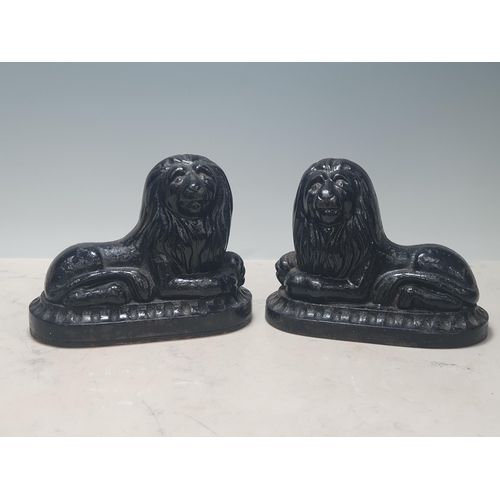


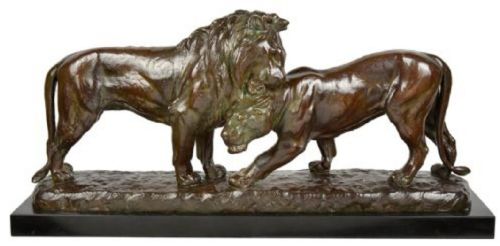


Cast Metal Lion Ornament
A cast metal lion ornament brings domestic strength and classical presence to a room, ranging from small desk studies to heavy door stops.
Cast Metal Lion Ornament
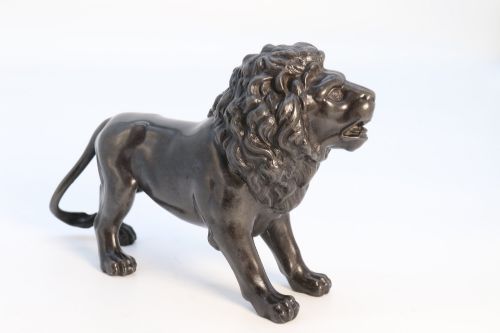
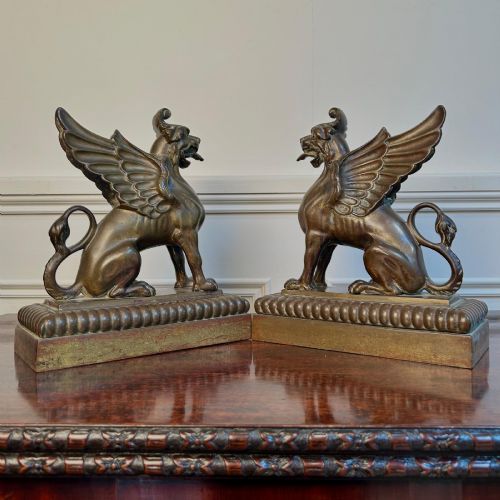
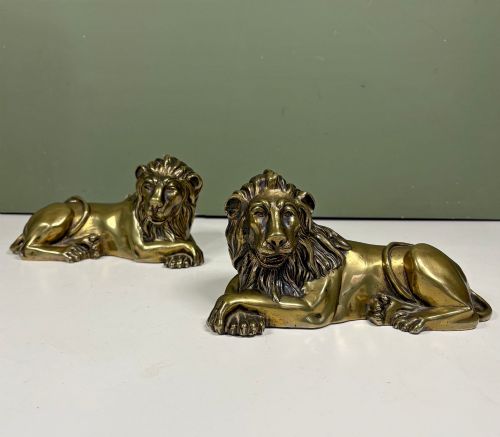
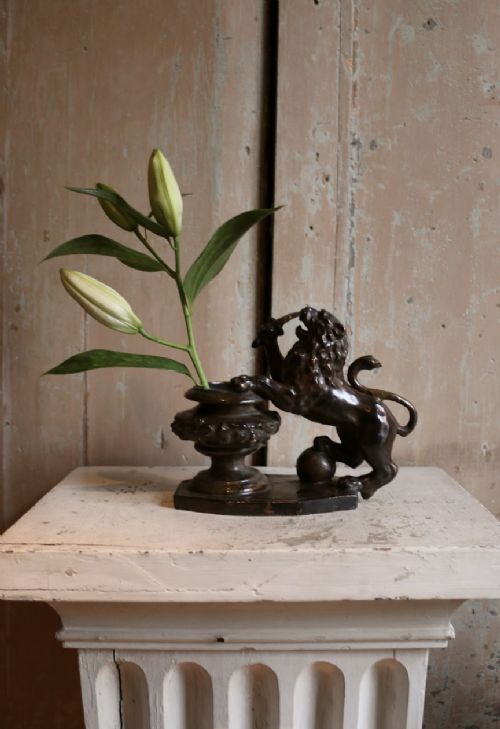
A cast metal lion ornament takes many sculptural forms, including seated pairs, recumbent figures, inkwells, and door stops. These objects appear across the nineteenth century alongside earlier seventeenth-century examples and twentieth-century Grand Tour models.
The materials span bronze, brass, cast iron, pewter, and patinated metal, sometimes mounted on marble bases. Buyers encounter English, French, and Tibetan interpretations reflecting Victorian, Neoclassical, Baroque, and Animalier styles.
Functional pieces like door stops and inkstands share shelf space with pure decorative sculptures and temple figures. The selection covers single figures and matching pairs intended for mantelpieces, desks, and hearths.
How they were made
Surfaces receive different treatments, including cold-painting, black paint, patination, and bronzing. Heavy iron and brass compositions suit utilitarian roles such as door stops and andirons, while refined bronze serves desk studies.
Some nineteenth-century door stops doubled as hearth guards, watching over the coal scuttle with unblinking metal gaze.
What varies in quality
The definition in the casting separates standard production from superior modelling, particularly in the rendering of paws, facial expressions, and anatomical depth. Better pieces retain sharp lines and convincing weight.
Surface finish and patination dictate the visual character of each object, whether through applied cold-painting or aged metal surfaces. Original finishes and mounts on marble bases distinguish more ambitious studio works from simpler utilitarian castings.
Franz Bergman·Louis Riche
The Cast Metal Lion Ornament Glossary
- Animalier
- Nineteenth-century art movement focusing on the realistic depiction of animals. Sculptors in this tradition studied anatomy closely.
- Grand Tour
- Cultural journey across Europe undertaken by the wealthy to collect antiquities and souvenirs. Figures often referenced classical sculpture.
- Cold-painted
- Technique where paint is applied to a bronze object without heat fixation. Colours can show gentle wear over time.
- Patinated
- Metal surface altered by chemical treatment, age, or burial to produce a characteristic toned skin. This layer protects the metal underneath.
- Andiron
- Fire dog used to support logs in an open hearth, often featuring decorative figural terminals. Pairs stood either side of the fireplace.
Cast Metal Lion Ornament: Frequently Asked Questions
What were cast iron lions used for?
Heavy cast iron examples served practical duties as door stops, door porters, and andirons in nineteenth-century interiors. Their weight kept heavy doors open against draughts while adding decorative character to hallways.
Over time, many transitioned from utility to purely ornamental display on hearths and floors.
How do I identify a Grand Tour bronze?
Grand Tour pieces typically replicate famous classical monuments or sculptures encountered by travellers in Europe. They often date from the nineteenth century and show careful attention to antique forms.
Many sit upon marble bases, reflecting their origin as souvenirs for affluent collectors.
What is cold-painted bronze?
Cold-painted bronze refers to metal sculptures finished with oil-based or enamel paints applied directly to the cold metal surface. This technique gained popularity during the late nineteenth and early twentieth centuries.
Makers used it to add realistic colour to animal figures and decorative objects.
How do I care for patinated metal?
Patinated metal benefits from gentle dusting with a soft, dry cloth to prevent dirt accumulation. Avoid harsh chemical cleaners and abrasive polishes that strip the surface finish.
Keeping pieces away from high humidity preserves the stability of the metal and its colour.