


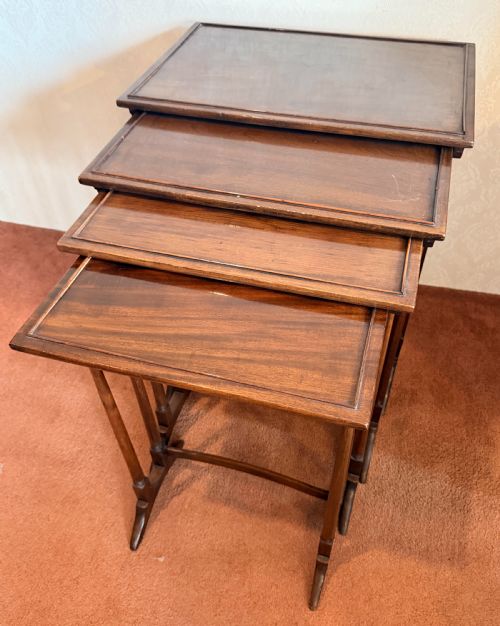

Antique Quartetto Nest
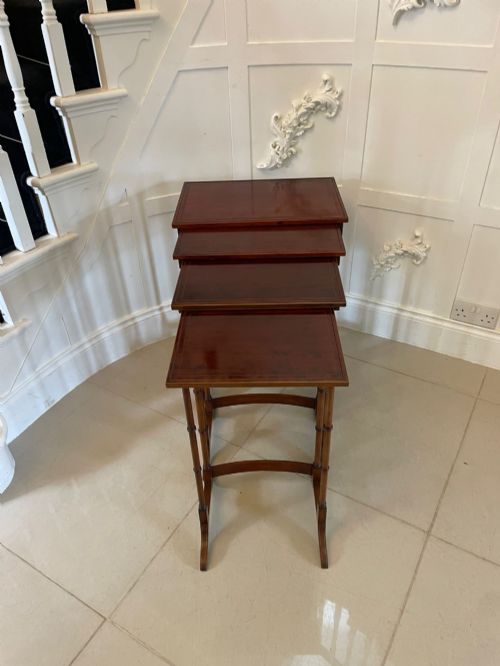
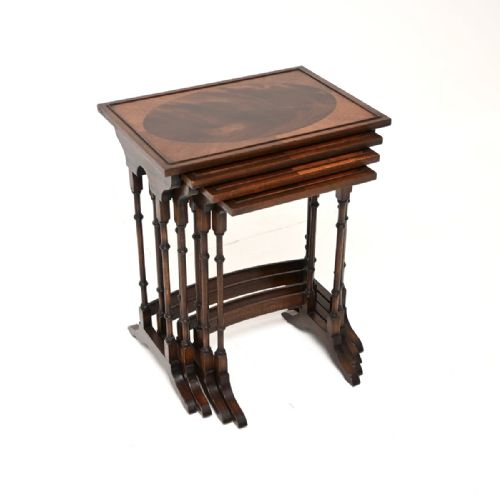
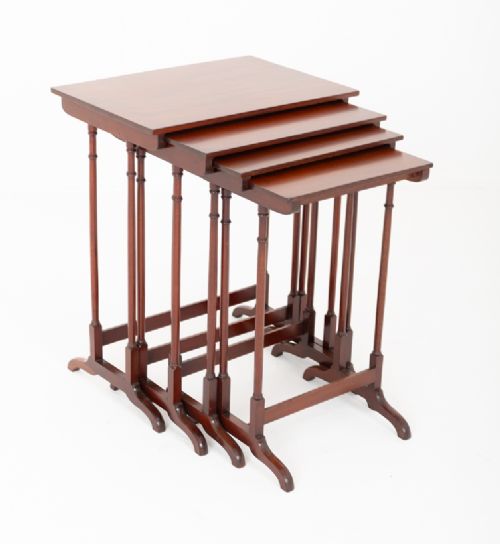
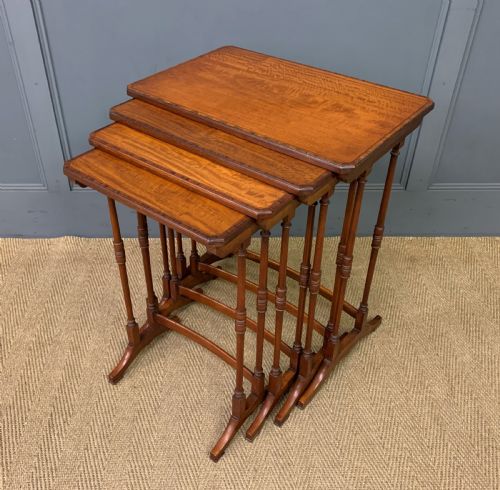
An antique quartetto nest brings four graduated tables together in a single footprint, offering movable surfaces that slide neatly out of sight when not in use.
Antique Quartetto Nest
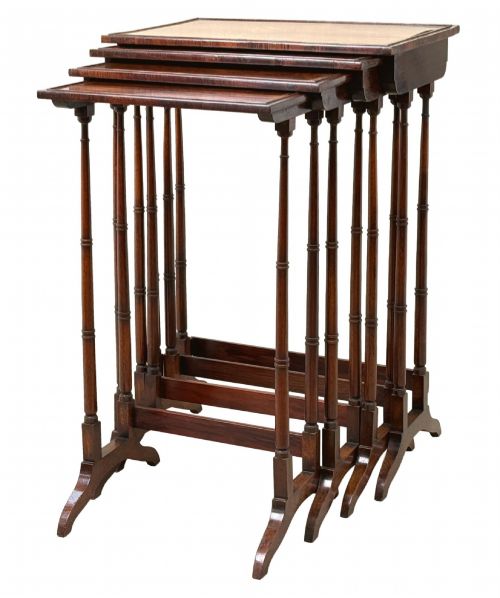
When searching for an antique quartetto nest, a buyer encounters a set of four graduated occasional tables designed to slide one beneath another. The form gained popularity during the Regency period and remained a staple through the Victorian and Edwardian eras, as well as into the early twentieth century.
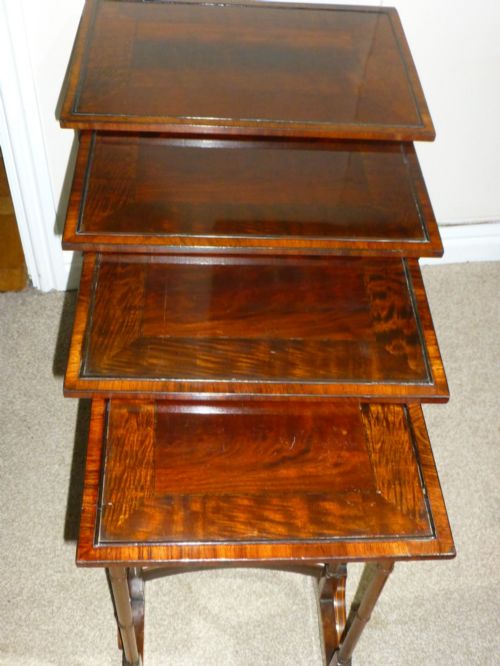
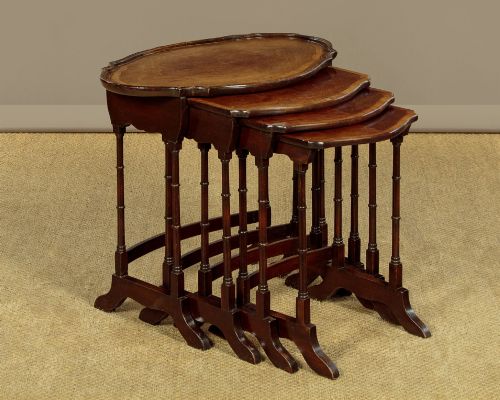
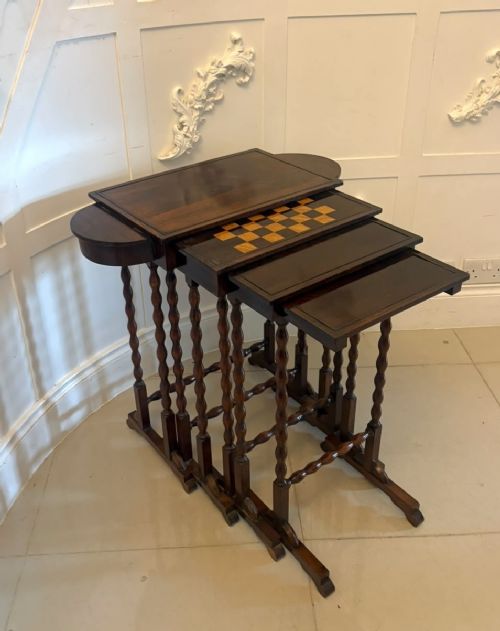
Mahogany dominates the surviving pieces on this page, often paired with satinwood or rosewood veneers. Most examples function as occasional, coffee, or lamp tables, with occasional variations featuring integrated chess boards or serpentine fronts.
English cabinet makers produced the majority of these sets, though examples with Chinese carved hardwood, Chinoiserie, or japanned finishes also appear in the historical record.
Materials and Construction
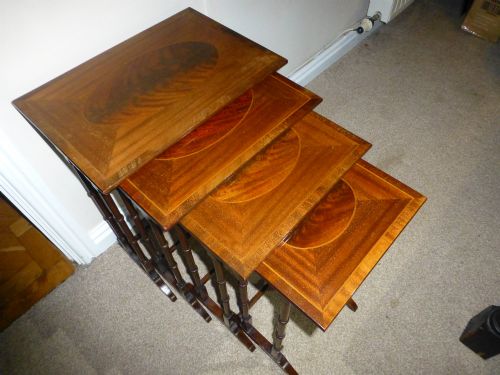
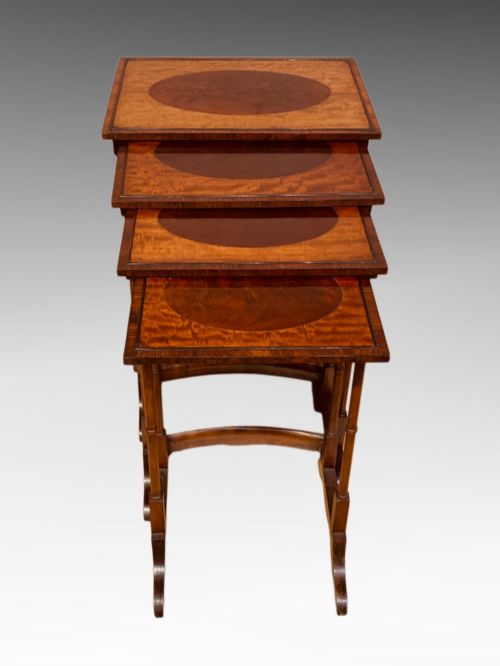
Timbers such as mahogany, rosewood, and walnut form the primary structure of these tables, chosen for durability and grain figure. Cabinet makers utilised contrasting lighter woods like satinwood and boxwood for decorative inlay and cross-banding.
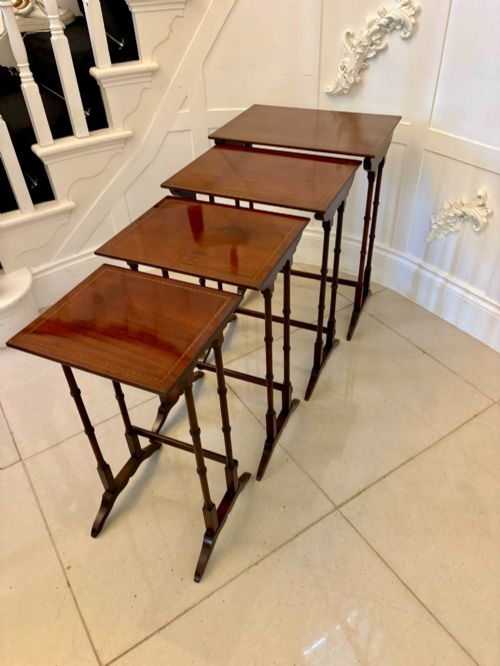
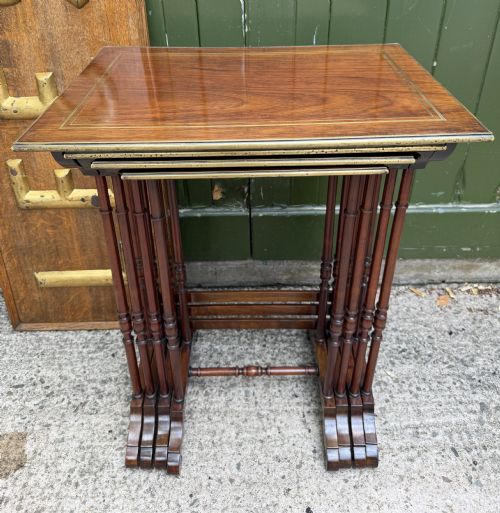
Construction relies on slender uprights or square tapered legs that allow each smaller table to clear the frame of the next table in the nest. Selected examples incorporate brass inlay or gilt painted details to accentuate the edges and tabletops.
Listings on this page span the Regency, Victorian, and Edwardian periods, stretching into the nineteen-twenties.
Distinctions in Execution
Quality rests in the precision of the graduated sizing and the stability of the frames when all four tables stand independently. Superior sets maintain tight joints and smooth sliding action without excessive clearance between the nesting tiers.
The choice of timber grain and the fineness of any satinwood or boxwood inlay distinguish standard production pieces from finer workshops. Well-executed cross-banding and balanced proportions elevate the appearance of the entire nest.
Gillows
The Antique Quartetto Nest Glossary
- Quartetto nest
- A matching set of four tables designed to stack progressively beneath one another. The term derives from the Italian for a group of four.
- Cross-banding
- A border strip of veneer laid around the perimeter of a tabletop so the grain runs at right angles to the central panel. This technique frames the primary wood and adds visual contrast.
- Satinwood
- A durable tropical hardwood with a lustrous, golden sheen utilised extensively for inlay and veneering during the Sheraton Revival and Edwardian periods.
- Serpentine form
- A gently undulating tabletop or front edge curved in a concave-convex-concave wave. It requires skilled carpentry to shape accurately.
- Japanned
- A European imitation of East Asian lacquerwork achieved through the application of layered resin finishes and painted decorations. It appears on select Victorian and Edwardian oriental-style pieces.
Antique Quartetto Nest: Frequently Asked Questions
How were quartetto nests used historically?
These tables served as versatile furniture for entertaining guests in drawing rooms and parlours. Servants or hosts could deploy the individual tables across a room to hold drinks, books, or lamps.
Once the gathering concluded, the tables nested back together to occupy the floor space of a single small table.
What woods were used for these tables?
Mahogany served as the primary structural timber throughout the nineteenth and early twentieth centuries. Cabinet makers also worked with rosewood, walnut, and padouk wood for richer grain patterns.
Lighter woods including satinwood, boxwood, and various exotic hardwoods provided contrast through stringing and inlay work.
How can I date an antique nest?
Dating relies on timber selection, leg style, and decorative motifs present on the tables. Regency and early nineteenth-century examples often feature rosewood with brass stringing, while Edwardian pieces frequently display Sheraton Revival satinwood inlay on mahogany.
Construction methods and secondary woods underneath also help confirm the period of manufacture.
Are all four tables the same size?
Quartetto nests consist of four progressively smaller tables designed so each one fits precisely beneath the next. The largest table stands at the outer edge, while the smallest rests completely hidden in the centre of the stack.
This graduated scaling allows the entire set to share a minimal footprint.