




Antique Quadruped Table
An antique quadruped table provides a sturdy four-footed base designed to support dining, card, and centre furniture.
Materials and Construction Methods
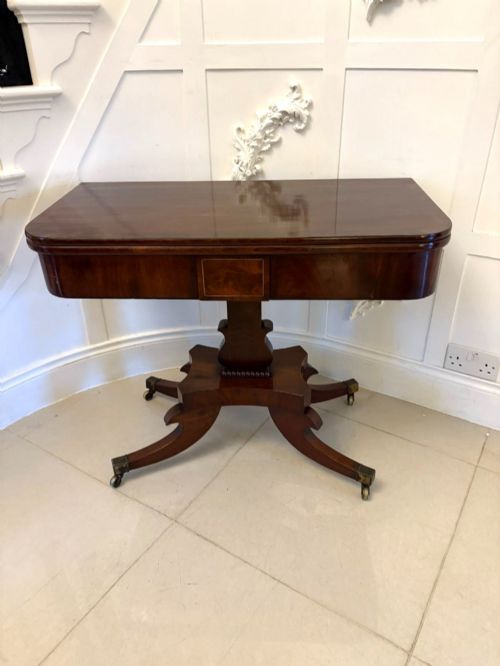
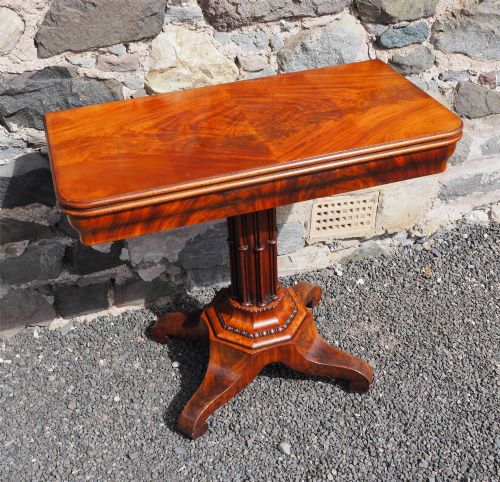
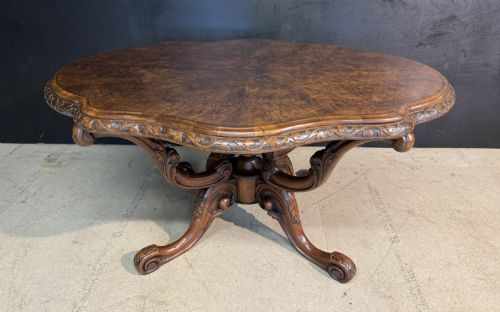
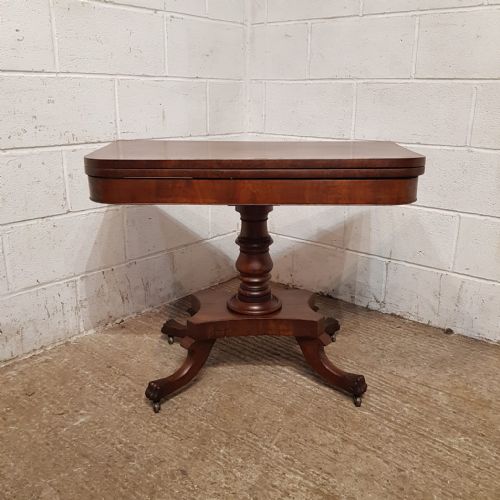
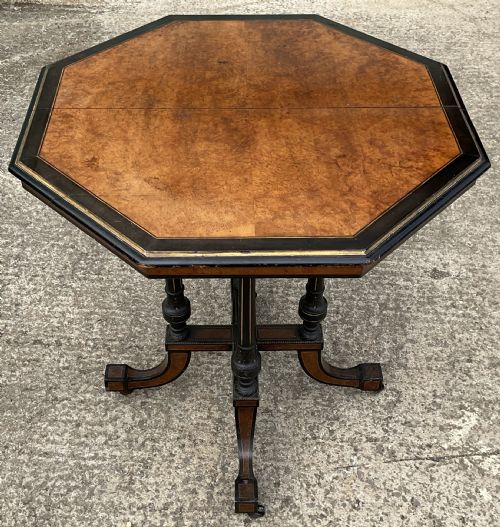
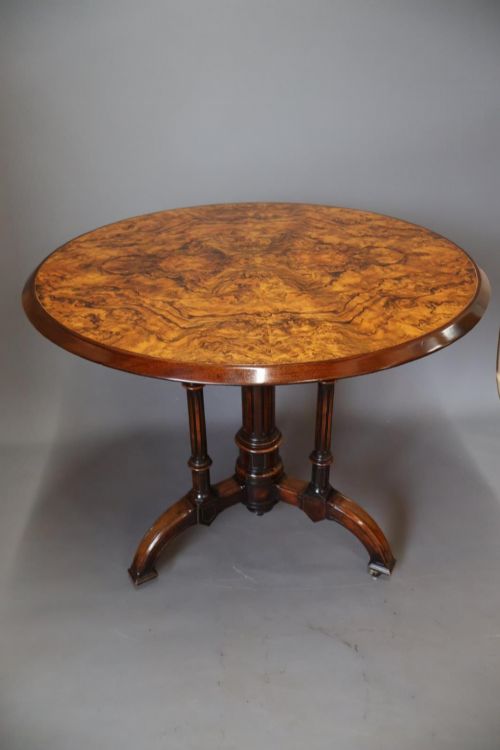
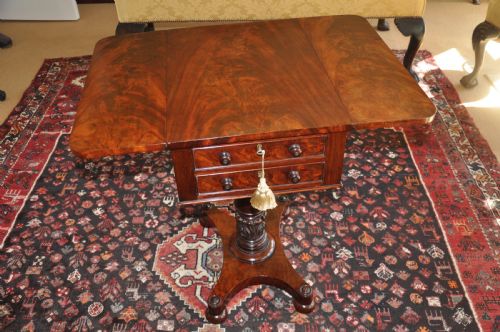
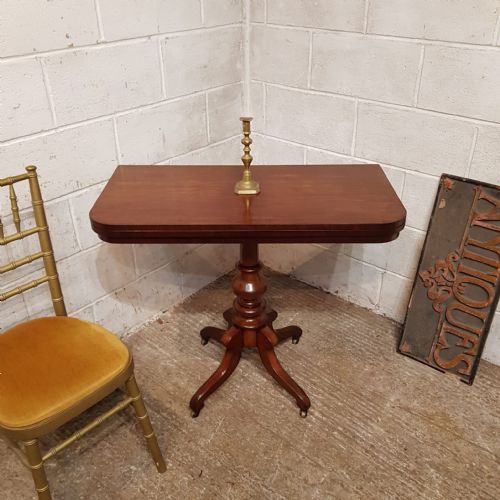
Cabinetmakers constructed these tables using solid timber frames faced with figured veneers such as flame mahogany, burr walnut, and rosewood. The central pillar typically anchors a heavy turned or carved pedestal that divides into four sweeping legs.
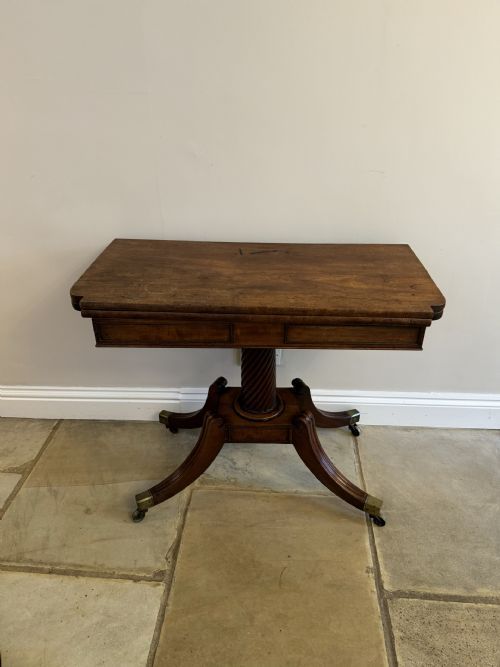
Brass mountings, boxwood inlay, and marquetry enrich the surfaces of higher-grade examples from the Regency and Victorian eras. Joinery relies on traditional pegged mortise and tenon joints to secure the pedestal block to the tabletop framework.
Distinctions in Quality and Execution
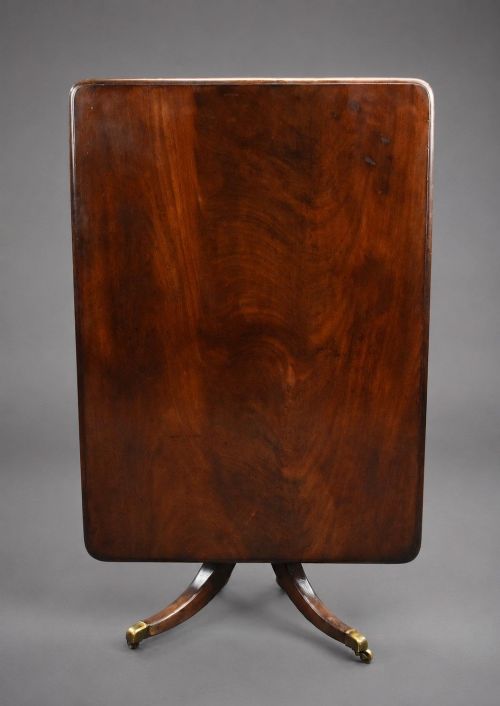
Quality reveals itself in the selection of timber veneers and the crispness of hand-carved elements on the pedestal and feet. Superior tables display continuous grain matching across folding leaves and balanced proportion between the top and the heavy base.
Lesser pieces exhibit simpler turned stems with standard mahogany boards, while finer examples incorporate brass inlay, amboyna mounts, or specialised mechanisms for revolving or tilting surfaces.
Listings feature woods such as mahogany, walnut, burr walnut, rosewood, satinwood, and birchwood across the nineteenth century.
James Mein·Gillows
The Antique Quadruped Table Glossary
- Quadruped
- A table supported by a pedestal base that splits into four distinct feet rather than the traditional three.
- Pedestal
- The central vertical column supporting the tabletop, usually rising from a platform or spreading feet.
- Loo table
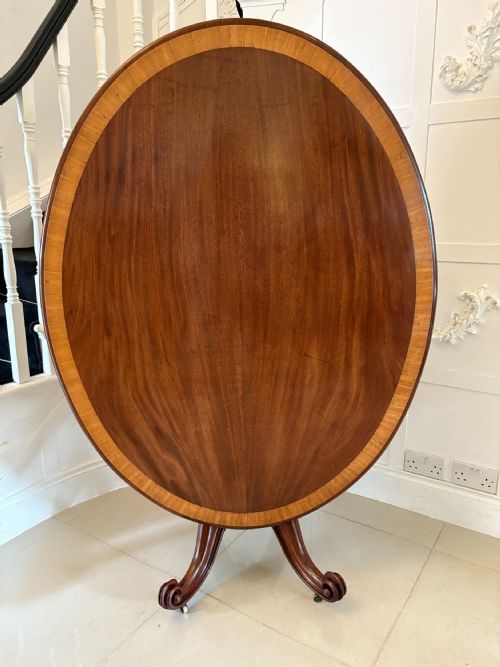
- A large round table originating in the nineteenth century, designed for the card game loo and often fitted with a tilting mechanism.
- Card table
- A folding table with a hinged top that opens to reveal a baize-lined surface for playing games.
- Marquetry
- Decorative inlay work using various coloured woods to create pictorial or geometric patterns on the table surface.
Antique Quadruped Table: Frequently Asked Questions
What is an antique quadruped table?
An antique quadruped table is a piece of furniture featuring a central pillar supported by four distinct feet. These tables emerged primarily during the Georgian, Regency, and Victorian periods.
They serve multiple functions in the home, acting as dining tables, breakfast tables, centre tables, and card tables. The four-footed design provides stability while keeping floor space unobstructed by corner legs.
How do I distinguish a Regency table from a Victorian one?
Regency tables generally display cleaner classical lines, often utilising mahogany or rosewood with subtle brass inlay and restrained carving. They reflect the early nineteenth-century taste for architectural symmetry and ancient Greek or Roman motifs.
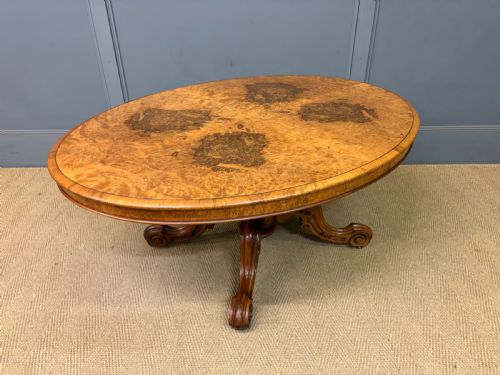
Victorian tables tend to be heavier and more heavily ornamented, frequently employing burr walnut, elaborate marquetry inlay, and deeply carved scroll feet. The later nineteenth-century pieces also embrace larger proportions and varied wood tones.
Were these tables used for dining?
Larger quadruped tables, specifically breakfast tables and loo tables, functioned effectively for family meals and gatherings. Their tilt-top mechanism allowed them to be stored against a wall when not in use.
Dining-sized quadruped tables provided ample legroom for diners because the single central pedestal removed the restriction of four corner legs. Smaller versions remained in the drawing room for tea or card games.
How should I care for a polished wood surface?
Maintain polished mahogany, walnut, or rosewood surfaces by keeping them away from direct sunlight and extreme temperature fluctuations. Consistent humidity prevents the timber and underlying veneers from splitting or warping.
Apply a traditional beeswax polish occasionally to nourish the grain and buff gently with a soft cloth. Avoid placing damp items directly onto antique timber to protect the historic finish.