

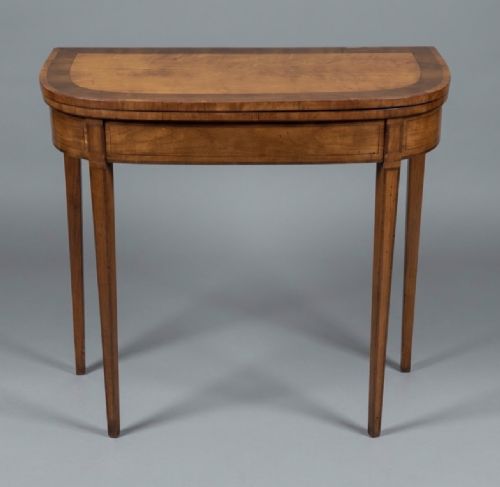

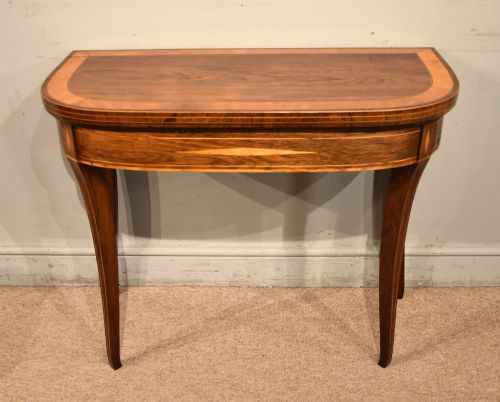
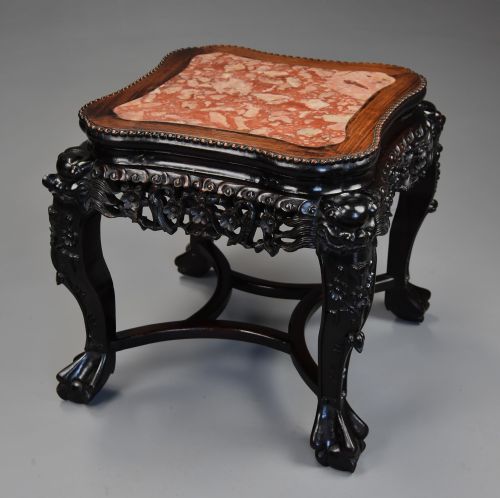

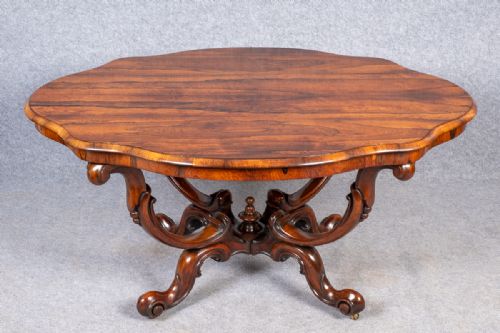


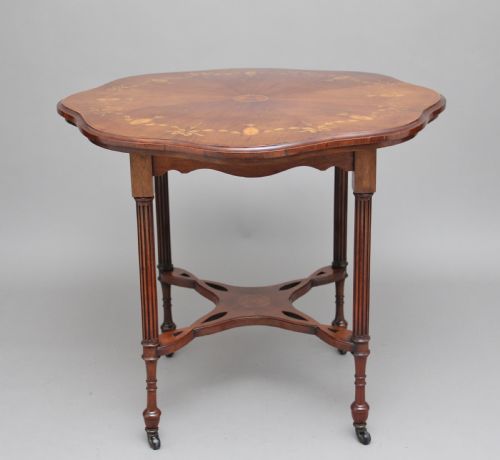


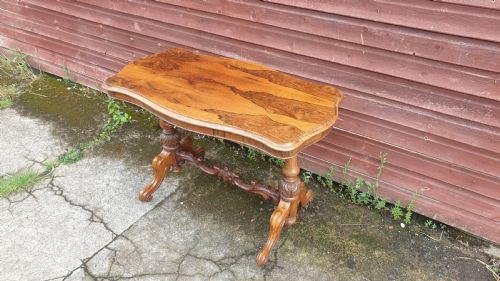


Shaped Rosewood Table
A shaped rosewood table brings dense grain and fluid curves to a room, serving as a writing desk, tea stand or centrepiece.
Shaped Rosewood Table
When you search for a shaped rosewood table, you encounter Victorian and Edwardian examples alongside earlier Regency and George III forms. The pieces span writing tables, card tables, occasional stands and large centre tables.
Kidney-shaped writing desks and D-shaped card tables appear frequently among the listings, often featuring serpentine or curved edges.
Origins stretch from English workshops to French revival styles and Chinese hardwood pieces inset with marble.
How they were made
Cabinetmakers utilised dense rosewood timber as the primary body, frequently incorporating contrasting satinwood, boxwood or kingwood veneers for intricate wood inlay and marquetry.
Metal elements such as brass, ormolu mounts and leather writing surfaces appear across writing tables and desks, while structural supports utilise carved pedestals and paw feet.
Shaped Rosewood Table Retail Price Guide 2026
Typical asking prices for shaped rosewood table among the pieces listed under this phrase on Sellingantiques today, from the lower quarter to the upper quarter. They describe what is for sale here now, not the wider market.
Listings feature 19th Century, Victorian, Edwardian, and George III periods alongside French Louis XV and Regency styles.
What varies in quality
The refinement of the curved silhouette dictates the distinction between standard production and top-tier work, particularly in kidney-shaped and serpentine designs.
The crispness of the marquetry and wood inlay, along with the integration of brass details and leather inserts, separates ordinary furniture from finer examples.
The Shaped Rosewood Table Glossary
- Kidney-shaped
- A curved, bean-like tabletop profile often found on writing tables and occasional stands. This form allows the user to sit closer to the centre.
- Marquetry
- Decorative patterns formed by fitting together small pieces of coloured wood veneer. Craftsmen apply this technique to tabletop surfaces and friezes.
- Serpentine
- A line that curves outward and then inward, creating a wavy edge. It is frequently seen on the fronts of card tables and centre tables.
- Ormolu
- Gilded bronze mounts applied to furniture edges and legs. This material provides metallic contrast against dark rosewood timber.
- D-shaped
- A semicircular table format often utilised for card and games tables. These pieces stand flush against a wall when closed.
Shaped Rosewood Table: Frequently Asked Questions
What rooms suit a shaped rosewood table?
A compact kidney-shaped or occasional table fits easily beside seating in a sitting room or study.
Larger centre tables and writing desks anchor a main room, providing a functional surface with distinct curves.
How do I care for rosewood furniture?
Keep the wood away from direct sunlight and heat sources to prevent the natural oils from drying out.
Dust gently with a dry cloth and avoid harsh chemical polishes that can damage the antique surface.
What is the difference between a centre table and a writing table?
A centre table stands finished on all sides to sit in the middle of an open space. Writing tables incorporate drawers and leather inserts designed for seated tasks.
Both formats employ curved silhouettes across different periods.
How do I identify a Victorian piece?
Victorian examples display rich rosewood grain, often paired with elaborate marquetry or heavy pedestal bases.
Many of these items adopt kidney-shaped or serpentine profiles reflecting the revival styles of the era.