


Antique Pottery Mantle Ornaments
These antique pottery mantle ornaments are spirited Victorian figures and spill vases that bring character and colour to a room.
Antique Pottery Mantle Ornaments
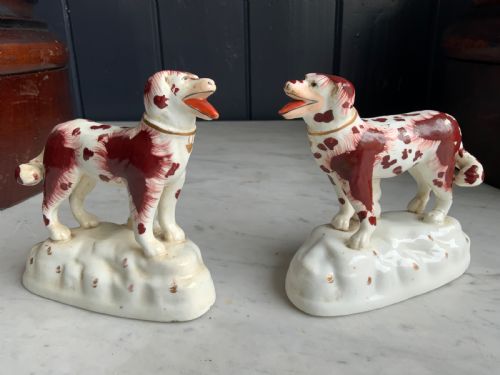
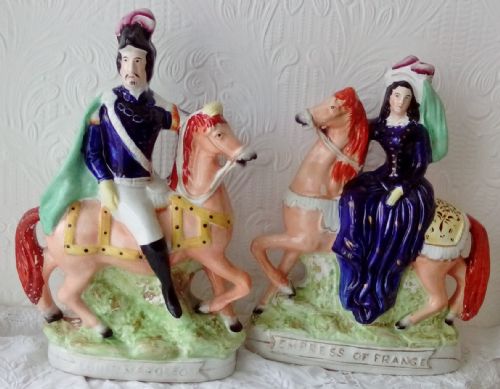
When you search for antique pottery mantle ornaments, you are looking at decorative figures and spill vases made to sit upon a fireplace mantelpiece. The pieces most likely to meet you on this page are Staffordshire figures from the nineteenth century, including pairs of dogs, sheep, pugs, and historical portraits.
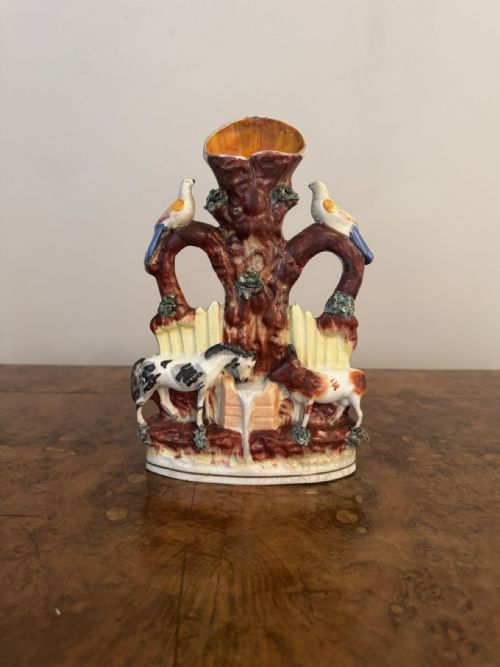
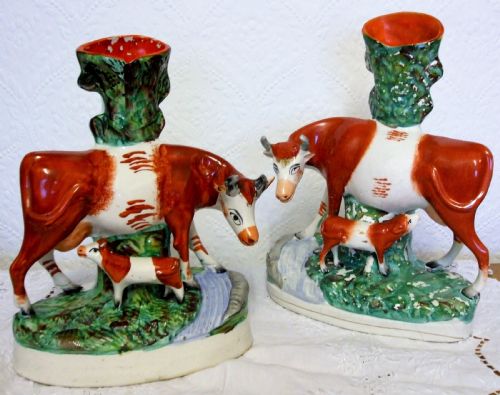
The selection ranges from flatback figures designed to be seen from the front to detailed spill holders and spaniels with glass eyes. You will find subjects spanning royalty such as Napoleon III and the Empress of France alongside literary characters like Little Red Riding Hood and Highland Jessie.
Originating largely from the nineteenth century, particularly the Victorian era, these earthenware and porcelain objects capture popular taste of the period. Makers produced them in pairs and collections, creating cheerful domestic ornaments that remain highly collectible today.
Materials and methods
Potters shaped these earthenware and porcelain mantle ornaments using ceramic techniques common to the nineteenth century. Many items received a lead glaze or enamel finish, providing a smooth surface that held vibrant pigments.
Listings feature pieces from the Victorian era and the nineteenth century, including specific years like eighteen-eighty and eighteen-sixty.
Judgements of quality
The sophistication of the glazing and the inclusion of elements like glass eyes separate finer figures from standard production pieces. Pairs that remain together with matching decoration command greater attention than mismatched survivors.
The Antique Pottery Mantle Ornaments Glossary
- Flatback
- A figure moulded with a finished front and a flat, unpainted reverse designed to stand against a wall. This technique saved materials and allowed the ornament to sit snugly on a mantelpiece.
- Spill vase
- A hollow ceramic holder intended to keep taper spills used for lighting fires and candles. They often take the form of tree trunks or architectural elements beside a figure.
- Earthenware
- A porous ceramic body fired at lower temperatures, commonly used for nineteenth-century Staffordshire figures. It requires a glaze to become impermeable to liquids.
- Enamel
- Opaque glass fused to the ceramic surface during firing to provide bright colours. It allows for the intricate decoration seen on Victorian figurines.
- Gilt
- A thin layer of gold applied to ceramic details for decorative emphasis. It catches the light from a hearth and highlights royal or portrait subjects.
Antique Pottery Mantle Ornaments: Frequently Asked Questions
What are antique pottery mantle ornaments?
These pieces are ceramic figures and spill vases manufactured during the nineteenth century to decorate fireplace mantelpieces. They include portrait figures, animals, and literary subjects produced in Staffordshire.
Potters designed them primarily for visual appeal in domestic interiors. They reflect Victorian tastes through their subjects and hand-painted decoration.
How were spill vases used?
Spill vases held thin wooden tapers known as spills, which people used to transfer flames from a hearth fire to candles or pipes. The hollow back of the figure served as the container.
They combined practical utility with decorative appeal. Their presence on a mantelpiece ensured tapers remained close at hand.
Why are dogs common among these ornaments?
Staffordshire potteries produced numerous pairs of dogs, including spaniels, greyhounds, pugs, and poodles, to satisfy Victorian domestic sentiment. Owners often placed a pair facing inwards at either end of a mantelpiece.
These canine figures ranged from plain earthenware to decorated models with glass eyes and gilt lockets. They represented loyalty and companionship in the nineteenth-century home.
How do you date Victorian pottery figures?
Dating relies on stylistic clues, historical subjects, and manufacturing materials such as earthenware and lead glazes. Figures depicting Napoleon III or specific literary characters point to the nineteenth century.
Evidence from nineteenth-century periods and specific decades helps narrow the timeline. Examining the base and the application of enamel provides further context for the era of production.