
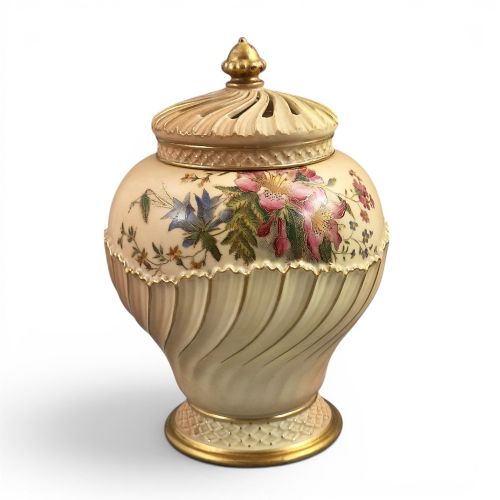


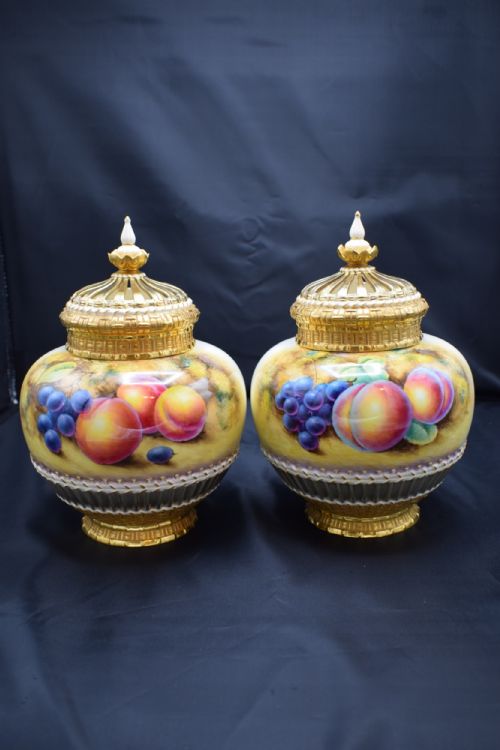


Antique Pot Pourri Vase
These antique pot pourri vase examples bring period scent diffusion and decorative presence into a room, offering finely painted ceramic bodies designed for dried herbs and petals.
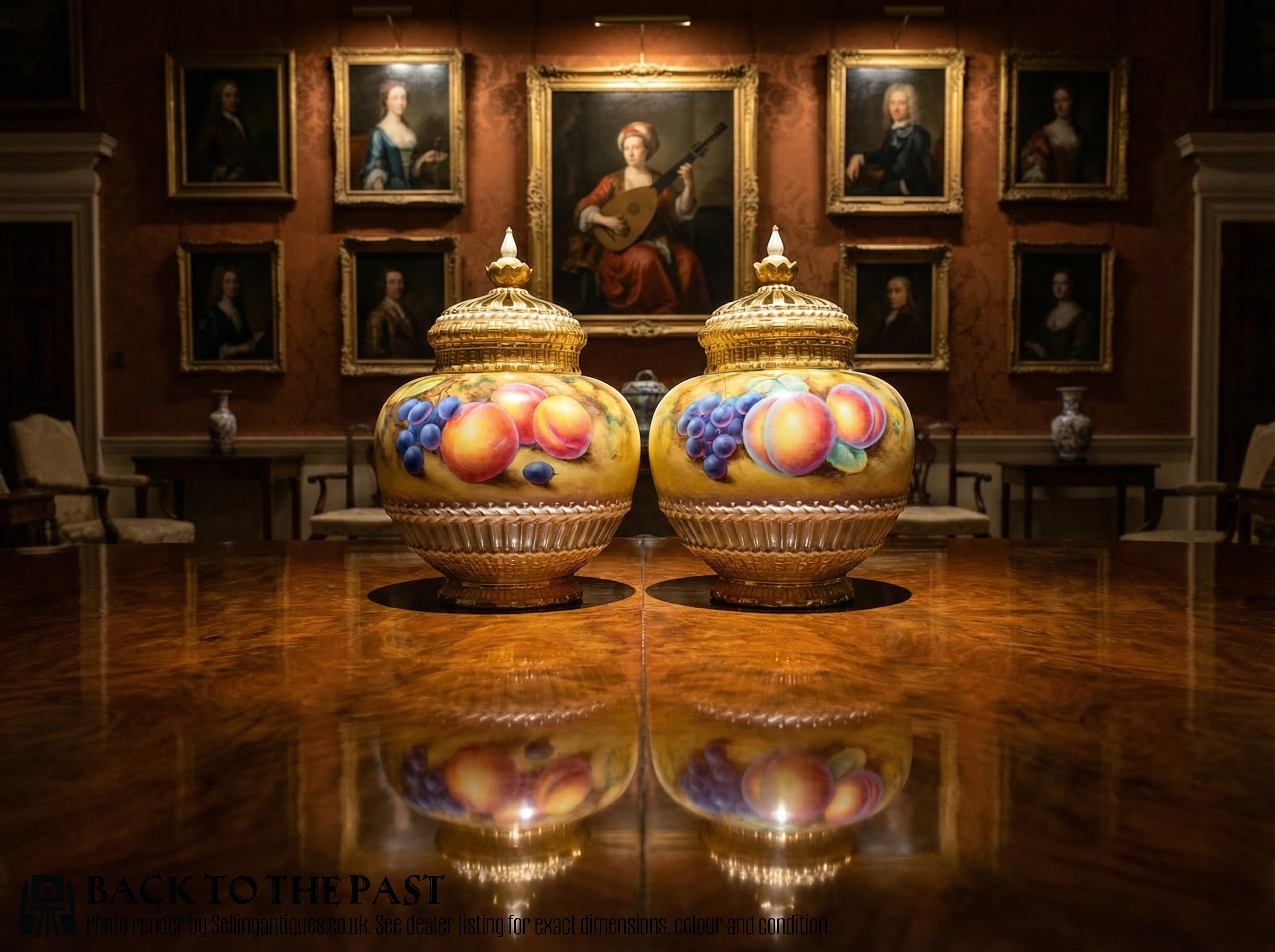
Antique Pot Pourri Vase
An antique pot pourri vase is a lidded ceramic vessel intended to hold fragrant botanicals while allowing scent to permeate a room through pierced covers or crowns. The selection spans nineteenth century works through mid twentieth century British and continental production, with English porcelain forming a major portion of available examples.
Buyers will encounter specific forms including ovoid jars, pedestal vases, and three-piece garniture sets complete with pierced inner lids and outer covers. Royal Worcester dominates the available inventory, particularly in blush ivory grounds, painted fruit, and signed artist pieces dating from the Edwardian era into the mid twentieth century.
Continental output also appears within the archive, featuring French and German porcelain mounted in gilt bronze and ormolu alongside nineteenth century Sevres and Dresden interpretations. Traditional English ironstone variations provide alternative ceramic textures distinct from fine porcelain bodies.
Materials and construction methods
Makers utilised fine porcelain and ceramic bodies shaped into vases, urns, and jars, frequently finished with pierced crown covers designed to release fragrance. Surface decoration relies upon hand-painted botanical and fruit subjects executed by named artists, complemented by printed and hand-tinted blush ivory glazes.
Gilding and gold leaf accent borders, handles, and pierced covers, whilst select nineteenth century continental pieces incorporate cast gilt bronze or ormolu mounts. Ironstone bodies provide heavier structural weight for larger decorative jars and lidded urns.
Antique Pot Pourri Vase Retail Price Guide 2026
Typical asking prices for pot pourri vase among the pieces listed under this phrase on Sellingantiques today, from the lower quarter to the upper quarter. They describe what is for sale here now, not the wider market.
Swans take flight across porcelain surfaces while painted fruit ripens permanently beneath gilded crown covers.
Distinguishing quality across pieces
Quality separates ordinary decorative ceramics from works defined by named artist signatures and superior hand-painted detail. Pieces bearing documented painter signatures command greater distinction through meticulous brushwork on fruit, roses, or swans.
The presence of matching original crown covers and inner lids preserves the integrity of a pot pourri vase. Furthermore, the crispness of pierced ceramic work and the weight of gilt bronze mounts dictate the relative standing of individual vessels.
Royal Worcester·Samuel Alcock·Masons Ironstone·Meissen·Sevres·Dresden
The Antique Pot Pourri Vase Glossary
- Blush ivory
- A softly shaded cream and ivory ceramic ground developed by Royal Worcester during the late nineteenth and early twentieth centuries. This finish often serves as the canvas for delicate floral hand-painting and gilt highlights.
- Ormolu
- Finely chased and gilt bronze mounts applied to nineteenth century continental porcelain vessels. The technique adds architectural structure and decorative weight to the piece.
- Imari
- A decorative style employing iron red, cobalt blue, and gold on a white ceramic ground. Originating in Japan, this palette was adopted by English ironstone manufacturers.
- Garniture
- A matched set of three or more vases or jars designed to be displayed together on a mantelpiece or cabinet. These groupings typically comprise a central vase flanked by matching smaller vessels.
- Bleu celeste
- A bright sky blue porcelain ground colour associated with eighteenth and nineteenth century French factories. It provides a vivid backdrop for gilt bronze mounts.
Antique Pot Pourri Vase: Frequently Asked Questions
What is an antique pot pourri vase?
An antique pot pourri vase is a lidded ceramic or porcelain vessel specifically constructed to hold dried fragrant herbs and flower petals. The design incorporates pierced covers or crown tops to allow the scent to diffuse into the surrounding room.
Most examples date from the nineteenth and twentieth centuries, ranging from English porcelain works to continental ormolu-mounted pieces. They function as both decorative mantel ornaments and functional scent diffusers.
Why do these vases have pierced lids?
The pierced holes in the crown covers and inner lids serve a practical purpose for scent dispersion. They allow air to circulate through the dried botanical mixture stored inside the body of the vase.
In many antique examples, a double-lid system is used, featuring a solid outer cap for sealing when fragrance was not required and a pierced inner lid for daily use.
Are painted fruit vases harder to find?
Painted fruit pieces represent a distinct pinnacle of studio output, particularly within twentieth century English porcelain production. Artists painted detailed apples, grapes, and peaches against shaded backgrounds.
Because these vessels required specialist artistic skill and individual artist signatures, they occur less frequently than standard floral transfer or simple blush ivory wares.