



Antique Posting Box
An antique posting box brings the character of country house communication to a desk, crafted in oak or mahogany for daily correspondence.
Antique Posting Box
When you search for an antique posting box, you encounter items designed to handle mail within domestic or hotel settings. The selection on this page includes letter boxes and postal boxes ranging from the Victorian period through to the Edwardian era.
Country house letter boxes predominate in this selection, often taking the form of desk accessories or wall-mounted receptacles. These pieces reflect the daily organisation of letters in large households before public collection became frequent.
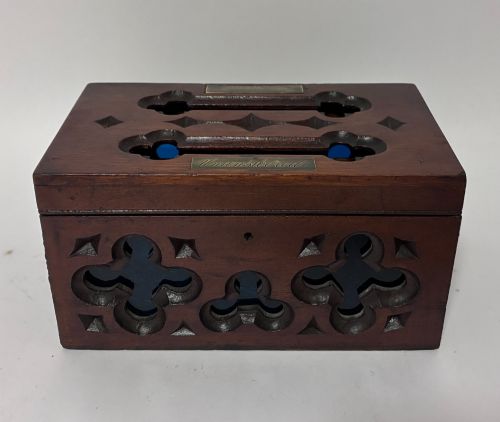
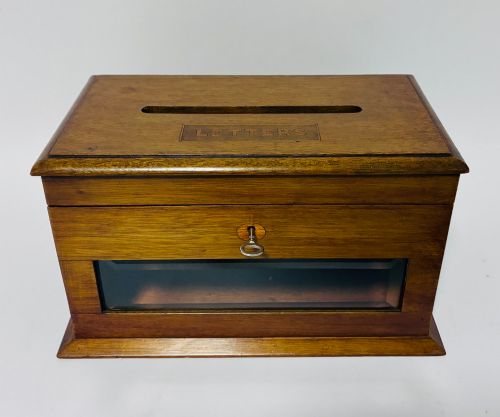
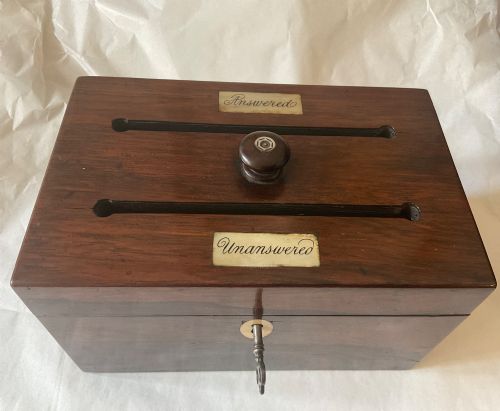
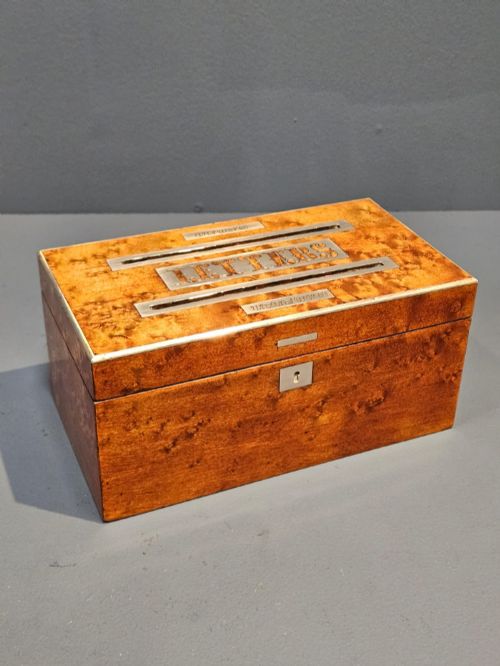
Forms vary from compact oak and brass boxes to larger mahogany receptacles with dedicated compartments for answered and unanswered post. Many pieces date from the nineteenth century, showing the functional needs of the period.
Materials and construction
Makers utilised dense timbers such as oak, mahogany, and satinwood to construct the bodies of these letter boxes. Grain selection mattered greatly, with burr satinwood and golden oak chosen for prominent domestic spaces.
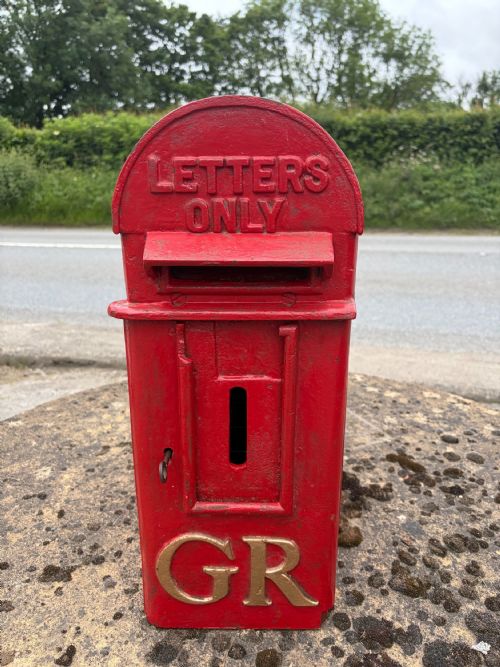
Brass mountings, hinges, and slot plates provide structural reinforcement and functional contrast to the wood. Cast iron appears on heavier items intended for institutional or wall-mounted use.
Interior divisions and glass panels allow for the sorting and viewing of mail. Joinery techniques range from standard box construction to detailed carving seen in Gothic Revival and Arts and Crafts examples.
Antique Posting Box Retail Price Guide 2026
Typical asking prices for posting box among the pieces listed under this phrase on Sellingantiques today, from the lower quarter to the upper quarter. They describe what is for sale here now, not the wider market.
Listings feature oak, mahogany, satinwood, brass, and cast iron across Victorian, Edwardian, and Arts and Crafts styles.
Judgements of quality
Quality rests upon the selection of timber and the precision of the brass hardware. A box fashioned from figured mahogany or golden oak with robust, well-cast mounts demonstrates superior manufacture.
The sophistication of the internal layout distinguishes standard utility boxes from superior country house pieces. Multiple divisions for correspondence, integrated lock mechanisms, and intact glass panels elevate a piece.
Design coherence separates ordinary items from those influenced by distinct movements like Arts and Crafts or Gothic Revival. Carved details and harmonious proportions reflect the skill invested by the maker.
The Antique Posting Box Glossary
- Correspondence box
- A desk accessory designed to hold stationery and incoming or outgoing mail. These often feature hinged lids and fitted interiors.
- Gothic Revival
- An architectural and decorative style popular in the nineteenth century, characterised by pointed arches, trefoils, and heavy carved ornament.
- Arts and Crafts
- A design movement valuing traditional craftsmanship, simple forms, and visible construction methods, frequently using plain oak.
- Satinwood
- A durable, lustrous timber with a golden yellow sheen, highly favoured for fine cabinet-making and decorative veneers.
- Mount
- A metal fitting, usually in brass, attached to wood to protect corners, secure hinges, or frame letter slots.
Antique Posting Box: Frequently Asked Questions
How were antique posting boxes used?
These boxes served to collect and organise daily letters within large country houses, hotels, or offices. Servants gathered mail from various rooms or residents placed outgoing letters inside for collection.
Some boxes featured dual compartments labelled for answered and unanswered correspondence. This system kept domestic communication orderly before regular postal deliveries made home sorting redundant.
Where should I place a letter box at home?
A desk or side table provides a natural surface for a wooden correspondence box, keeping it accessible for daily stationery use. Wall-mounted versions can be fixed securely in a hallway or study where post naturally accumulates.
Placing the box away from direct sunlight protects polished mahogany or oak surfaces from fading. Keeping the interior dry preserves any original fabric lining or paper labels.
What is the difference between a post box and a letter box?
In this context, the terms are often used interchangeably to describe receptacles for managing mail. A letter box typically refers to a desktop or wall-mounted container for household correspondence.
A post box can also denote larger cast iron items associated with institutional or collection use. Both serve the primary function of receiving and securing written messages.