


Oak Stationery Rack
An oak stationery rack keeps correspondence orderly on a desk, combining timber and brass to tame the clutter of daily post.

Oak Stationery Rack
An oak stationery rack organises letters, envelopes and pens on a desktop or wall, drawing on periods from the nineteenth century into the twentieth. You will frequently encounter Victorian and Edwardian examples alongside Arts and Crafts designs.
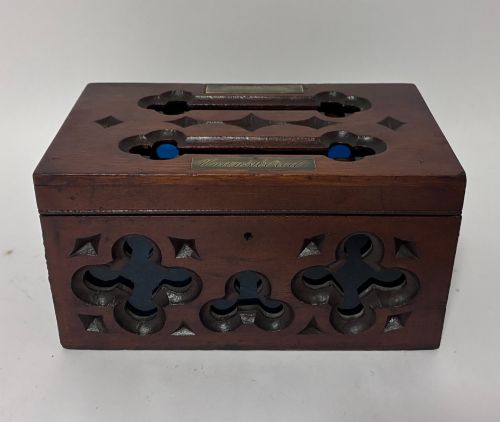
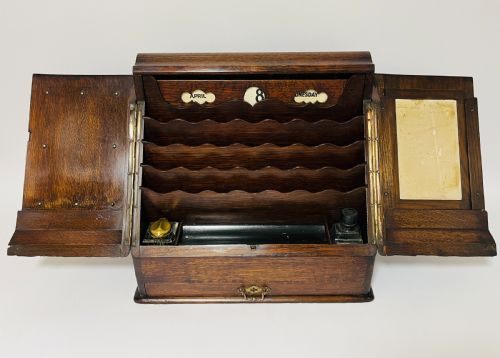
The forms range from open letter racks and desk tidies to fall front stationery cabinets, letter boxes and wall organisers. Many pieces incorporate compartments for correspondence, while some add glass ink bottles or secret drawers.
These desk accessories originate from English country houses and commercial offices alike, utilising solid oak timber often described as golden or polished oak. The physical evidence also includes Gothic Revival and Victorian Gothic stylistic touches.
Materials and construction
Makers built these pieces primarily from solid oak, frequently selecting golden oak figures for desktop stationery boxes and wall hanging racks. Woodworking joints included dovetailed construction for internal drawers and sturdy framing for cabinets.
Metalwork played a structural and decorative role, featuring brass hinges, corner mounts, locking mechanisms and carrying handles. Glass components appeared in the form of fitted ink bottles, while fabric and leather lined internal surfaces.
Materials recorded across the archive include solid oak, brass fittings, glass ink bottles, and leather or fabric linings.
Judging quality in oak stationery
Quality rests on the selection of the timber grain, the weight of the brass hardware, and the crispness of any carving or Gothic detailing. Substantial solid oak construction distinguishes finer country house pieces from lighter utilitarian versions.
William Tonks and Sons
The Oak Stationery Rack Glossary
- Fall front
- A hinged panel that drops forward to reveal interior letter compartments and writing surfaces. This mechanism allows quick access to stored correspondence.
- Standish
- A traditional desk stand or inkstand holding ink bottles, pens, and sometimes stationery compartments. These desk accessories sit centrally on a writing table.
- Gothic Revival
- An architectural and decorative style drawing on medieval forms, featuring pointed arches and heavy mouldings. Pieces in this style often display dramatic proportions.
- Arts and Crafts
- A design movement prioritising traditional craftsmanship and simple, honest construction over mass production. Objects from this tradition highlight the natural grain of the wood.
Oak Stationery Rack: Frequently Asked Questions
What is an oak stationery rack used for?
These pieces served to sort incoming and outgoing post, letters, and writing materials on a desk or table. They kept correspondence upright and accessible in the home or office.
Today they function similarly for modern mail, notebooks, and small documents, adding period character to a working surface.
How do I distinguish Victorian from Edwardian pieces?
Victorian examples often feature heavier proportions, darker finishes, and sometimes ornate Gothic Revival or carved detailing. They date from the nineteenth century up to nineteen hundred.
Edwardian pieces tend to display lighter golden oak tones and simpler Arts and Crafts influences reflecting changing interior tastes after nineteen hundred.
Can these racks be mounted on walls?
Certain variations are specifically built as wall organisers or hanging letter racks, featuring integrated hanging loops or brackets on the backboards. These saved valuable desk space in busy studies.
Desktop models lack these fixtures and rely on a flat base to stand securely among other desk accessories.
What metals are typically found on these boxes?
Brass is the predominant metal used for hinges, handles, locks, escutcheons, and decorative mounts on oak stationery cabinets. It provided a bright contrast against the dark or golden oak timber.
Some pieces also incorporated other base metals for internal mechanisms or structural reinforcement.