



Antique Porcelain Warrior
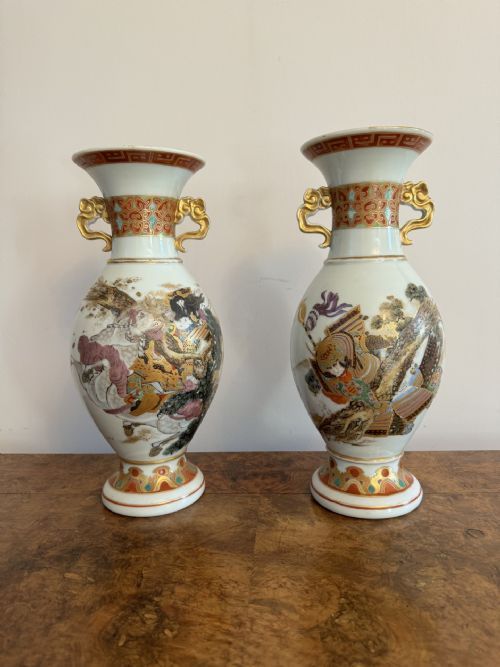
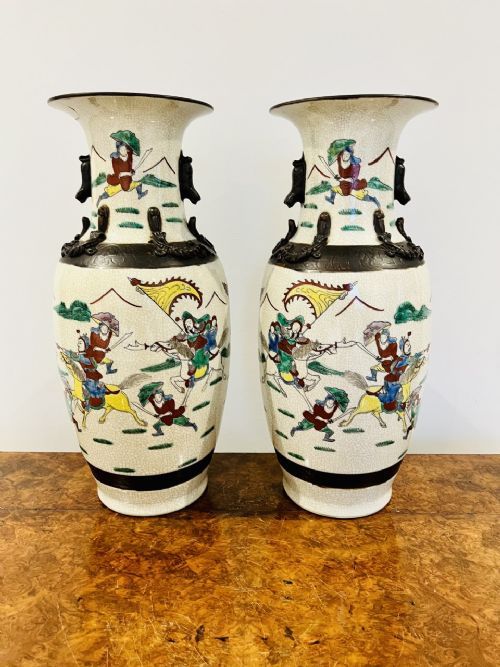
These antique porcelain warrior pieces bring hand-painted narrative scenes and sculpted form into a room.
Antique Porcelain Warrior
An antique porcelain warrior search brings up figural sculptures, table lamps, and large decorative vases adorned with historical or mythological figures. The pieces range from nineteenth-century Chinese export wares to Meiji period Japanese Satsuma and Kutani productions, alongside European porcelain and Parian figures.
Buyers most frequently encounter tall baluster and beaker vases decorated with samurai scenes, alongside individual figurines depicting classical or mythological characters like Mars and Clorinda. These works combine utilitarian vessel forms with narrative painting or sculptural presence, spanning periods from Regency to the late nineteenth century.
The aesthetic vocabulary encompasses blue and white Kangxi style motifs, cracked glaze surfaces, and elaborate famille verte enamels. Makers utilised bamboo-handle forms and garlic head shapes to frame the painted warrior and samurai narratives across both Chinese and Japanese workshops.
How they were made
Potters shaped these vessels and figures from porcelain and earthenware, often applying cobalt underglaze, enamel colours, and gold leaf highlights. Skilled painters executed detailed warrior and samurai scenes by hand directly onto the ceramic body.
Surface effects such as crackelware and cracked glazes were deliberately achieved during firing to give texture and depth. Artisans also integrated gilding and wood components, particularly in larger floor vases and table lamps adapted from earlier vessels.
Samurai warriors stare out from porcelain surfaces across the centuries, occasionally balanced atop converted twentieth-century table lamp bases.
What varies in quality
The fineness of the hand-painted brushwork distinguishes superior examples from standard production, especially in the rendering of facial expressions and armour detail on samurai and warrior figures. Precision in the application of enamel colours and gold leaf creates greater visual depth on high-grade Satsuma and Chinese export vases.
The purity of the porcelain paste and the control achieved over specialised finishes like crackelware and cobalt underglaze determine the overall refinement of the piece. Larger pairs and complex modelled forms demonstrate greater technical ambition by the workshop.
Kinkozan
The Antique Porcelain Warrior Glossary
- Satsuma
- A type of Japanese pottery with a pale, ivory-coloured cracked glaze that typically serves as a canvas for elaborate enamel and gilt decoration depicting figures and samurai scenes.
- Famille verte
- A French term describing a Chinese porcelain palette dominated by green enamels, used extensively during the Qing dynasty to render detailed figurative compositions.
- Parian
- A fine-grained white biscuit porcelain resembling marble, developed in the nineteenth century and widely used for classical figures and literary sculptures.
- Cobalt underglaze
- A blue pigment applied to the raw ceramic body before glazing and firing, characteristic of traditional Chinese beaker vases and blue and white wares.
- Kutani
- Japanese coloured porcelain and pottery produced in Ishikawa Prefecture, known for bold enamel painting and narrative scenes.
Antique Porcelain Warrior: Frequently Asked Questions
How do I display a large warrior vase?
Large vases work best as focal points in a room, placed on sturdy stands or pedestals where the painted samurai and warrior scenes can be clearly viewed.
Due to their height and weight, they require stable placement away from high-traffic areas.
How can I tell Satsuma from Kutani?
Satsuma wares are distinguished by their characteristic ivory-coloured cracked glaze and dense enamel painting finished with gold leaf. Kutani pieces typically feature bolder, more saturated enamel palettes on white porcelain or pottery bodies.
Both styles frequently depict samurai and historical figures from the Meiji period.
What is Parian ware?
Parian is a fine unglazed biscuit porcelain introduced in the nineteenth century to imitate carved white marble. It was commonly used for classical figures, busts, and literary characters rather than utilitarian vessels.