
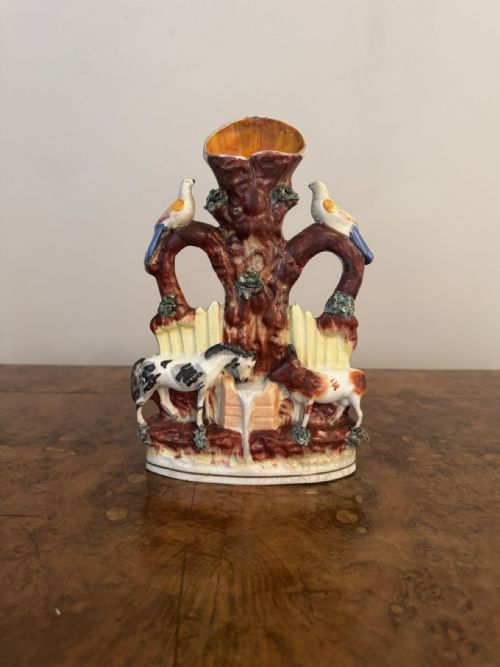


Painted Ceramic Mantle Ornament
These painted ceramic mantle ornaments bring colour and character to a room, offering the charm of Victorian and Georgian domestic display.
Painted Ceramic Mantle Ornament
A painted ceramic mantle ornament covers a diverse range of figures, spill vases, busts, and sculptural groups designed for display on a fireplace shelf or sideboard. When searching for a painted ceramic mantle ornament, buyers encounter pieces spanning from the late eighteenth century through to the early twentieth century.
The selection here includes Staffordshire figures, French bisque porcelain pairs, and Derby porcelain figures of gardeners and mythological subjects. These decorative objects range from utilitarian spill vases to finely modelled figurines and busts.
Victorian Staffordshire figures and spaniels appear frequently alongside Edwardian spill vases and French nineteenth-century porcelain groups. Each piece reflects the interior tastes of its period, from Rococo Revival flourishes to Art Nouveau curves.
How They Were Made
Potters shaped these ornaments using earthenware, bisque porcelain, and glazed ceramic, often combining different bodies within a single piece. Bisque porcelain offers a matte, unglazed finish that highlights fine modelling, while earthenware and standard porcelain take glossy glazes and hand-painted enamel colours.
Makers applied hand-painted enamels over the ceramic body, sometimes adding gilt or gold leaf highlights to accentuate robes, bases, and decorative borders. Figures were cast in moulds, then hand-finished and painted before firing in kilns to fix the colours.
What Varies in Quality
The distinction between ordinary and superior pieces lies in the crispness of the modelling and the skill of the hand-painting. Finer ornaments display subtle facial expressions, delicate brushwork on the enamels, and carefully applied gilding rather than heavy, rushed decoration.
The reputation of the maker or factory also shapes the standing of a piece, with established works producing sharper details and more balanced compositions. Age and originality play a part, as genuine eighteenth-century or nineteenth-century items retain a distinct historical integrity compared to later interpretations.
Vion et Baury·Ernst Whaliss·Royal Worcester
The Painted Ceramic Mantle Ornament Glossary
- Bisque Porcelain
- Unglazed white porcelain fired once to create a matte, biscuit-like texture resembling marble. It is particularly valued for capturing intricate facial details and drapery on figures.
- Spill Vase
- A hollow cylindrical vase designed to hold taper spills used for lighting candles and fires. They often sit beside figural groups on nineteenth-century mantles.
- Staffordshire Flatback
- A type of earthenware figure glazed and painted on the front while the back remains flat and plain, made to be viewed from the front on a shelf. These figures often depict royalty, animals, or literary scenes.
- Enamel
- Opaque vitreous composition fused to the ceramic surface through firing to provide bright, durable colours. Hand-painted enamel details distinguish finer ornamental work from mass-produced wares.
- Gilt
- A thin layer of gold or gold leaf applied to ceramic surfaces to highlight decorative elements. It adds a reflective quality that catches candlelight in a period interior.
Painted Ceramic Mantle Ornament: Frequently Asked Questions
What is a mantle ornament?
A mantle ornament is a decorative ceramic object, such as a figurine, bust, or spill vase, made to stand on a fireplace mantelpiece.
These pieces served to brighten Victorian and Georgian parlours, often arranged in pairs or matched sets to create symmetry.
How do I clean ceramic ornaments?
Clean these delicate pieces gently with a soft, dry brush to remove dust from crevices and painted surfaces.
Avoid using water or chemical cleaners, especially on bisque porcelain and hand-painted enamels, which can easily suffer damage or fading.
Are these figures hand-painted?
Many nineteenth-century and earlier ceramic ornaments feature hand-painted enamel details applied over the glaze or bisque body.
Skilled decorators hand-brushed the faces, clothing, and patterns, meaning no two figures share identical brushstrokes.
How do I date a ceramic figure?
Dating relies on stylistic clues, ceramic bodies, and the type of glaze or painting techniques used across different eras.
Victorian earthenware differs noticeably from eighteenth-century Derby porcelain or late nineteenth-century Art Nouveau bisque in weight, finish, and subject matter.