


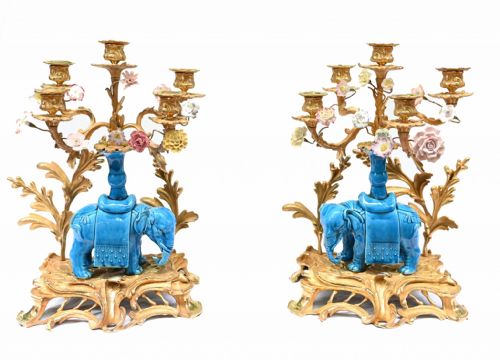


Antique Porcelain Table Centerpieces
These antique porcelain table centerpieces anchor a dining table or sideboard with sculptural presence and hand-painted detail, drawing the eye through elaborate form.
Antique Porcelain Table Centerpieces
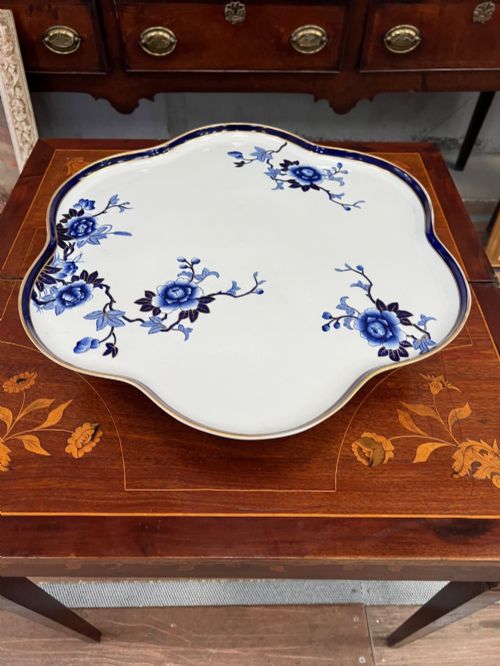
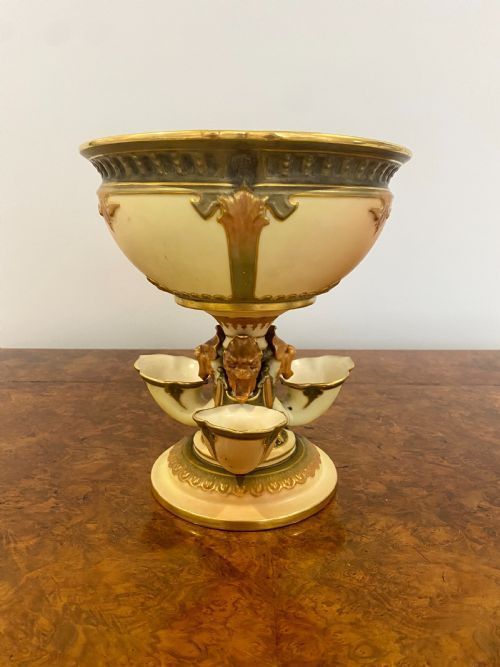
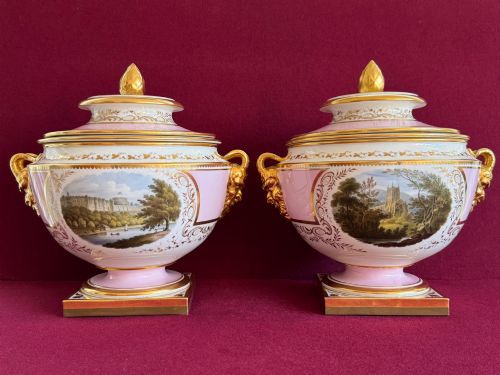
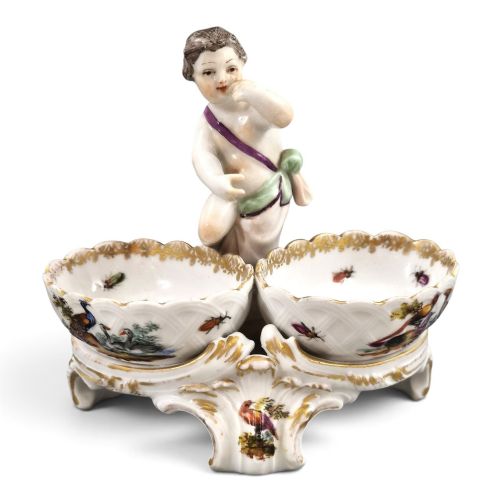
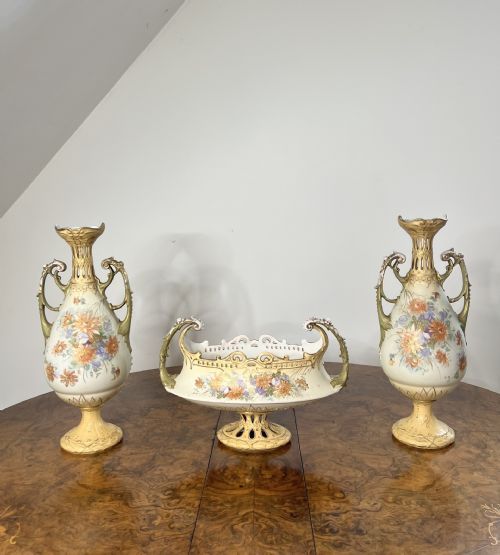
When you search for antique porcelain table centerpieces, you encounter grand table ornaments, decorative bowls, and figural stands designed to command a dining room or salon. These items take many forms across the inventory, ranging from large German centrepieces with cherubs to open shell sweetmeat stands and candelabra.
The pieces span the eighteenth, nineteenth, and early twentieth centuries, drawing on Georgian, Victorian, Edwardian, and Art Nouveau periods. Continental manufactories from Germany, Austria, and France supply a large portion of the figures and bowls, alongside notable English porcelain makers.
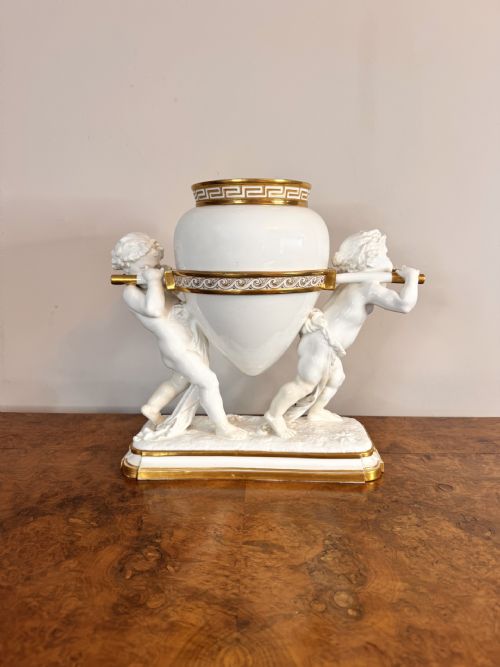
Forms extend beyond simple vessels to include figural flower carts, putti groups, and jardiniere planters. Buyers select them to bring historic ceramic artistry and complex sculptural modelling directly onto the table.
How they were made
The creation of these works relies on porcelain bodies shaped through moulding or hand-modelling, frequently finished with hand-painted polychrome enamel details. Potters combined ceramic pastes with intricate applied elements such as flowers, cherubs, and animal figures before firing.
Gilding, gold leaf, and enamel pigments add colour and metallic contrast to the fired porcelain surface. Certain items integrate external mounts, combining the ceramic base with ormolu or silver plate fittings.
Makers utilised specialised glazing techniques to seal the ceramic body and achieve smooth or high-gloss finishes across the bowls and figural groups.
Antique Porcelain Table Centerpieces Retail Price Guide 2026
Typical asking prices for porcelain table centerpieces among the pieces listed under this phrase on Sellingantiques today, from the lower quarter to the upper quarter. They describe what is for sale here now, not the wider market.
Listings feature works spanning the eighteenth century through to the 1940s, encompassing Georgian, Victorian, Edwardian, and Art Nouveau styles.
What varies in quality
The preservation of delicate applied elements, such as petals, fingers, and intricate lace work, distinguishes superior examples. Weight, the complexity of the architectural or organic form, and the richness of the gilding also define the upper tier of the range.
KPM Berlin·Royal Vienna·Mason's·Worcester·Doulton Burslem·Schierholz·Carl Thieme·Meissen·Sevres·Royal Crown Derby·Royal Doulton·Coalport·Royal Worcester·Royal Dux·Samson
The Antique Porcelain Table Centerpieces Glossary
- Centrepiece
- A large decorative vessel or figural group designed to sit in the middle of a dining table. These objects often incorporate bowls, baskets, or multiple candle arms.
- Sweetmeat stand
- A small tiered or compartmentalised dish used for serving small sweet confections or nuts. They frequently appear in shell or figural shapes.
- Candelabra
- A branched candlestick holding multiple candles. In this category, they often incorporate porcelain figures and gilt bronze mounts.
- Gilding
- The application of gold leaf or powdered gold to the ceramic surface. This technique highlights rims, figures, and structural details.
- Polychrome
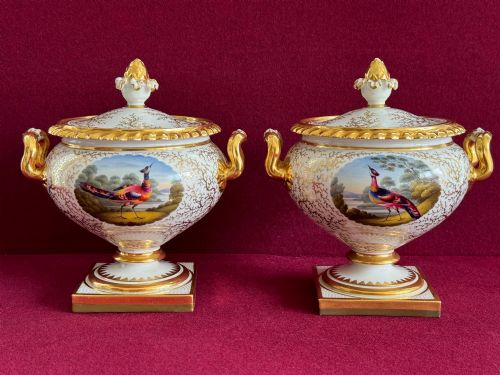
- Decoration employing multiple distinct colours painted onto the porcelain body. It defines the hand-painted birds, flowers, and garments seen on figures and bowls.
Antique Porcelain Table Centerpieces: Frequently Asked Questions
What were antique porcelain table centerpieces used for?
These pieces served as ornamental focal points on dining tables and sideboards during formal meals and receptions. Elaborate versions held fruit, sweetmeats, or flowers to impress guests.
Smaller stands functioned as individual salt cellars or small dishes, while larger multi-armed examples combined floral decoration with ambient candle lighting.
How do I style an antique porcelain centerpiece at home?
Place the piece centrally on a large dining table, sideboard, or console where its sculptural form and hand-painted details remain visible. Keep surrounding objects minimal to let the intricate figures and gilding stand out.
Avoid placing them in direct, harsh sunlight or heavy traffic areas to protect delicate applied elements like porcelain flowers and fingers from accidental knocks.
How do I identify the period of a porcelain centerpiece?
Examine the style of the modelling and decorative motifs, such as the curved asymmetry of Rococo Revival or the flowing organic lines of Art Nouveau. Period characteristics often align with specific aesthetic movements spanning the eighteenth to early twentieth centuries.
Look closely at the ceramic body, glaze texture, and any factory marks stamped or painted on the base to narrow down the era of production.
Are German and English centerpieces different?
German manufactories frequently produced highly sculptural figural groups featuring putti, cherubs, and animals intertwined with floral elements and elaborate Rococo bases. These pieces emphasise intricate hand-modelled porcelain details.
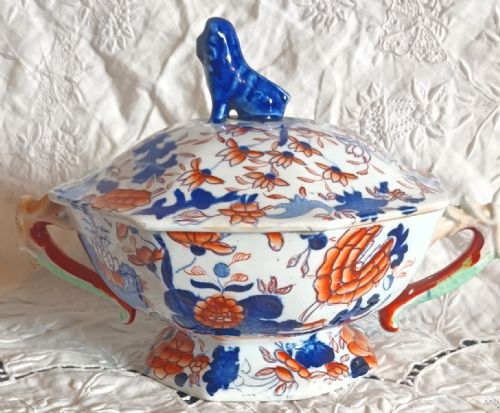
English makers often focused on robust ironstone, transfer-printed patterns, or refined floral bowl designs tailored to domestic dining traditions of the Georgian and Victorian periods.