


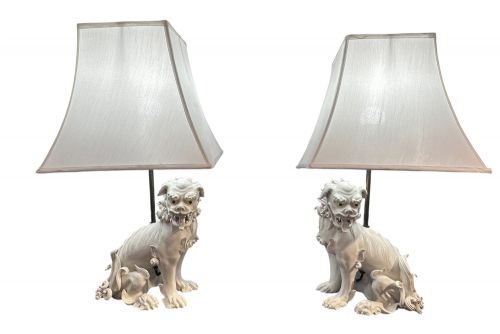


Antique Porcelain Dog Pair
An antique porcelain dog pair brings the steadfast charm of nineteenth-century hearths directly into a modern room.
Antique Porcelain Dog Pair
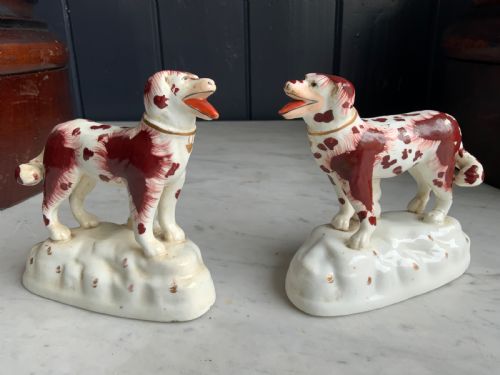
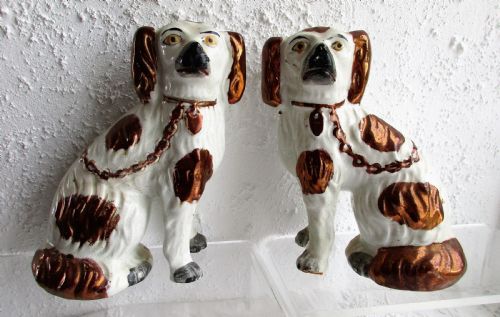
An antique porcelain dog pair most commonly takes the form of Staffordshire pottery spaniels, greyhounds, poodles, or pugs produced across the Victorian era. These mantel ornaments were modelled to sit in symmetrical pairs, facing each other from opposite ends of a fireplace or shelf. Buyers searching for an antique porcelain dog pair will frequently encounter spaniels decorated with gilt accents, copper lustre, or hand-painted patches.
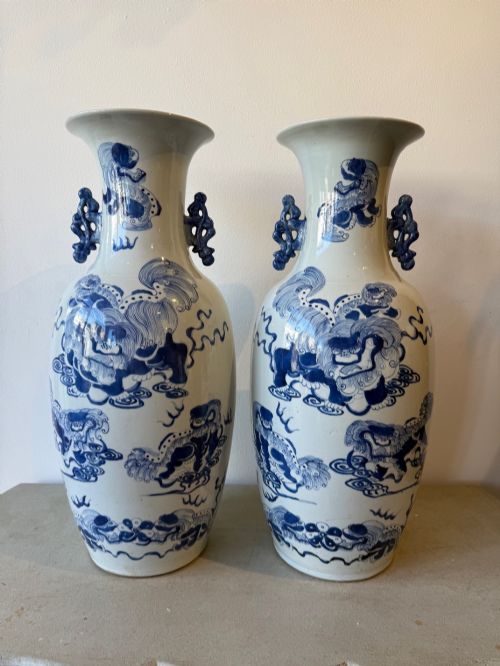
Beyond English earthenware and pottery, the listings also encompass continental porcelain figures and Asian ceramic pairs, including blanc de chine Buddhist lions and Shi lions. Figures range from miniature poodles to grand spaniels, sometimes incorporating practical functions such as inkwells, quill holders, or table lamps. Nineteenth-century examples dominate the selection, anchored by Victorian manufacturing traditions.
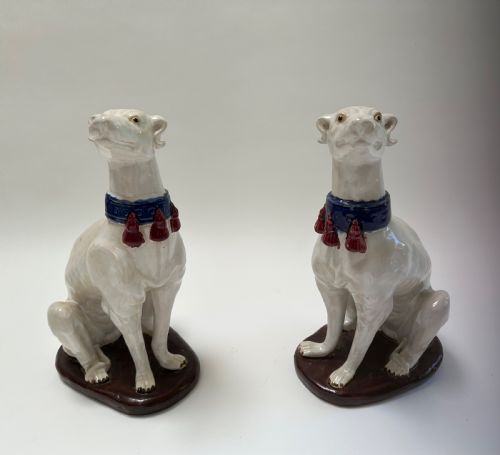
The enduring appeal of these pairs lies in their domestic character, capturing the popular breeds and ornamental tastes of the nineteenth century. Whether cast as seated spaniels with spaniel pups or alert greyhounds, each pair reflects the decorative conventions of its specific period and kiln.
Materials and construction
The pieces recorded in the evidence rely primarily on earthenware, ceramic, and porcelain bodies shaped through moulding. Potters applied glazes to seal the clay before adding hand-painted details in enamel, gilt, or gold leaf. Copper lustre finishes also appear, providing a metallic sheen across the surface of the pottery.
Many Victorian figures incorporate surface texture through encrusting, simulating fur or foliage directly onto the ceramic body. Kiln techniques allowed for both white glazed bodies and rich cobalt blue and polychrome enamel decoration, depending on whether the origin was English Staffordshire or international export ware.
Recorded styles range from Victorian Staffordshire and Chinoiserie to Japanese Imari and Qing Dynasty aesthetics.
Assessing quality and character
The retention of original gilding and vibrant enamel colours distinguishes better-preserved pairs from those that have suffered extensive rubbing or surface wear. The nuance in the painting of the eyes, muzzle, and collar often separates standard commercial output from more expressive modelling.
Thomas Parr·Royal Capodimonte Factory·Royal Doulton·James Dudson·Beswick
The Antique Porcelain Dog Pair Glossary
- Comforter spaniels
- Staffordshire pottery spaniels traditionally placed on either side of a fireplace mantelpiece in Victorian homes. These dogs often feature gold lockets and chains painted on the chest.
- Blanc de chine
- A type of white porcelain originating from China, lacking coloured glaze to highlight the purity of the ceramic body. It is frequently seen on figures of Buddhist lions and dogs of Fo.
- Copper lustre
- A metallic glaze technique that produces a bright, copper-like reflective surface over earthenware. This finish was widely utilised in nineteenth-century Staffordshire potteries.
- Imari style
- A decorative scheme characterised by rich underglaze blue and iron-red highlights, often enhanced with gold. It originates from Japanese export traditions and inspired various European reproductions.
- Encrusting
- A sculptural technique where small particles of clay or slip are applied to the surface of a ceramic piece to create textured details like curls of fur or floral elements.
Antique Porcelain Dog Pair: Frequently Asked Questions
Where were these dog pairs displayed?
Victorian households typically placed these ceramic pairs on the mantelpiece above a fireplace, arranged symmetrically to frame the hearth.
They also appeared on sideboards and chests of drawers in sitting rooms, serving as cheerful domestic ornaments.
How do I identify Staffordshire spaniels?
Staffordshire spaniels are usually modelled as seated dogs facing inwards toward one another, often featuring painted chain collars and lockets.
They generally employ earthenware or pottery bodies with painted patches and glazed white surfaces.
What is a dog of fo?
Dogs of Fo, or Chinese guardian lions, are traditional symbolic sculptures often produced in pairs to guard sacred spaces.
In decorative ceramics, they appear as glazed pottery or white porcelain figures, sometimes adapted into nineteenth-century lamps.
Are these figures functional?
While most serve strictly as decorative ornaments, certain nineteenth-century examples incorporate practical elements into the design.
Listings include greyhound figures configured as quill holders and inkwells for writing desks.