




Antique Porcelain Display Vases
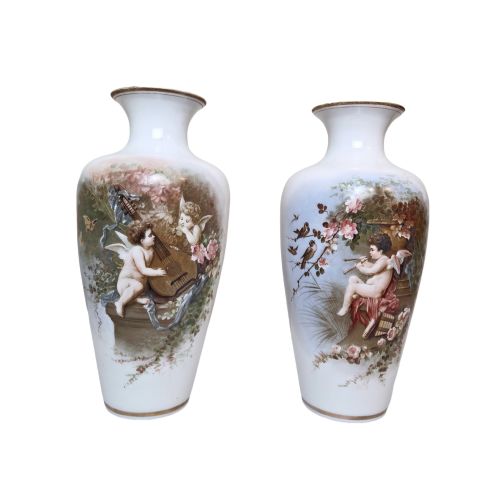
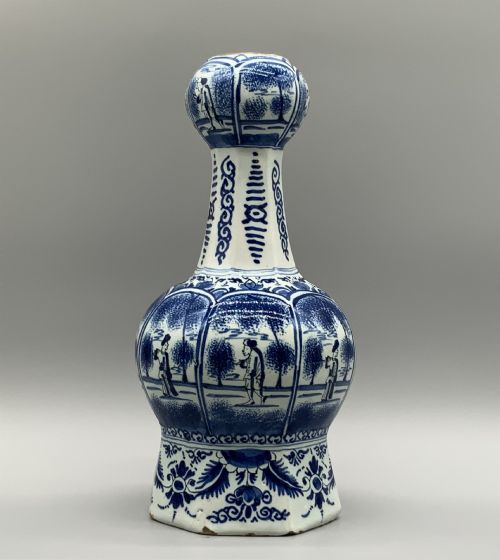
These antique porcelain display vases bring focal weight and hand-painted detail to a room, spanning European workshops and Asian kilns.
Antique Porcelain Display Vases
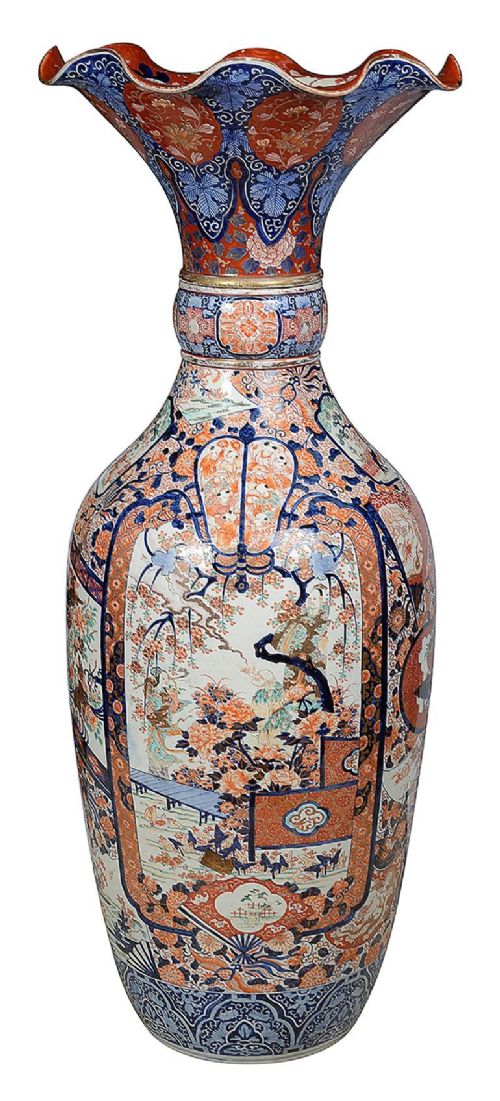
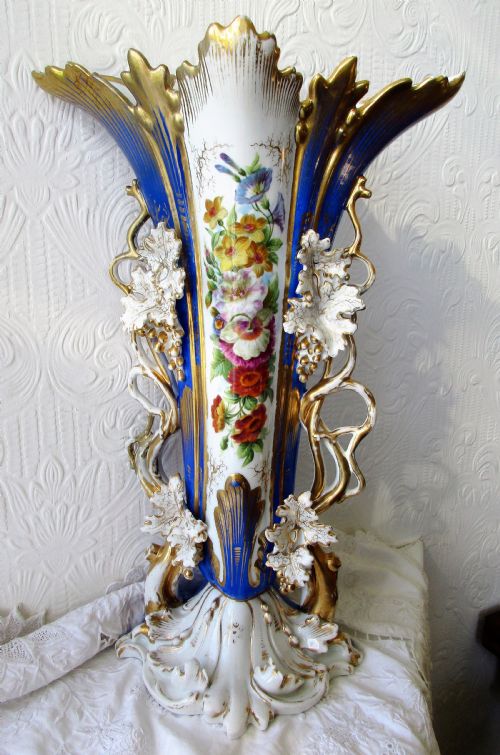
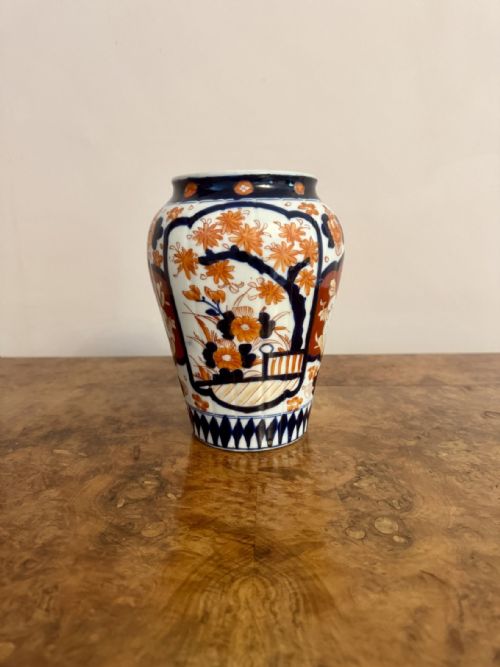
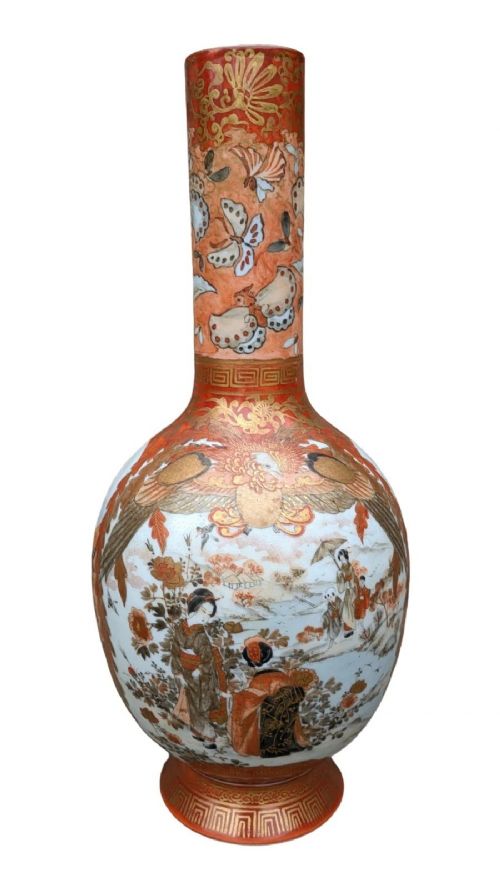
When you search for antique porcelain display vases, you encounter substantial decorative vessels designed to sit on stands, floors, and centre tables rather than hold fresh water. The pieces on this page are dominated by Japanese Imari and Satsuma wares from the Meiji period, alongside Chinese Qing dynasty ceramics and European factory productions from the Victorian and Edwardian eras.
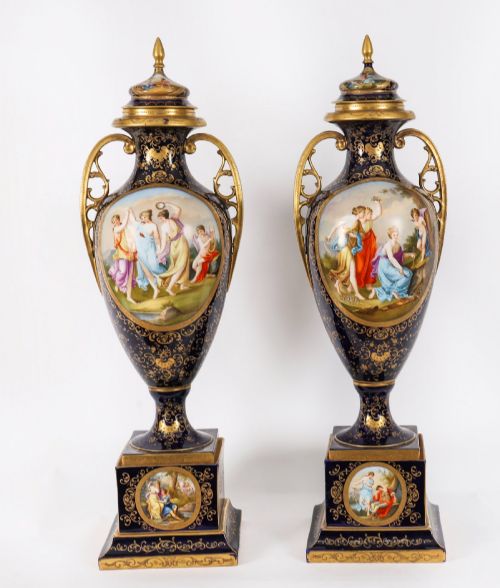
Forms range from monumental floor-standing cylinders and lidded jars to miniature cabinet pieces and moon flasks. European makers such as Royal Vienna, Minton, and Coalport sit alongside Japanese Kutani workshops and Chinese export porcelain, offering both crisp Neoclassical painting and dense oriental ornamentation.
How they were made
Makers shaped hard-paste and soft-paste ceramic bodies before applying underglaze blue, polychrome enamels, and heavy gold leaf gilding. Many Japanese and European examples incorporate raised moriage details or intricate hand-painted figural processions that require multiple kiln firings.
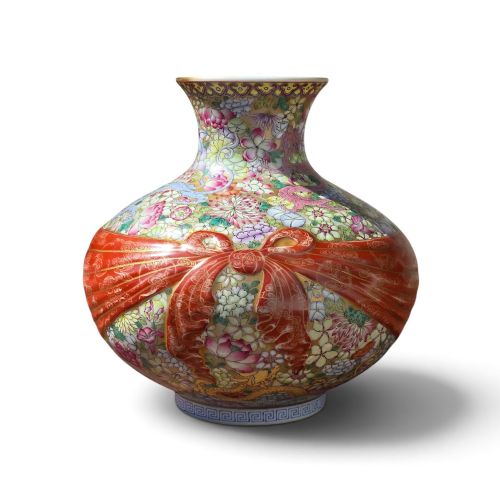
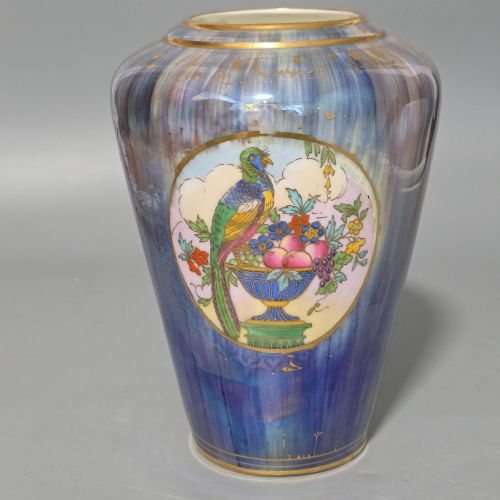
Surface treatments also include lustre glazes, lacquer overlays on black paint, and intricate iron-red ribbon work. Master decorators signed these surfaces directly, utilising specialised workshops in Kaga and Kyoto or established European pottery kilns.
Antique Porcelain Display Vases Retail Price Guide 2026
Typical asking prices for porcelain display vases among the pieces listed under this phrase on Sellingantiques today, from the lower quarter to the upper quarter. They describe what is for sale here now, not the wider market.
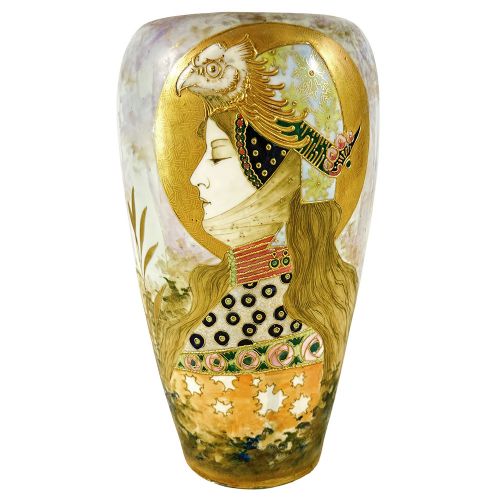
Parrots and dragons share shelf space with samurai and court figures across these historic display vessels.
What varies in quality
Quality rests in the crispness of the hand-painting, the precision of the gilding, and the presence of artist or workshop signatures. Pieces from named makers and exhibition sources show superior control in enamelling and porcelain throwing.
Scale and proportion separate standard decorative items from monumental pairs and floor-standing vases. The density of the palette and the complexity of motifs such as dragons, court figures, and millefleurs determine the standing of each vessel.
Royal Vienna·Reissner Stellmacher and Kessel·Minton·Coalport·Kinkozan·Kinrin Workshop
The Antique Porcelain Display Vases Glossary
- Imari
- Japanese export porcelain decorated in underglaze blue, iron red, and gilt. This palette became prominent during the Edo period and strongly influenced European ceramic design.
- Satsuma
- Japanese earthenware featuring a ivory craquelure glaze decorated with polychrome enamels and gold. These pieces frequently depict court figures, landscapes, and floral panels.
- Moriage
- A Japanese ceramic technique using raised slip decoration to create a textured, three-dimensional surface. Artisans often highlight these raised elements with gold leaf.
- Qing
- The last imperial dynasty of China, spanning from sixteen forty-four to nineteen twelve. Ceramics from this period include Famille Rose enamels and complex dragon motifs.
- Pate-sur-pate
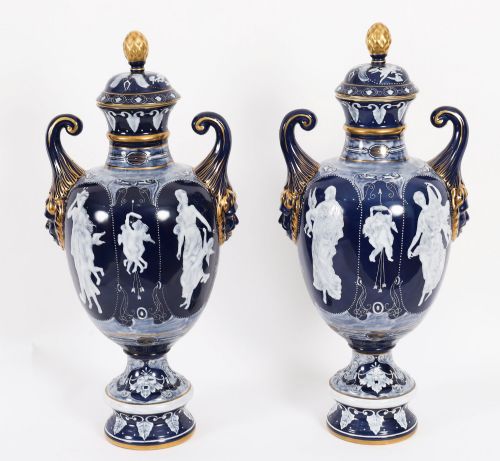
- A ceramic decoration method where successive layers of liquid white porcelain slip are built up on a coloured clay body. This creates a low relief cameo effect.
Antique Porcelain Display Vases: Frequently Asked Questions
Were these vases made for water?
Most large display vases and decorative urns served purely ornamental roles within drawing rooms and hallways. Their size and painted surfaces made them centrepieces rather than functional flower containers.
Using them for water today can damage the interior glaze and historical bodies.
How do I date a Japanese Satsuma vase?
Examine the crackle pattern in the glaze and look for artist signatures or workshop marks on the base. Pieces from the Meiji period typically display fine, even crazing and dense hand-painted gilding.
Exhibition pieces often carry specific mon emblems or maker seals that narrow down the exact decade of manufacture.
What is the difference between Imari and Kutani?
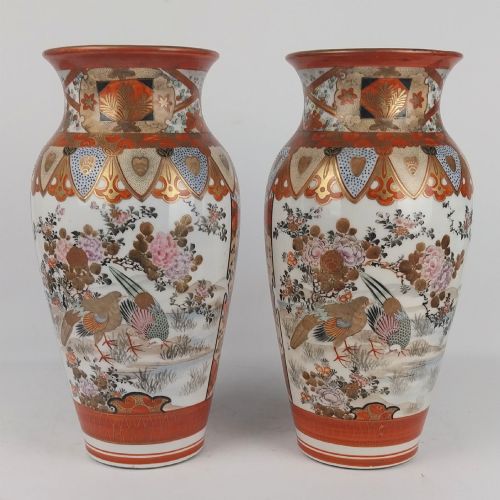
Imari porcelain relies on a distinct palette of deep cobalt blue, iron red, and abundant gold leaf on a hard white body. Kutani wares often utilise a bolder green, purple, and red colour scheme with extensive figural or nature scenes.
Both traditions originated in Japan but developed separate regional aesthetics and kiln techniques.