



Antique Porcelain Covered Dish
An antique porcelain covered dish brings the weight of the dining table from past centuries straight into modern rooms.
Antique Porcelain Covered Dish
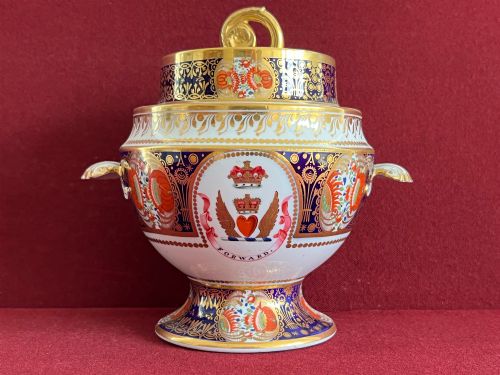
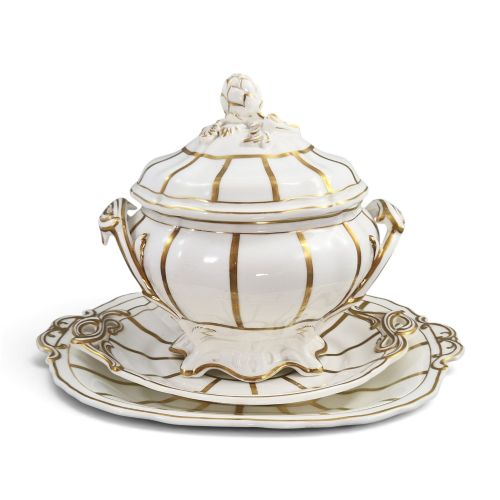
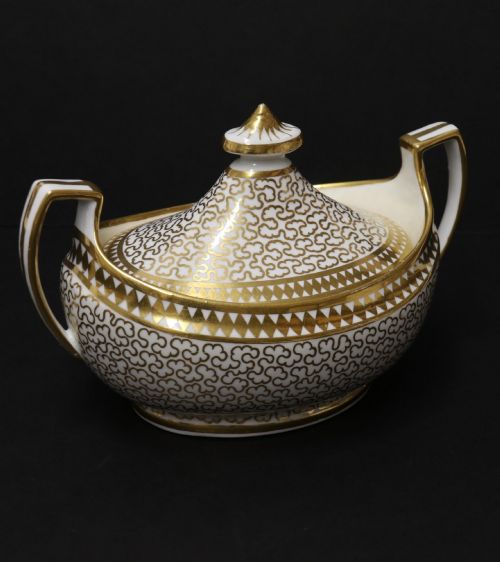
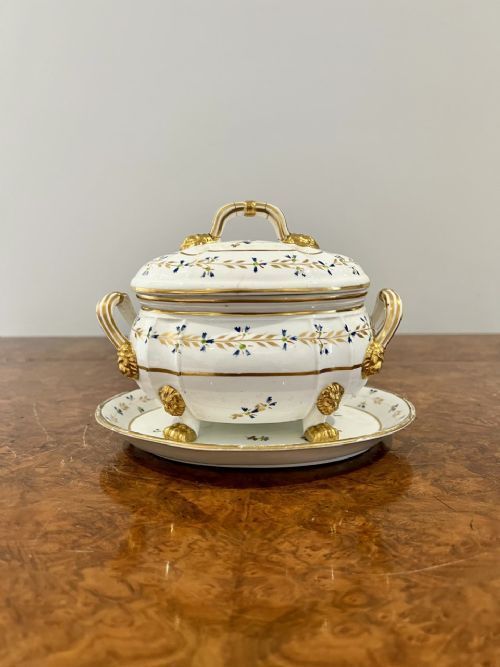
When searching for an antique porcelain covered dish, collectors encounter forms ranging from large soup tureens and sauce boats to delicate butter dishes and sugar bowls. The examples recorded here cross the eighteenth and nineteenth centuries, taking in Georgian, Regency, and Victorian periods alongside continental and Chinese export traditions.
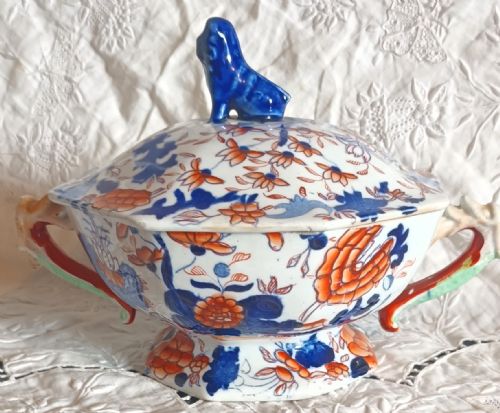
Buyers are most likely to meet English ironstone and bone china tureens alongside French, German, and Chinese porcelain vessels designed for serving food at table. These pieces combine utility with decorative presence, often retaining matching stands or ladles.
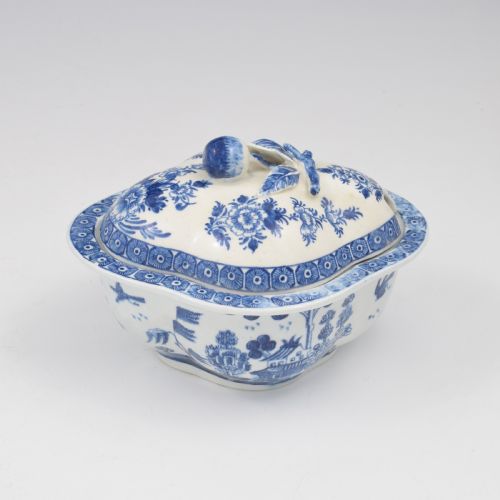
The selection spans straightforward utilitarian tableware and highly ornate cabinet pieces adorned with hand-painted botanicals, Imari palettes, or blue and white transfer printing. Each item reveals the specific dining customs of its era, from formal soup service to small individual butter dishes.
Materials and Techniques
Makers shaped these covered dishes from various ceramic bodies including bone china, pearlware, ironstone, and hard-paste porcelain, applying lead and tin glazes to seal the porous clay underneath. Kiln firing fixed the form before artisans applied underglaze blue, enamel colours, and gold leaf highlights.
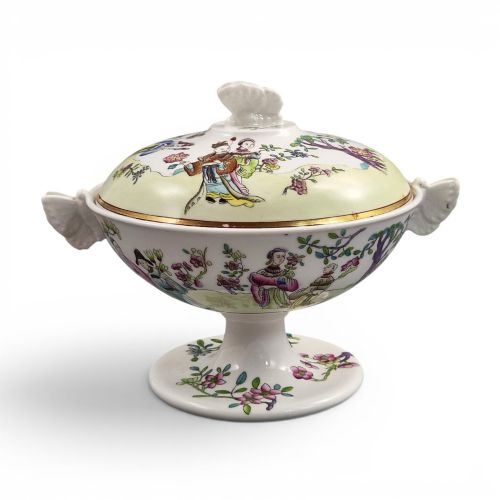
Decoration relied on hand-painting or transfer printing, sometimes combined with moulded details such as butterfly handles, ribbed bodies, or figural forms like birds and vegetables. Overglaze enamels and gilding required a secondary, lower-temperature firing to bond the metals and colours to the glazed surface.
One nineteenth-century Staffordshire maker turned a cabbage into a tureen, proving that Georgian and Victorian dining tables welcomed a touch of botanical humour.
Markers of Quality
Quality rests upon the crispness of the moulding and the skill evident in the hand-painted or transfer-printed decoration. Finer pieces display precise brushwork, well-defined relief work, and clean, even glazing without kiln scars or warping.
The presence of matching original covers and stands elevates a vessel, as does the survival of original gilding and enamel brightness. Makers known for superior paste composition and artistic output, such as Worcester or Derby factories, command attention for their refined execution.
Davenport Bone China·Derby Porcelain·Spode Felspar Porcelain·Chamberlains Worcester·Mason Ironstone·Coalport·Crown Derby·Mintons·Dresden Porcelain·Flight Barr And Barr·Kuznetsov·Copeland·Turner·Meissen
The Antique Porcelain Covered Dish Glossary
- Tureen
- A deep covered bowl used for serving soup, sauce, or gravy at the dining table. They frequently include fixed or separate stands to catch drips.
- Ironstone
- A heavy, durable type of earthenware patented in the nineteenth century to imitate Chinese porcelain. It resists chipping and took bright enamel colours readily.
- Sucrier
- A small covered vessel designed to hold sugar for tea or coffee service. They appear in porcelain and bone china across the Georgian and Regency periods.
- Imari
- A decorative style imitating Japanese export ware featuring iron red, cobalt blue, and gold. English factories adopted this palette extensively during the Regency and Victorian eras.
- Bone china
- A hybrid porcelain developed in England containing animal bone ash for strength and translucency. It allowed makers to throw thinner walled vessels with bright white surfaces.
Antique Porcelain Covered Dish: Frequently Asked Questions
What were covered dishes used for?
These vessels served soups, sauces, vegetables, and butter at formal dining tables, keeping the contents warm and protected between the kitchen and the guests.
Larger tureens sat centrally during the main course, while smaller bowls and butter dishes accompanied tea or dessert services.
Can I use these dishes for serving food today?
While structurally sound, antique porcelain and ironstone require careful hand washing rather than modern dishwashers to protect historic glazes and gold leaf.
Harmless crazing in the glaze can absorb strong liquids over time, so modern use is best restricted to dry items or decorative display.
How do I distinguish ironstone from porcelain?
Ironstone is heavier, thicker, and completely opaque even when held to a strong light, possessing a robust stoneware body.
Porcelain and bone china feel lighter, are often translucent at the thinnest rims, and yield a higher-pitched ring when gently tapped.