

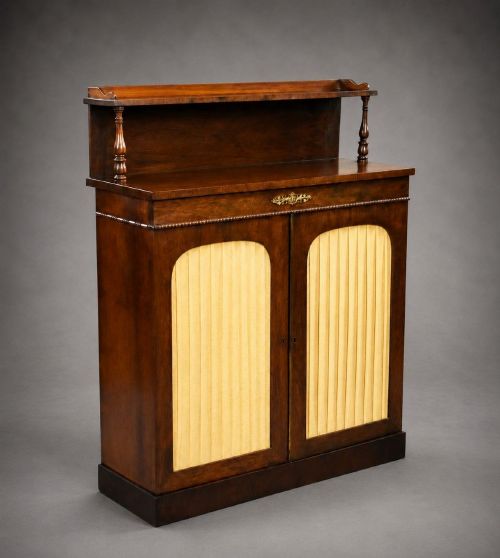
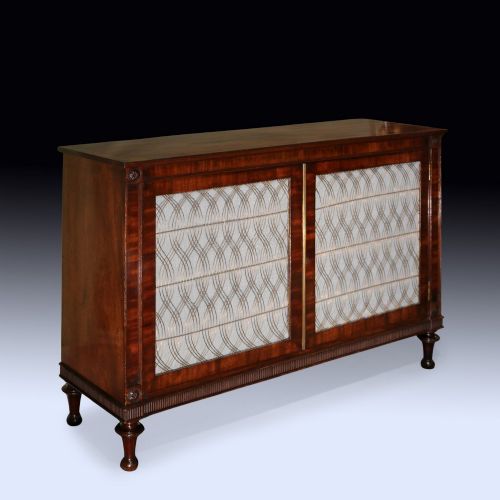


Antique Pleated Cabinet
An antique pleated cabinet brings together fine timbers and delicate textile panels to create a striking focal point in a period interior.
Antique Pleated Cabinet
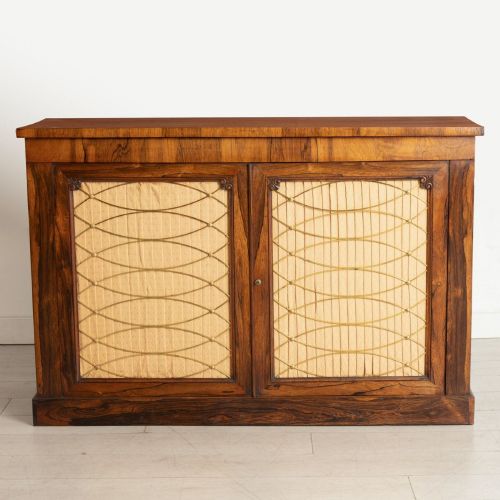
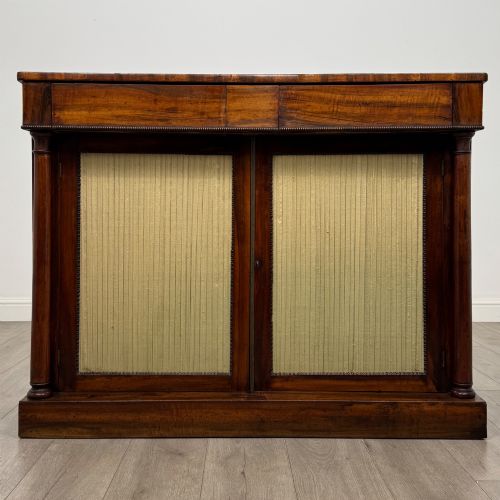
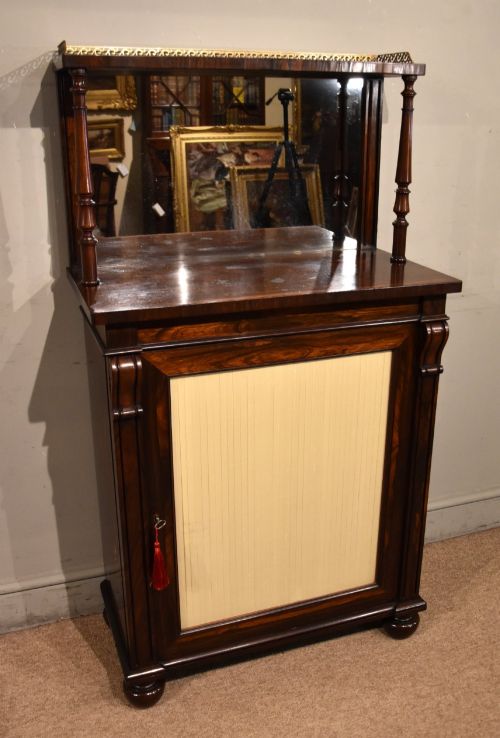
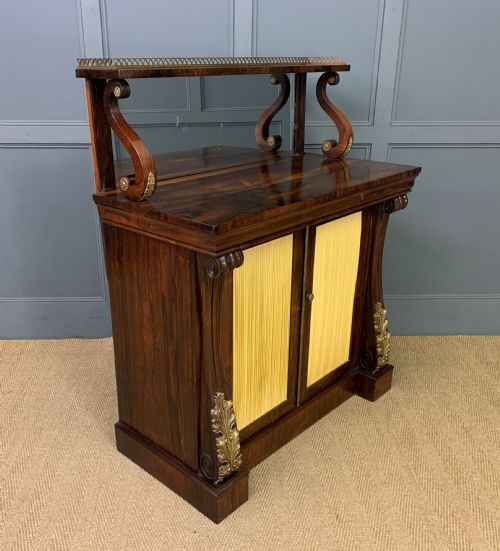
When you search for an antique pleated cabinet, you encounter sophisticated nineteenth-century storage forms defined by fabric-fronted door panels. These pieces largely emerge from the Regency, George IV, William IV and Victorian eras, taking shapes such as chiffoniers, side cabinets and low bookcases. The variant you meet most often on this page is the rosewood chiffonier or side cabinet featuring silk or fabric-backed fretwork or glazed doors.
Makers and cabinet-makers of the period utilised these configurations primarily for domestic display and storage in formal reception rooms. The integration of pleated fabric panels behind brass grilles or wooden framing softened the overall appearance of heavy timber furniture. Such items served as credenzas, sideboards or specialised sewing tables, combining enclosed shelving with display surfaces.
The regional origins and stylistic vocabulary span Grand Regency designs alongside provincial Victorian adaptations. Walnut, mahogany and rosewood bodies form the structural core, whilst the pleated elements introduce texture and colour variation through textiles. Buyers typically select these works to anchor a traditional room scheme with authentic nineteenth-century craftsmanship.
Materials and Construction Techniques
The primary timbers recorded in these pieces are rosewood, mahogany, walnut and goncalo alves, often selected for strong grain figures and deep natural warmth. Workshops frequently employed simulated rosewood or faux finishes alongside solid hardwoods, pairing the timber bodies with contrasting marble tops or polished wooden surfaces.
Metalwork played a structural and decorative role, with brass inlay, mounts and wire grilles framing the door apertures. Silk and other fine fabrics were gathered into pleated panels behind these grilles, requiring precise tension and stitching to maintain their form within the wooden framework.
Some nineteenth-century makers concealed delicate pen-work decoration within small work tables, offering hidden artistry for the diligent owner.
Distinctions in Quality and Execution
Quality separates through the selection of timber figures, where heavily figured rosewood or finely matched mahogany veneers distinguish superior examples from plain variants. The precision of brass inlay and the fineness of brass grilles indicate the level of workshop attention invested in the piece.
The execution of the pleated fabric panels and the integrity of internal mahogany linings further define the upper tier of production. Pieces bearing attribution to established workshops display a superior harmony of proportion, particularly in breakfront forms and neat-sized chiffoniers.
Gillows
The Antique Pleated Cabinet Glossary
- Chiffonier
- A low cabinet or sideboard featuring shelves and enclosed cupboards beneath, popular during the Regency and Victorian periods. These pieces frequently incorporate fabric-backed doors or brass grilles.
- Breakfront
- A cabinet design where the central section projects forward from the flanking outer sections. This architectural arrangement creates depth and visual rhythm across larger sideboards and bookcases.
- Goncalo alves
- A dense exotic hardwood known for its striking contrasting grain patterns, utilised in high-status Regency furniture. It provides a rich visual texture distinct from standard mahogany or rosewood.
- Palisander
- A term historically applied to various richly coloured rosewoods with dark grain markings. It appears frequently in descriptions of finely veneered nineteenth-century cabinets.
- Pen-work
- A delicate decorative technique utilising ink to draw intricate surface patterns directly onto wood. This labour-intensive ornamentation marks out unusual and highly individual small tables and cabinets.
Antique Pleated Cabinet: Frequently Asked Questions
What is an antique pleated cabinet used for?
These pieces function primarily as refined storage and display units within reception rooms and hallways. Historically, they held books, tableware or sewing materials while providing a decorative surface for ornaments.
The inclusion of enclosed cupboards and shelves allows for practical concealment of items alongside upper display potential. Today, buyers utilise them to introduce period character and warm timber tones into modern living spaces.
Are the pleated fabric panels original?
Fabric panels on nineteenth-century cabinets experience wear over long periods of domestic use and frequently require replacement. Surviving original textiles are exceptionally scarce and fragile.
Restorers usually replace the silk or fabric lining with historically appropriate materials that match the original colour and gathering style. This maintenance preserves the visual integrity of the door grilles without diminishing the authenticity of the timber structure.
What is the difference between a chiffonier and a credenza?
A chiffonier is generally a more compact piece featuring a single tier of cupboards below and often a shelf above. They emerged strongly during the Regency period as versatile storage units for living areas.
A credenza tends to be a larger, lower sideboard form without a superstructure, frequently featuring multiple doors across a breakfront configuration. Both styles share the characteristic use of fine veneers and glazed or fabric-fronted panels.