



Pleated Silk Cupboard
A pleated silk cupboard brings warmth and texture to a room, offering a traditional place to store books and silver behind soft, gathered fabric doors.
Pleated Silk Cupboard
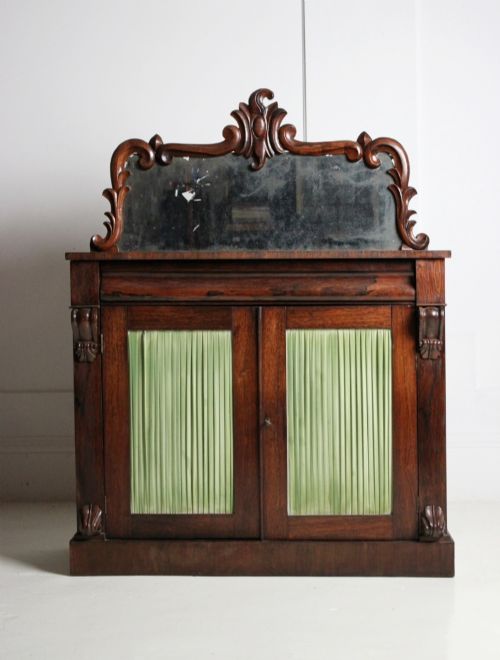
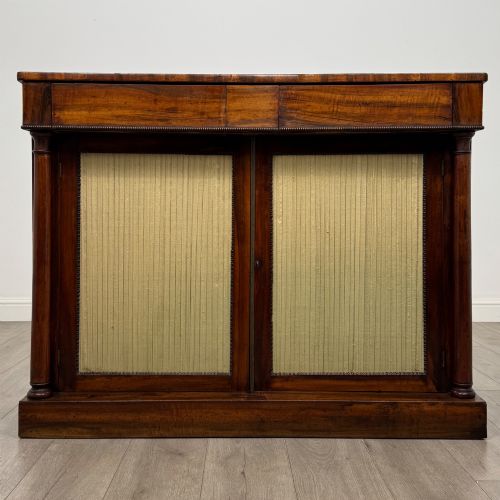
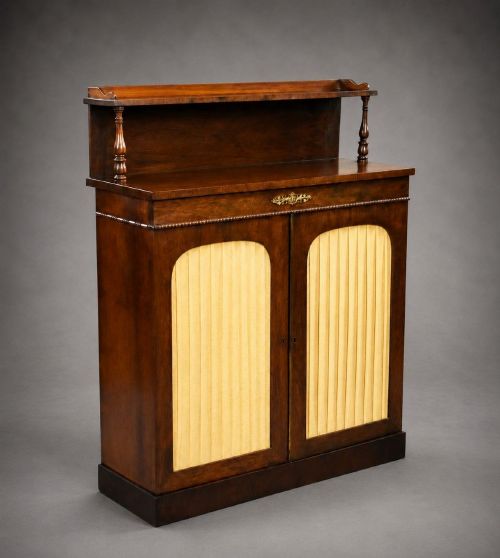
A pleated silk cupboard encompasses side cabinets, chiffoniers, and sideboards designed with fabric panels inset into their doors. When searching for a pleated silk cupboard, buyers encounter low storage furniture primarily from the Regency and Victorian periods, often termed side cabinets or chiffoniers in the record.
The dominant forms on this page date from the nineteenth century, including George IV examples and Victorian interpretations. Rosewood and mahogany provide the primary wooden structures for these pieces, complemented by brass details and marble tops.
Makers of the period favoured compact sideboards and low cabinets for entertaining spaces, utilising glass and brass grilles alongside silk inserts behind doors. These items function today as focal points in drawing rooms and hallways, combining timber frames with delicate textile elements.
Construction and materials
Cabinet makers constructed these pieces using dense hardwoods such as rosewood and mahogany, sometimes applying simulated rosewood finishes or pen-work decoration. Timber frames house internal shelving and support marble or wooden upper surfaces.
Makers incorporated fabric panels behind wooden or brass frames on the doors, securing the pleated silk to allow soft diffusion of light and partial concealment of contents. Brass fittings, handles, and occasional glass elements complete the structural assembly.
Pleated Silk Cupboard Retail Price Guide 2026
Typical asking prices for pleated silk cupboard among the pieces listed under this phrase on Sellingantiques today, from the lower quarter to the upper quarter. They describe what is for sale here now, not the wider market.
Nineteenth-century cabinet makers occasionally used painted pen-work to mimic costly inlay, proving that clever artistry predates modern shortcuts.
Assessing quality and finish
Quality rests in the selection of timber veneers and the precision of the cabinet joinery, particularly around the door frames and drawer linings. Finer examples display meticulous pen-work or finely figured rosewood grains across the breakfront and side surfaces.
The integrity of the structural carcase and the original integration of the brass hardware distinguish superior items from standard production. Details such as well-executed simulated finishes and stable marble tops indicate higher workshop standards.
The Pleated Silk Cupboard Glossary
- Chiffonier
- A low nineteenth-century sideboard or cabinet featuring enclosed shelving beneath a superstructure or plain top. These pieces often incorporate fabric door panels.
- Regency
- An architectural and decorative style spanning the early nineteenth century, known for classical restraint and rosewood veneers. Pieces from this era frequently display brass inlay.
- Breakfront
- A cabinet design where the central section projects forward from the flanking cupboards. This configuration adds architectural depth to sideboards and side cabinets.
- Simulated rosewood
- A painted or stained wood finish mimicking the distinctive grain of genuine rosewood. Artisans used this technique on secondary timbers during the nineteenth century.
Pleated Silk Cupboard: Frequently Asked Questions
What rooms suit a pleated silk cupboard?
These low cabinets suit drawing rooms, dining rooms, and hallways where surface space and enclosed storage are both required. Their compact height allows placement beneath windows or paintings.
They coordinate well with traditional wooden furniture while introducing softer textures through the fabric panels.
How do I date a nineteenth-century side cabinet?
Dating relies on timber selection, construction methods, and stylistic markers such as Regency or Victorian decorative motifs. Rosewood and mahogany veneers combined with specific brass hardware help narrow the decade of manufacture.
Comparison with documented pieces from the Regency and Victorian eras provides further chronological context.
How should I care for the silk panels?
Keep the fabric shielded from direct sunlight to prevent fading and degradation of the delicate textile threads. Gentle dusting with a soft brush maintains the pleated appearance without pulling the material.
Avoid moisture and chemical cleaners near the fabric inserts.
What is the difference between a chiffonier and a side cabinet?
A chiffonier traditionally denotes a specific type of low nineteenth-century cabinet, frequently fitted with enclosed doors and sometimes a raised shelf at the back. Side cabinets cover a broader category of low storage furniture without necessarily including a superstructure.
Both forms appear frequently within nineteenth-century British cabinet-making.