

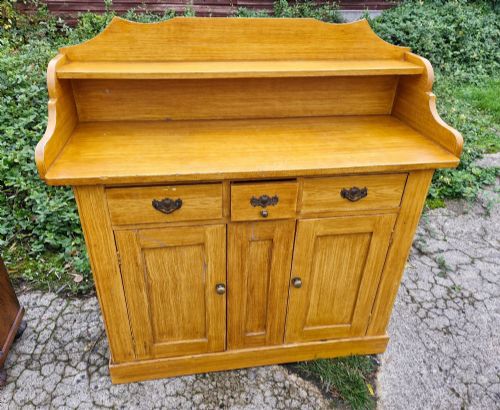
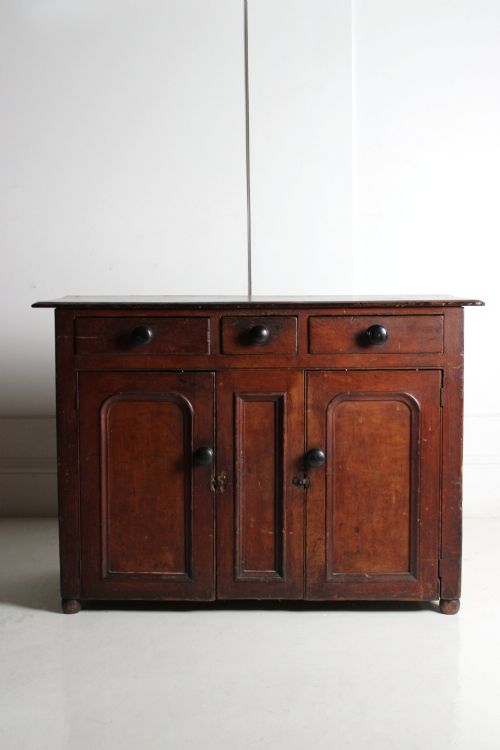
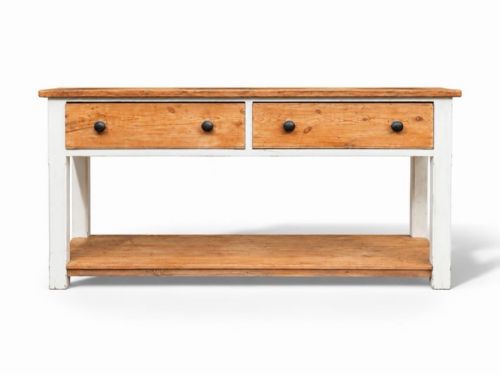
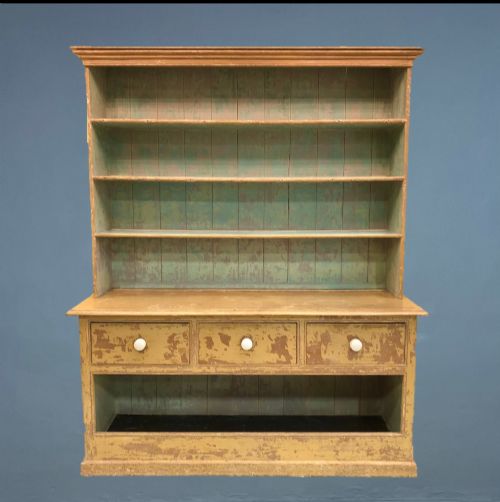
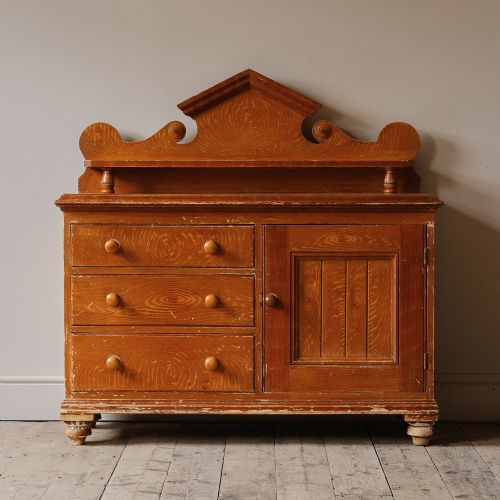
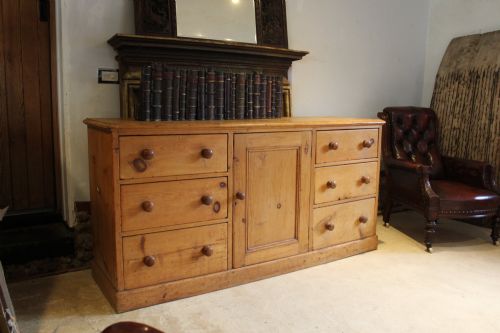
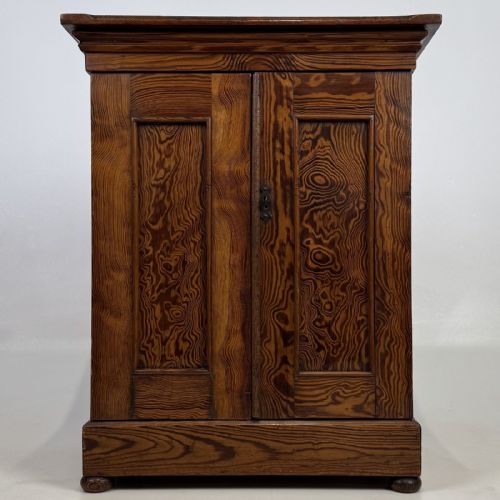
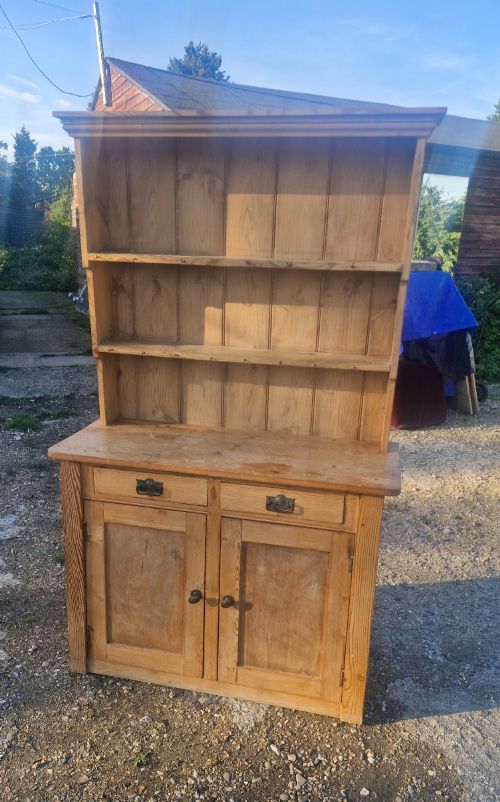
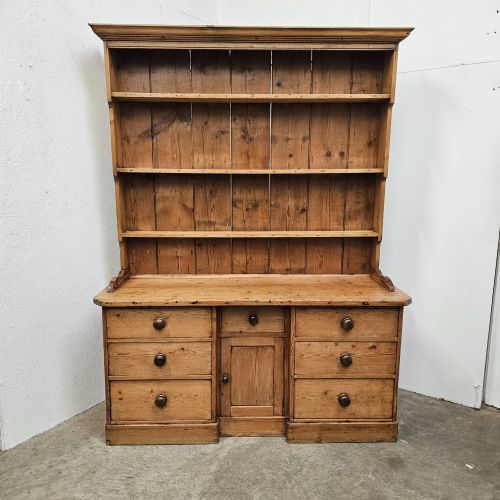

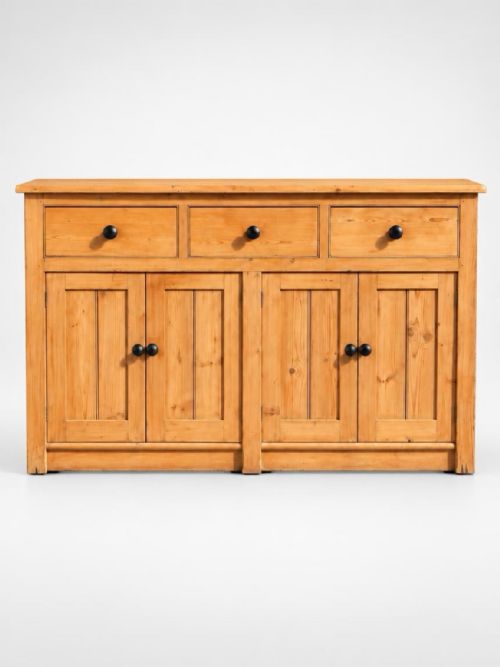
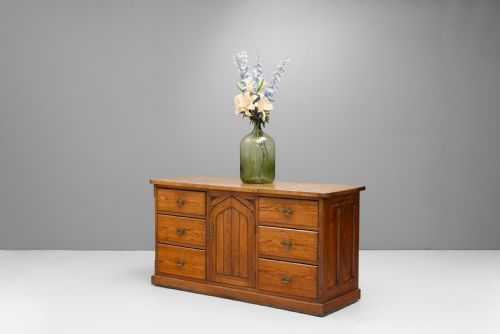
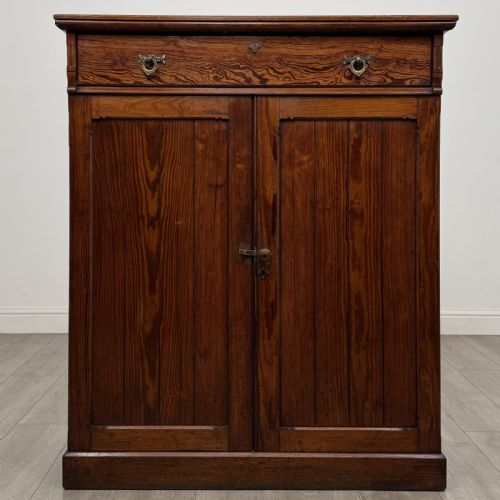
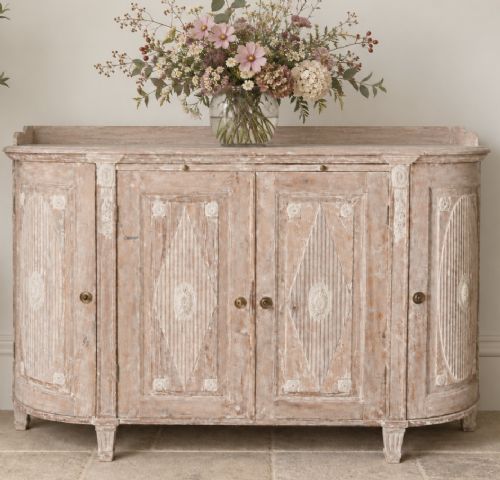
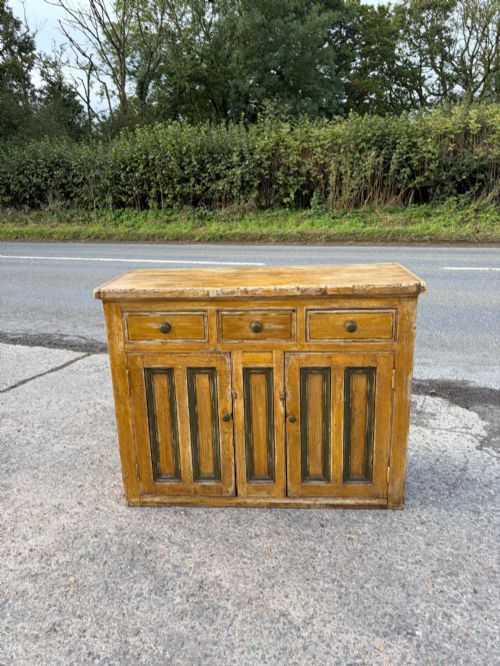
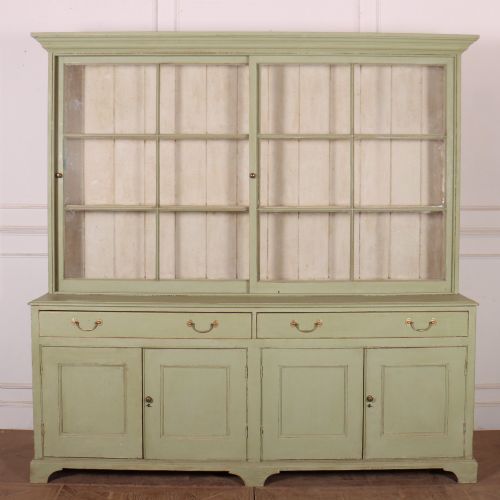
Antique Pine Cupboard Sideboard
These substantial antique pine cupboard sideboard items combine practical storage with honest country character, offering robust utility for modern rooms.
Antique Pine Cupboard Sideboard
When searching for an antique pine cupboard sideboard, buyers encounter versatile storage furniture originating mainly from the nineteenth century alongside Georgian and early twentieth-century examples. These pieces encompass kitchen dressers, dresser bases, housekeeping cupboards, and sideboards designed for domestic utility.
Victorian country examples dominate the current selection, often presenting with original paint finishes or waxed surfaces ready for integration into traditional and rustic interiors.
Materials and construction methods
Construction relies heavily on solid pine and pitch pine, providing a durable carcase for hardworking domestic furniture. Carpenters utilised traditional joinery techniques, mounting panelled doors and drawers with hand-cut joints designed for daily service.
Surface treatments vary between natural waxed finishes that highlight the grain and historical layers of paint, including original painted surfaces and simulated rosewood finishes. Hardware typically incorporates brass ring handles, standard brass pulls, or iron fixtures.
Antique Pine Cupboard Sideboard Retail Price Guide 2026
Typical asking prices for pine cupboard sideboard among the pieces listed under this phrase on Sellingantiques today, from the lower quarter to the upper quarter. They describe what is for sale here now, not the wider market.
Listings feature pieces spanning the Georgian, Victorian, and early 20th century periods, constructed from pine, pitch pine, and accented with brass or iron hardware.
Judging quality in pine furniture
Quality rests upon the integrity of the original timber and the retention of authentic surface treatments, such as untouched original paint or pleasing patination on waxed pine. Superior examples display balanced proportions, clean drawer construction, and well-fitted panelled doors.
Modifications and heavy restoration alter the character of these utility pieces, distinguishing honest provincial workshop production from heavily altered items. The presence of period brass or iron hardware adds to the integrity of the piece.
The Antique Pine Cupboard Sideboard Glossary
- Dresser base
- The lower section of a kitchen dresser featuring cupboards and drawers without the upper plate rack. This configuration functions independently as a sideboard.
- Pitch pine
- A dense, resinous variety of pine timber often utilised in Victorian furniture for its distinct grain pattern and durability. It provides a harder wearing surface than standard soft pine.
- Confiturier
- A French jam cupboard designed for food storage, typically featuring a single door above or below a small drawer. These compact pieces suit smaller spaces.
- Godwinesque
- A design style associated with Godwin and the Aesthetic movement, incorporating simplified structural forms. It reflects late nineteenth-century artistic reform in domestic furniture.
- Patina
- The surface sheen and colour developed through years of handling, waxing, and ageing. It serves as an indicator of genuine period age.
Antique Pine Cupboard Sideboard: Frequently Asked Questions
How do I use a pine sideboard in a modern kitchen?
These pieces provide substantial surface workspace and deep internal storage for crockery, cookware, and dry goods. Their utilitarian origins allow them to anchor both contemporary and traditional kitchen schemes.
Positioning a dresser base against a dining room or kitchen wall creates an authentic focal point while concealing everyday clutter behind solid pine doors.
What is the difference between a dresser base and a sideboard?
A dresser base originates from a two-piece kitchen dresser where the upper plate rack has been separated or omitted during manufacture. Sideboards were typically designed specifically for dining room storage.
Both forms offer surface tops and lower cupboard or drawer combinations, though dresser bases often display heavier kitchen utility construction.
How should I care for waxed pine furniture?
Maintain waxed pine surfaces by applying a traditional beeswax polish sparingly and buffing with a soft cloth to preserve the sheen. Avoid placing timber furniture near direct heat sources to prevent shrinkage or splitting.
Regular dusting with a dry cloth prevents dirt build-up within the grain and protects the natural patination.
Can I paint an unpainted antique pine cupboard?
Many pine cupboards and dresser bases were historically painted or stripped depending on regional domestic fashions. Choosing to paint a waxed piece is a personal aesthetic decision that alters the historical surface.
Ensure proper preparation using breathable primers if you choose to introduce a painted finish to bare or waxed timber.