
Antique Pier Cabinet Credenza
When you handle an antique pier cabinet credenza, you encounter timber, ormolu and glass assembled to anchor a nineteenth-century room.
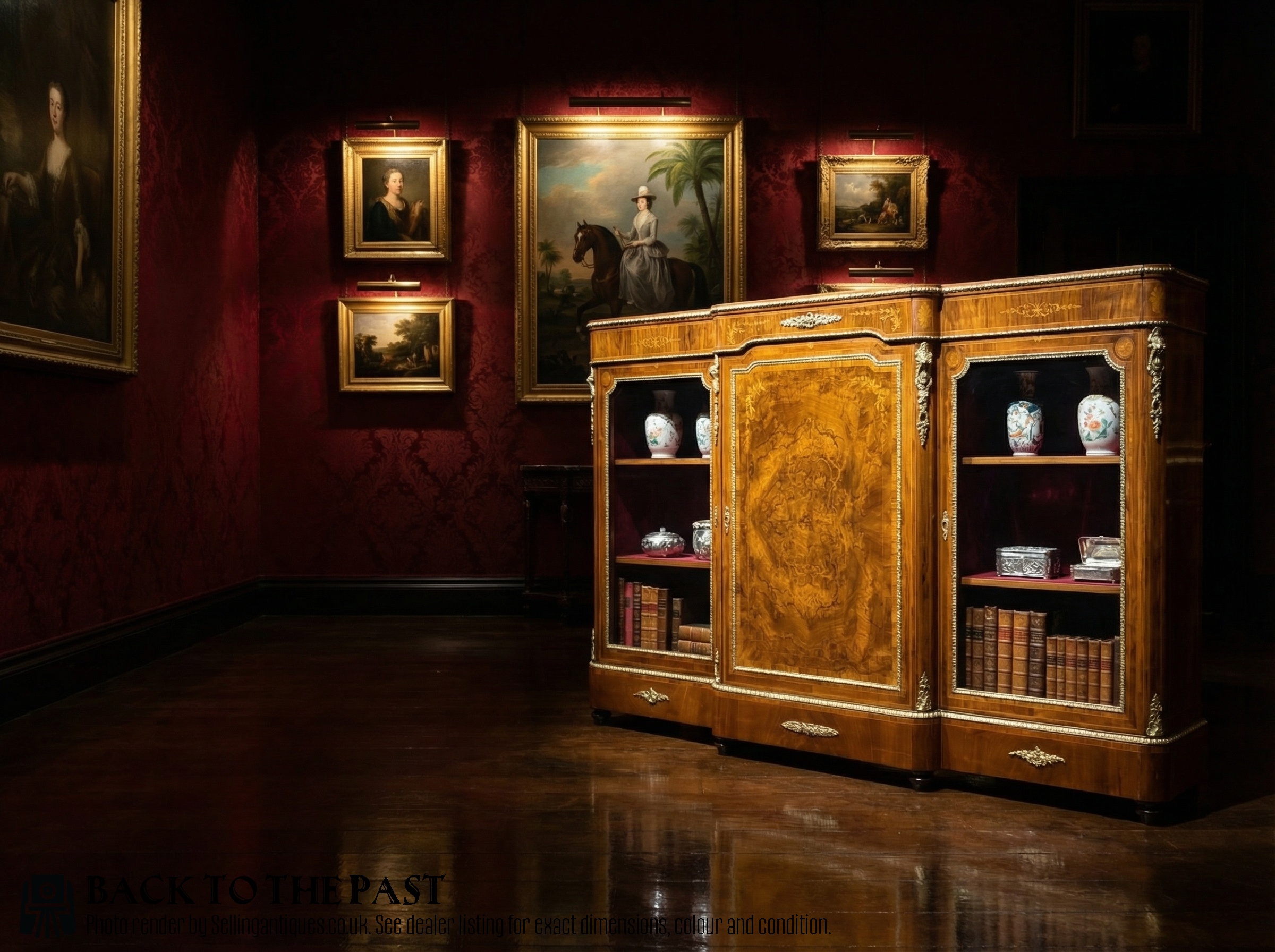
Antique Pier Cabinet Credenza
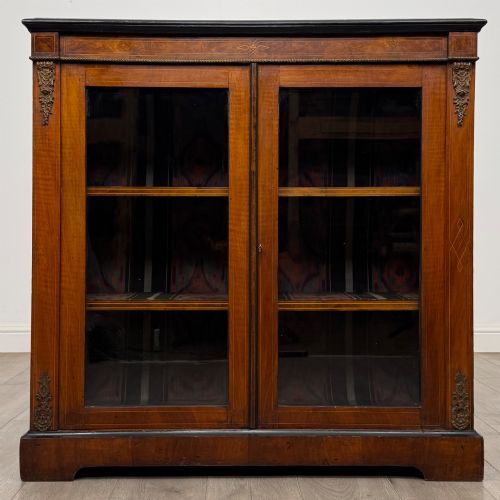
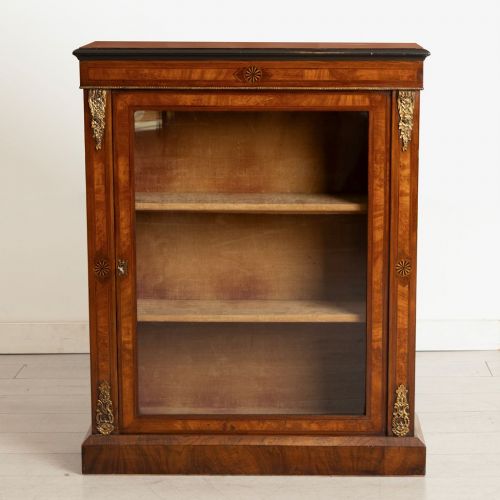
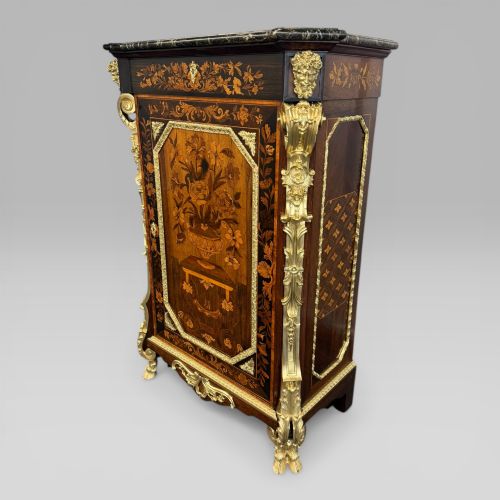
An antique pier cabinet credenza is a low reception room storage piece designed to stand against the narrow wall space between windows, known as the pier. These items take the form of side cabinets, display cabinets and credenzas originating predominantly from the Victorian period alongside Regency and Napoleon III eras.
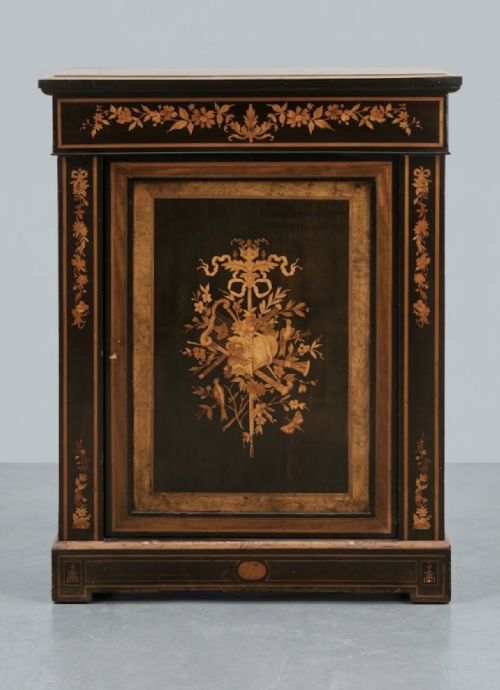
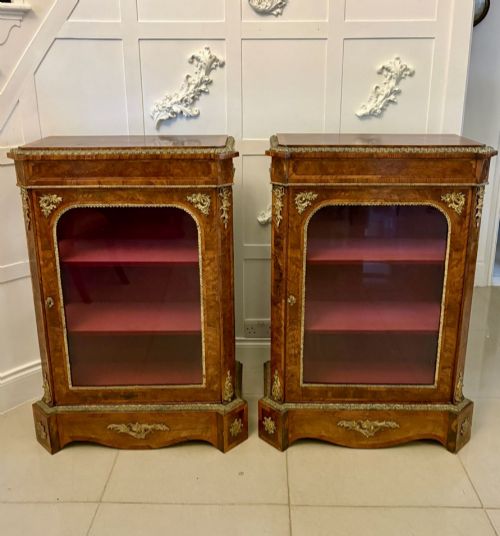
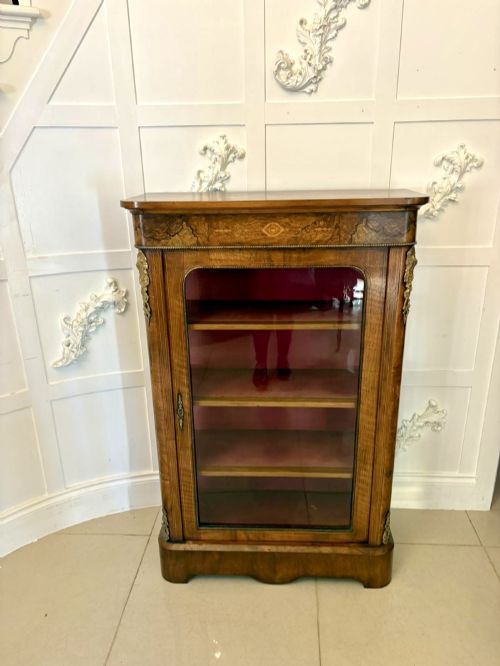
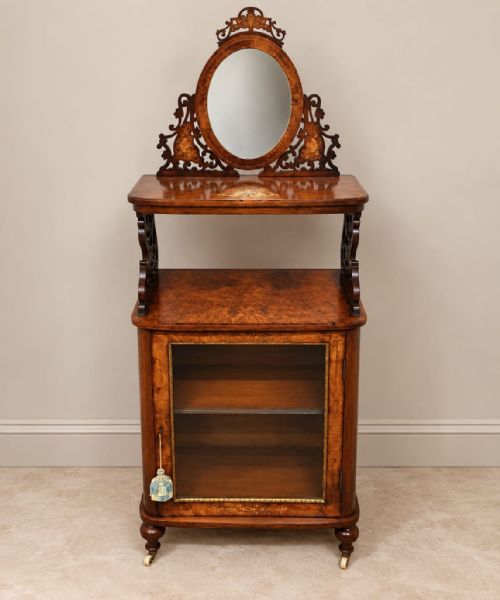
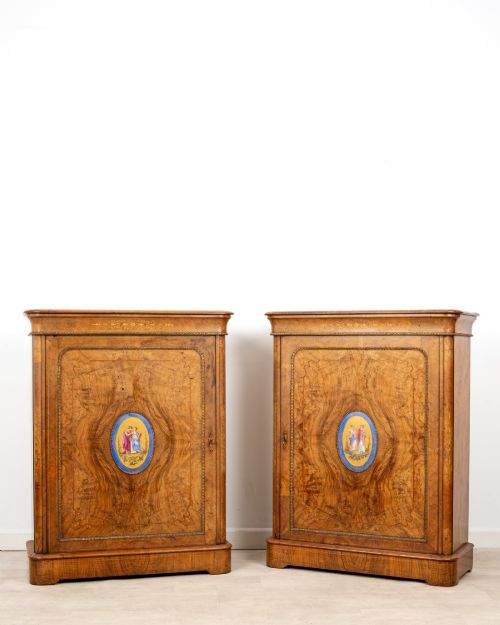
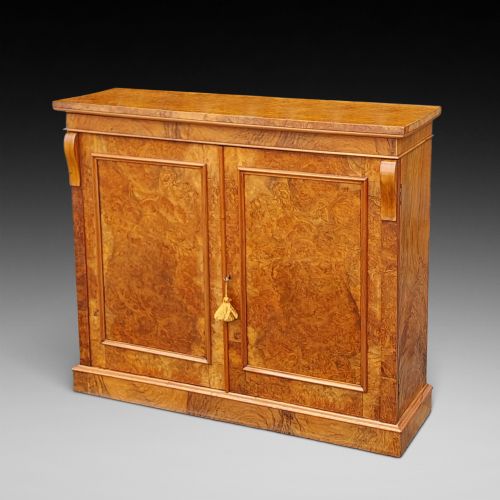
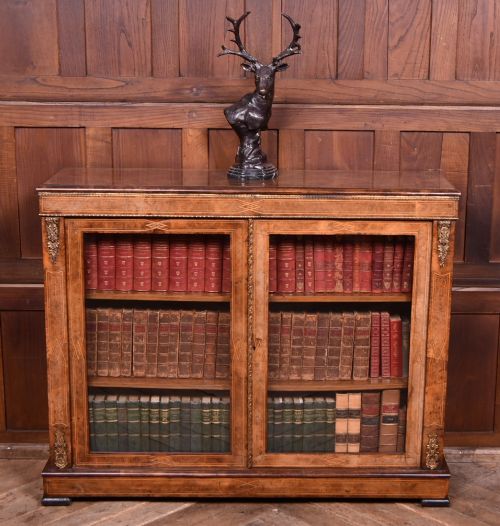
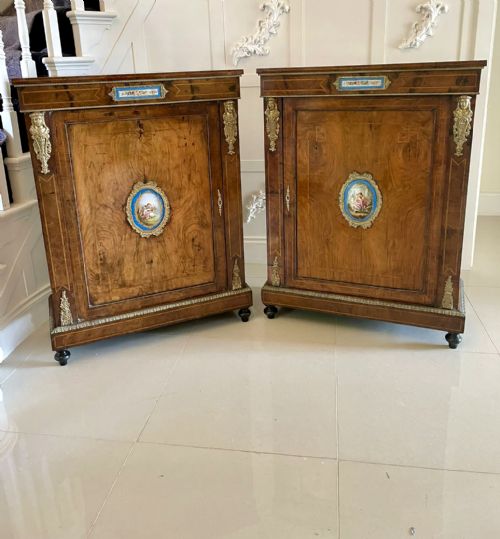
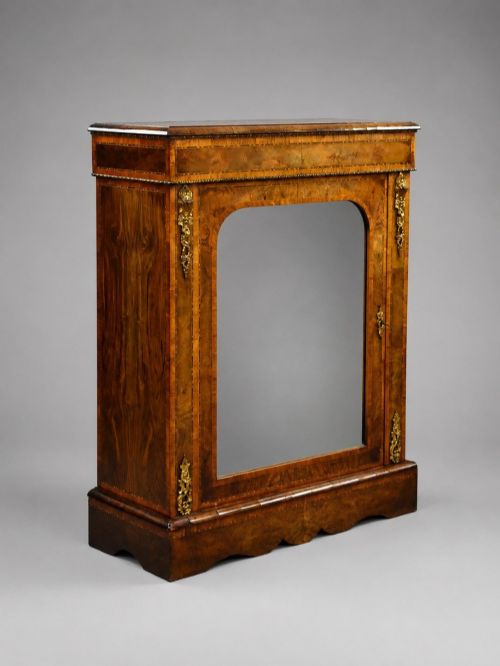
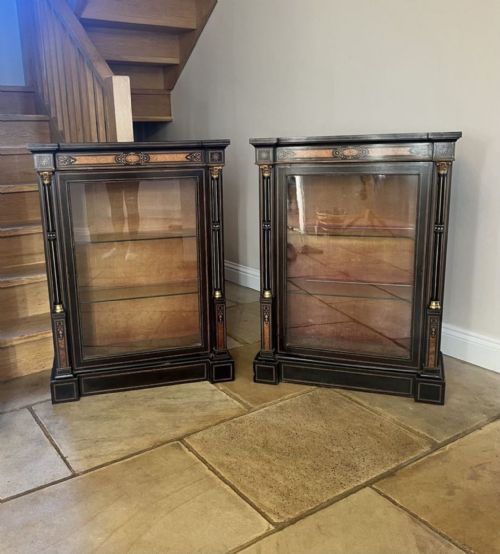
The version you meet most often on this page is a Victorian walnut piece, frequently figured with burr walnut veneer and decorated with marquetry inlay. Alongside these, French Napoleon III examples in ebonised wood with brass inlay appear frequently among the listings.
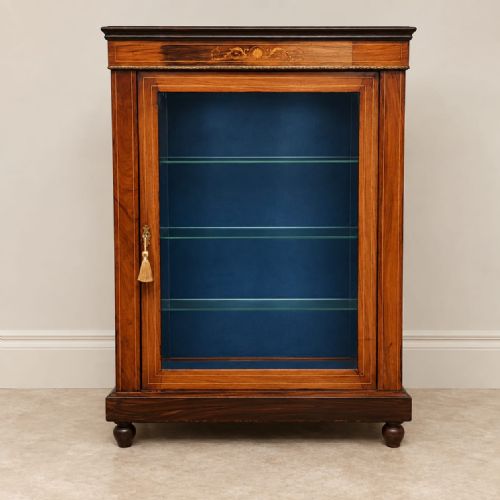
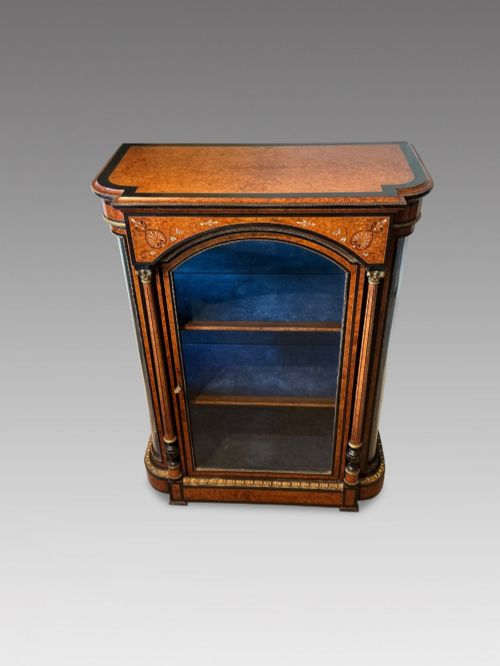
Makers and designers working in these styles utilised glass doors and marble tops to create display space for ceramics and decorative objects within formal interiors. The evidence shows forms ranging from single door display cabinets to longer serpentine credenzas.
How they were made
Cabinetmakers constructed the carcase of an antique pier cabinet credenza using timbers such as walnut, rosewood, mahogany or ebonised wood, upon which they applied decorative veneers like burr walnut and amboyna. Artisans embedded brass, ebony and satinwood in intricate marquetry patterns into the timber surfaces.
Gilded bronze or ormolu mounts frame the glazed doors and corners of many pieces, often accompanied by porcelain plaques painted in a Sevres style. Marble tops provide a heavy, polished surface finish on French and English models alike.
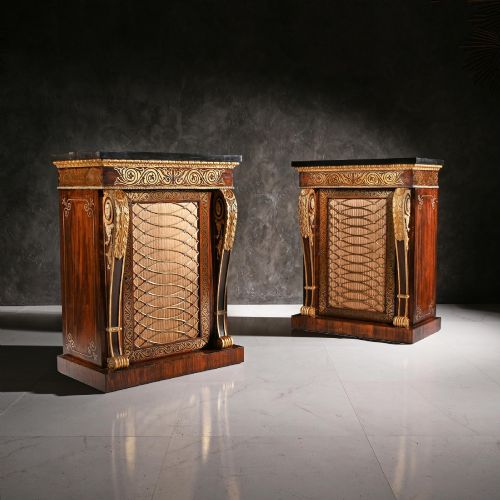
The site listings combine Victorian burr walnut pier cabinets with French Napoleon III ebonised Boulle credenzas and Regency rosewood side cabinets.
What varies in quality
The calibre of an antique pier cabinet credenza rests on the choice of timber figure and the precision of the marquetry inlay. Finely figured burr walnut and complex brass and tortoiseshell Boulle work separate standard production from exceptional workshop output.
The weight and chasing of the ormolu mounts, together with the quality of the painted porcelain plaques, indicate the distinction between ordinary furniture and pieces commissioned from notable makers such as Edward Holmes Baldock or Louis Constantin Le Gaigneur.
Louis Constantin Le Gaigneur·Edward Holmes Baldock
The Antique Pier Cabinet Credenza Glossary
- Pier cabinet
- A narrow cabinet designed to fit the wall space between two windows. These pieces often feature glazed doors for displaying porcelain.
- Credenza
- A low dining or reception room cabinet used for storage and display. The evidence shows serpentine shapes and marble tops associated with this form.
- Ormolu
- Gilded bronze mounts applied to furniture corners and door frames. This technique provides metallic contrast against dark woods.
- Marquetry
- Inlay work using various wood veneers to create pictorial patterns. Artisans cut contrasting timbers into the background veneer.
- Boulle
- A form of marquetry using brass and tortoiseshell. Named after the French cabinetmaker, it appears on Napoleon III pieces.
Antique Pier Cabinet Credenza: Frequently Asked Questions
What is an antique pier cabinet credenza?
These pieces are nineteenth-century low storage and display furniture designed for nineteenth-century reception rooms. They combine timber carcases with glass doors and decorative mounts.
Cabinetmakers built them to stand against walls and architectural piers, providing enclosed shelving for ceramics and books.
How do I style an antique pier cabinet credenza?
Place the piece against a focal wall in a living room or hallway where its wood grain and glass panels are visible. Keep the top surface uncluttered to showcase the marble or timber.
Use the interior shelves to display small collections of glassware or ceramics, echoing the original nineteenth-century purpose of these cabinets.
How do I tell Victorian from Regency pieces?
Regency examples date from the early nineteenth century and frequently employ rosewood with brass inlay. They reflect classical revival tastes.
Victorian pieces from the mid to late nineteenth century lean towards burr walnut, marquetry and porcelain mounts. The ornamentation tends to be heavier and more varied.
What is Boulle work on a credenza?
Boulle work is an intricate marquetry technique combining cut brass and tortoiseshell. It originates from French cabinetmaking traditions.
On Napoleon III pieces, this technique covers the ebonised surfaces with reflective metallic patterns.