


Antique Pepper Castor
An antique pepper castor brings refined craftsmanship to the dining table, offering both decorative charm and functional service.
Antique Pepper Castor
An antique pepper castor is a tabletop vessel designed for dispensing ground pepper over food, appearing in forms ranging from simple baluster shapes to elaborate novelty designs. When exploring this selection, buyers frequently encounter sterling silver and silver-plated examples from the Victorian and Edwardian eras, alongside earlier Georgian iterations.
The assortment includes individual pepper pots and shakers, alongside larger multi-bottle cruet sets that house mustard and vinegar alongside the castor. These pieces reflect the dining customs of the eighteenth, nineteenth, and early twentieth centuries, serving as both utilitarian tablewares and decorative ornaments.
Materials and construction
The construction of these pieces relies heavily on sterling silver, silver plate, and 800 silver, shaped through traditional silversmithing techniques. Cut glass and standard glass bodies also appear, often mounted with silver collars and pierced lids designed for sifting seasoning.
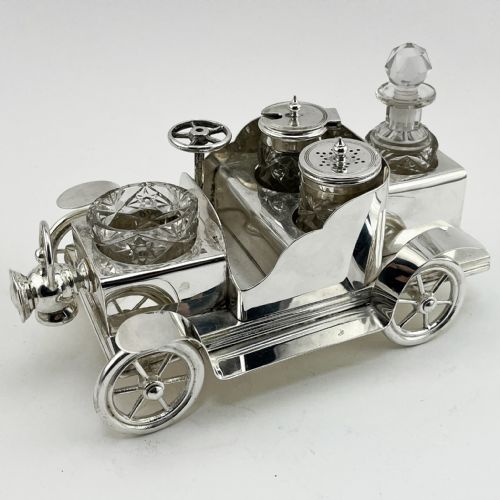
Specialist variations incorporate pewter and novelty configurations, such as animal and vehicle forms, requiring detailed casting and hand-finishing by period artisans. Fabric elements like silk and velvet occasionally line associated presentation or cruet containers.
Current listings feature pieces spanning the Georgian era through to the early twentieth century, utilising sterling silver, silver plate, and cut glass.
Judging quality and execution
Quality in these vessels rests upon the crispness of the piercing on the lid and the weight of the metal utilised in the body. Superior examples demonstrate balanced proportions, clean hallmarks where applicable, and secure, well-fitting caps that align correctly with the collar.
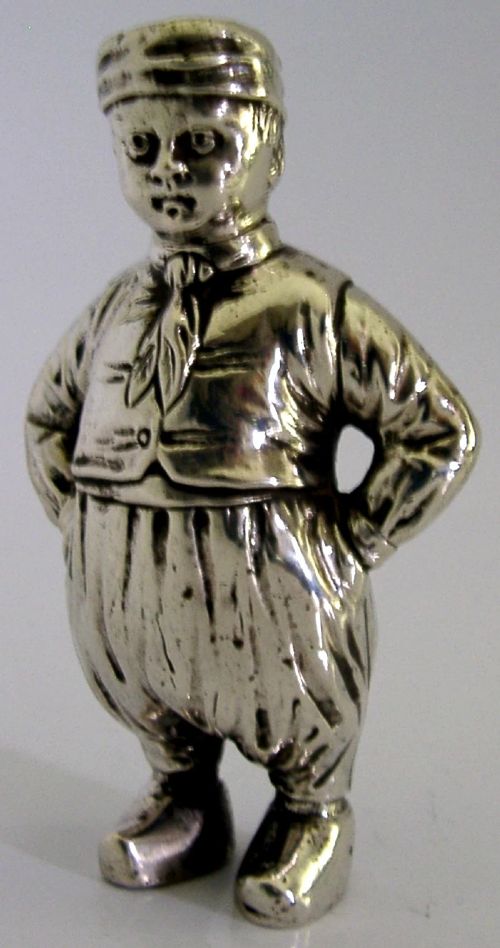
Novelty pieces derive distinction from the realism and detailing of the sculptural form, whether depicting an animal, a vehicle, or a human figure. The integrity of the glass inserts and the preservation of original silver plating further distinguish finer specimens from standard production.
Bricks and Sons·Thomas Ross·Thomas Pritchard
The Antique Pepper Castor Glossary
- Castor
- A small container with a perforated top used for sprinkling sugar, pepper, or other condiments over food. These vessels typically feature removable lids secured by a push-fit or threaded mechanism.
- Cruet set
- A matched group of condiment bottles and castors held within a dedicated frame or stand for table service. Such sets frequently organise containers for oil, vinegar, mustard, and pepper.
- Sterling silver
- A silver alloy consisting of significant purity by weight, widely utilised across British tablewares for its durability and lustre. Items in this material usually bear official assay office hallmarks.
- Silver plate
- A base metal substrate coated with a thin layer of silver through electroplating or older techniques such as Sheffield plating. This method provided the visual appeal of solid silver at a more accessible cost during the nineteenth century.
Antique Pepper Castor: Frequently Asked Questions
What is a pepper castor?
A pepper castor is a tabletop container featuring a pierced lid designed to sprinkle ground pepper onto meals. They have been produced in various precious metals and glass for centuries.
These pieces were standard dining table accessories, evolving from monumental Georgian silver forms to smaller Victorian novelty pots.
How do I date a silver castor?
Dating relies heavily on hallmarks stamped into the metal, which indicate the assay office, the maker, and the year of production. Stylistic cues such as Edwardian proportions or Georgian baluster shapes also help narrow the period.
Unmarked pieces or silver-plated items require assessment through manufacturing techniques, overall design style, and comparative examples from known eras.
What is a cruet set?
A cruet set is a collection of condiment containers, including castors for pepper and sugar alongside bottles for oil and vinegar, all held within a fitted stand. They kept seasonings organised together for formal dining.
These sets range from simple domestic silver-plated frames to elaborate multi-bottle table centerpieces.
How do I clean antique silver?
Cleaning antique silver requires a gentle approach using a specialist silver cloth or mild polish to preserve the underlying metal and any remaining hallmarks. Aggressive scrubbing can wear away thin silver plating or damage delicate engraved details.
Regular, careful dusting and minimal chemical exposure help maintain the natural patina accumulated over the centuries.