
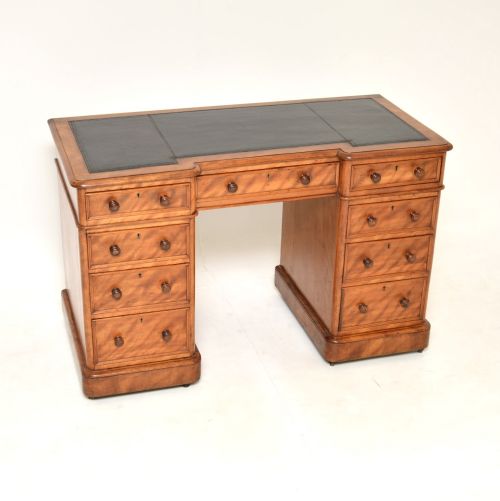
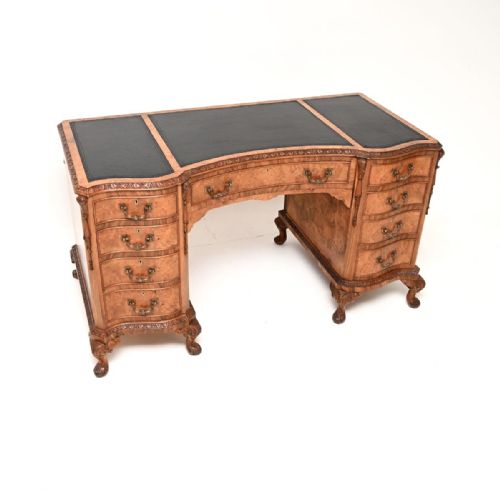
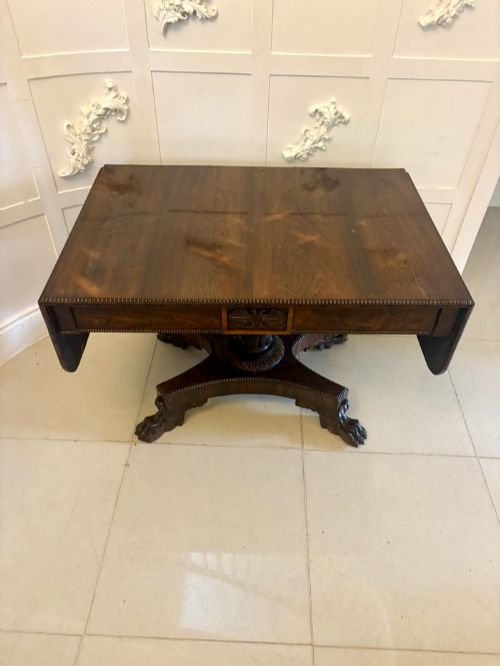
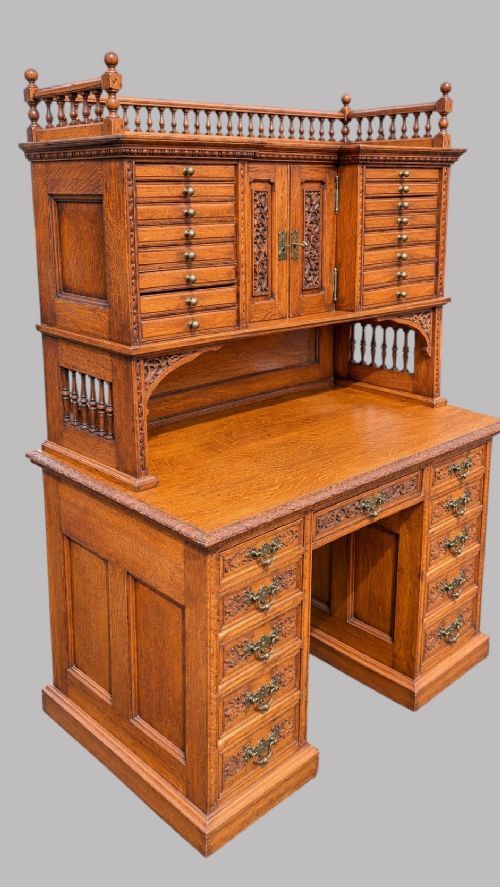
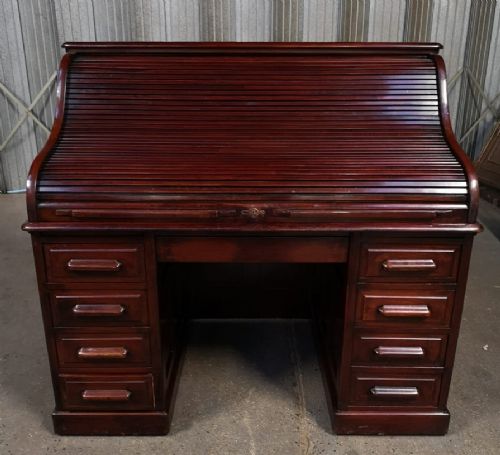
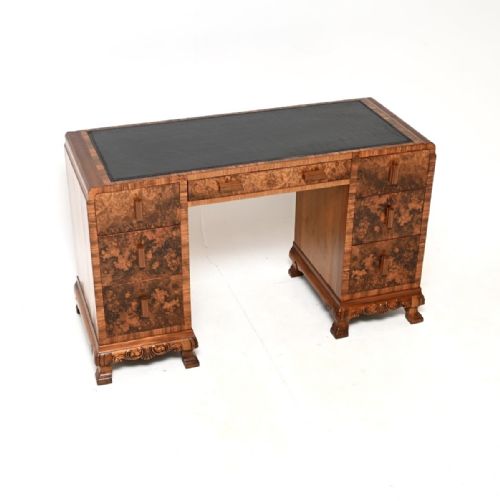
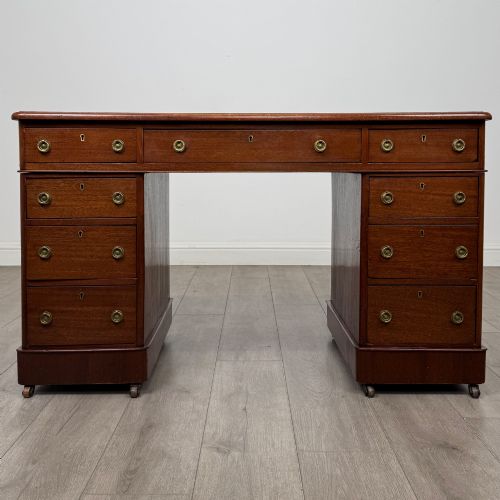
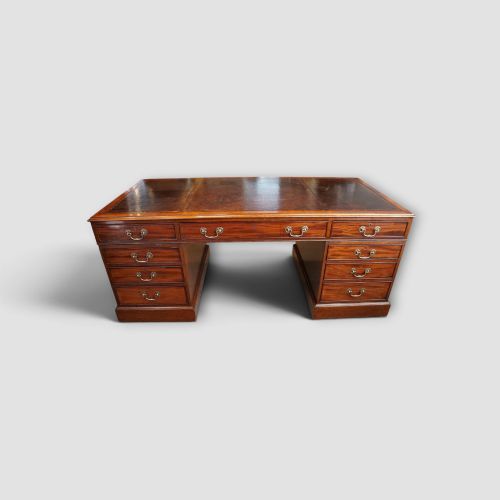

Antique Pedestal Desk Table
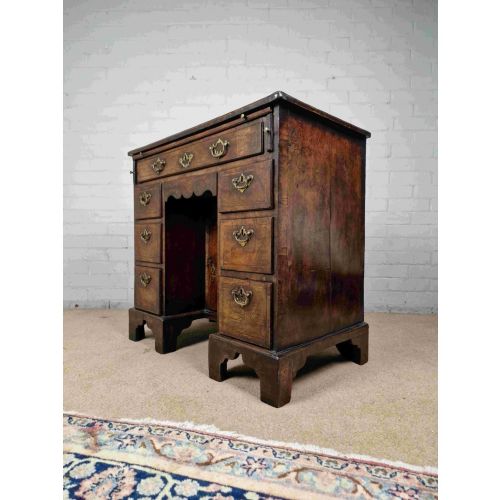
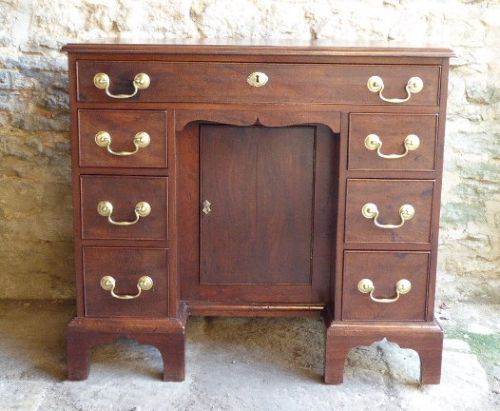
When you search for an antique pedestal desk table, you enter a world of heavy timber, brass mounts and inset writing surfaces designed for serious correspondence.
Antique Pedestal Desk Table
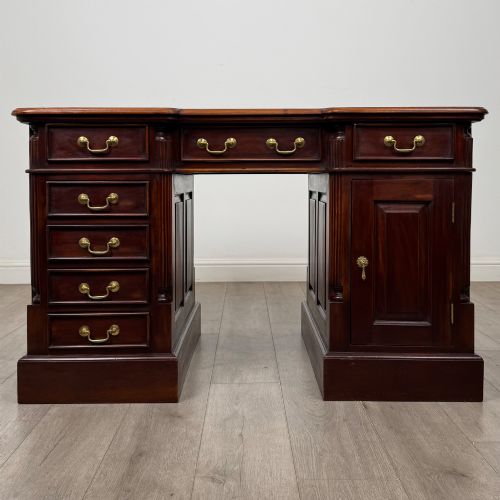
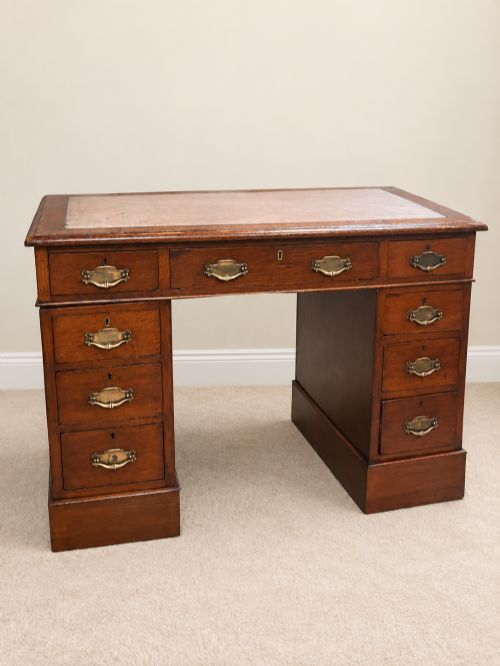
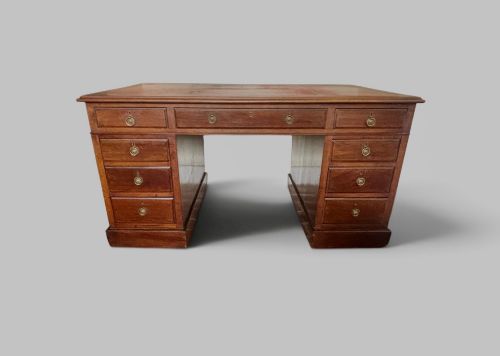
An antique pedestal desk table combines two independent pedestals of drawers with a central desktop, creating a substantial writing station for the study or library. The form evolved through the nineteenth century, drawing on Georgian proportions and accommodating the administrative demands of Victorian households.
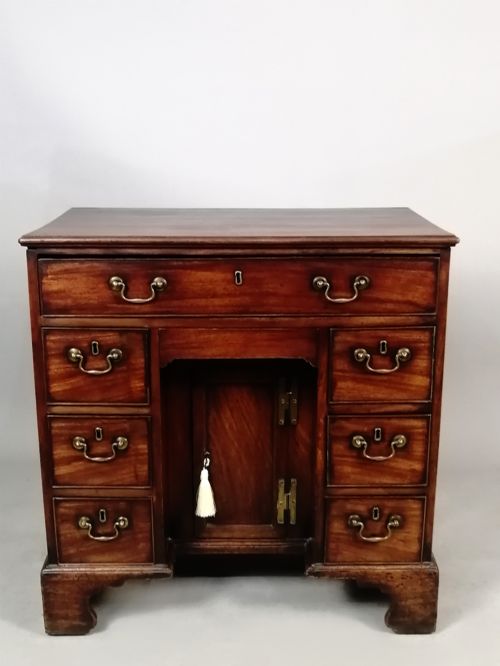
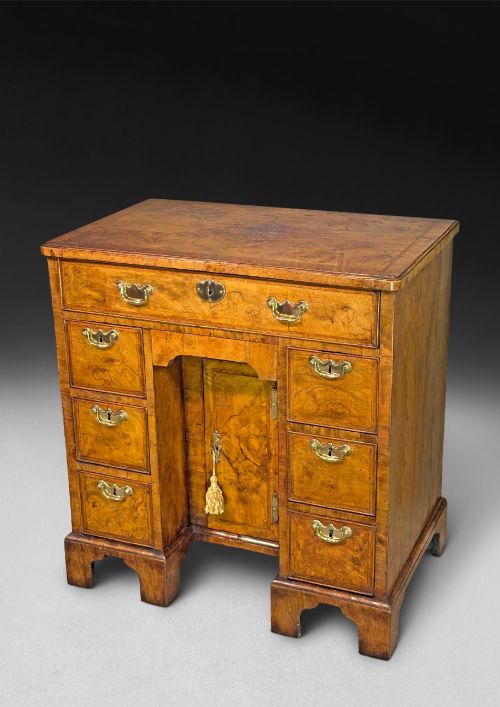
You will encounter pieces in mahogany, oak and walnut, ranging from modest Edwardian writing tables to grand Victorian partners desks finished on both sides. Some examples incorporate leather writing surfaces, roll tops or kneehole configurations designed for domestic and professional use.
How they were made
Cabinet makers utilised dense hardwoods such as mahogany, oak and walnut, often applying burr walnut or flame mahogany veneers to primary display surfaces to create striking grain patterns. Drawers utilised traditional dovetail joints, while structural elements relied on sturdy internal framing to support the weight of heavy timber tops.
Writing surfaces frequently incorporated inset panels of tooled leather, secured with blind tooling or gilt decoration. Brass hardware, including handles, handles plates and castors, completed the construction, providing both functional utility and decorative accent.
Listings feature pedestal desks spanning the Georgian, Victorian and Edwardian eras, constructed in mahogany, oak, walnut and rosewood.
What varies in quality
The distinction between standard utility furniture and superior examples lies in the selection of timbers and the precision of cabinet work. Finer desks display carefully matched veneers, hand-cut dovetails and original brass hardware, whereas lower tiers rely on simpler construction methods and plain secondary woods.
Attention to secondary details elevates a piece, such as finished backs that allow the desk to stand freely in the centre of a room rather than against a wall. The presence of royal commemorative leather or intricate marquetry inlay similarly indicates workshop output of higher ambition.
Edwards and Roberts·Maple and Co·Trollope and Sons·JAS Shoolbred
The Antique Pedestal Desk Table Glossary
- Pedestal desk
- A freestanding desk comprising two banks of drawers supporting a wide writing surface. The central space between the pedestals forms the kneehole.
- Partners desk
- A large double-sided desk designed for two people to work opposite one another, featuring drawers and cupboards on both faces.
- Kneehole desk
- A compact desk featuring a recessed central space beneath the desktop, often flanked by smaller banks of drawers.
- Tooled leather
- Leather writing inserts decorated with blind stamping or gold leaf along the perimeter. This treatment adds a formal decorative border to the working surface.
- Burr walnut
- Timber harvested from the growth excrescences of walnut trees, yielding highly figured patterns utilised for luxury veneering.
Antique Pedestal Desk Table: Frequently Asked Questions
How do I care for the leather top?
Clean the leather gently using a damp cloth and treat it periodically with a neutral leather balm to prevent cracking. Avoid placing hot cups or liquids directly on the surface to protect the underlying material and any gilt tooling.
Keep the desk away from direct sunlight and strong heat sources, which can dry out the hide and cause the timber beneath to warp or shrink over time.
Can these desks stand in the room centre?
Many larger examples, particularly partners desks and library tables, feature finished panelling on all four sides. This allows them to float in the middle of a room rather than resting against a wall.
Standard single-sided pedestals usually feature plain backs intended to face a wall, so check the rear construction before planning an open room layout.
How are nineteenth-century desks dated?
Dating relies on timber choices, drawer construction techniques and stylistic flourishes. Early Victorian pieces often display rich mahogany tones and heavy proportions, while later Edwardian versions utilise lighter oak or satinwood inlay.
Hardware styles, secondary woods inside the drawers, and maker stamps or labels provide further chronological clues when examining a piece.
Are these desks easy to move?
Most pedestal desks separate into three distinct sections for transport: the two drawer pedestals and the heavy top. This modular construction makes moving large pieces through doorways manageable.
When reassembling, ensure the top rests evenly on the pedestals and secure any internal bolts or fixings to maintain structural stability.