


Antique Pebble Jewellery
Antique pebble jewellery brings together cut hardstones and silver or gold, offering the distinct character of Victorian Scottish craftsmanship.
Antique Pebble Jewellery
Antique pebble jewellery primarily comprises brooches, kilt pins, bracelets, snuff boxes, and pendants produced during the nineteenth century. The typical pieces encountered on this page belong to the Victorian era and the Scottish Revival movement, reflecting a strong regional aesthetic.
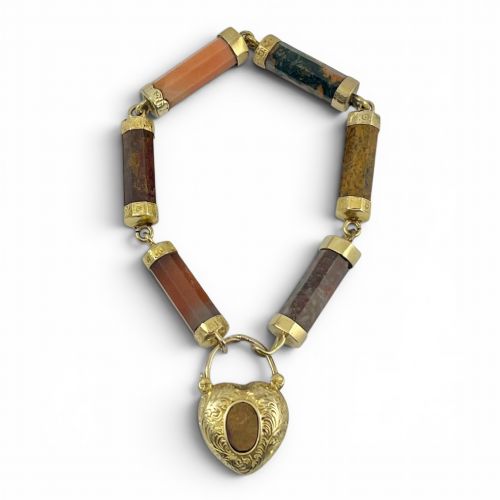
Makers fashioned these ornaments into distinct forms such as shields, broadswords, dirks, padlocks, and bows. Silver serves as the principal mounting metal, frequently accompanied by gold in select bracelets and brooches.
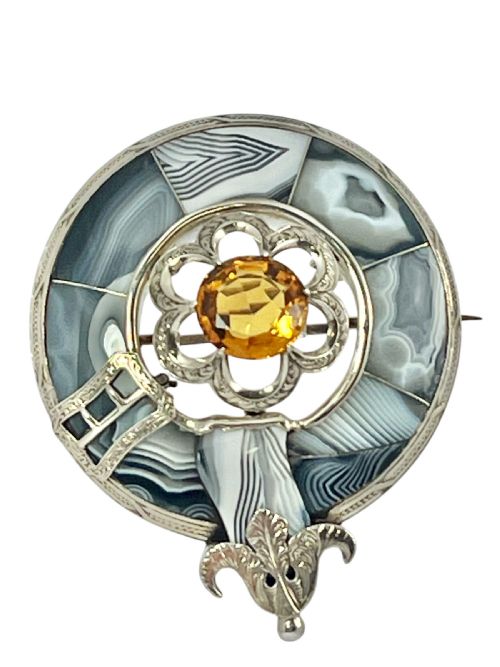
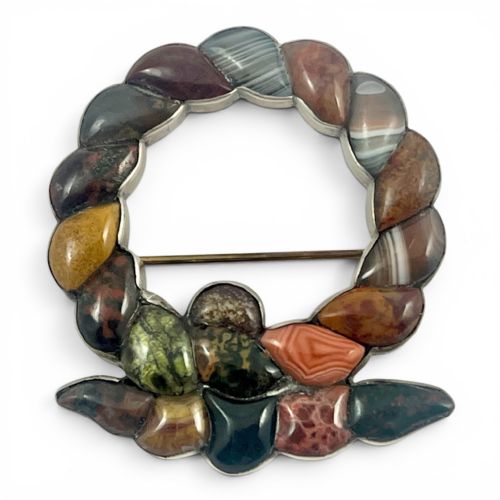
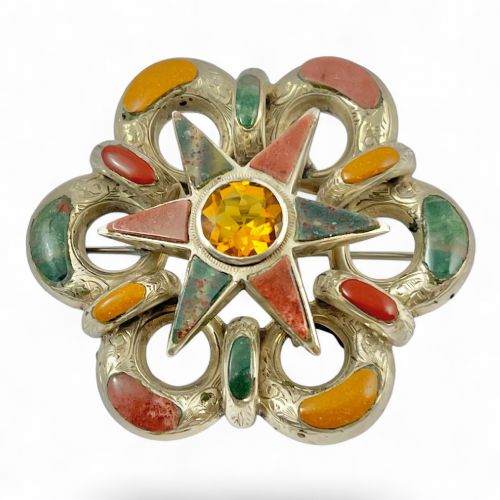
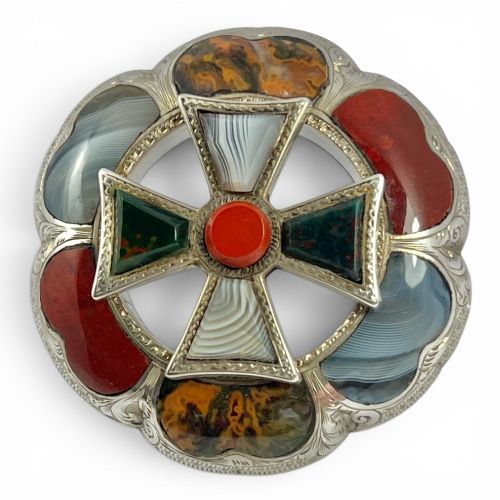
The stones themselves define the visual weight of each piece, appearing as matched sections or as varied mineral specimens assembled together. Buyers searching for antique pebble jewellery will encounter numerous silver brooches centred on patterned agates and citrines.
Materials and construction
Silversmiths and jewellers utilised sterling silver and gold to construct secure bezels and decorative wirework frames that hold the polished hardstones. Stones such as agate, jasper, bloodstone, and malachite were carefully shaped, ground, and fitted tightly into these metal settings.
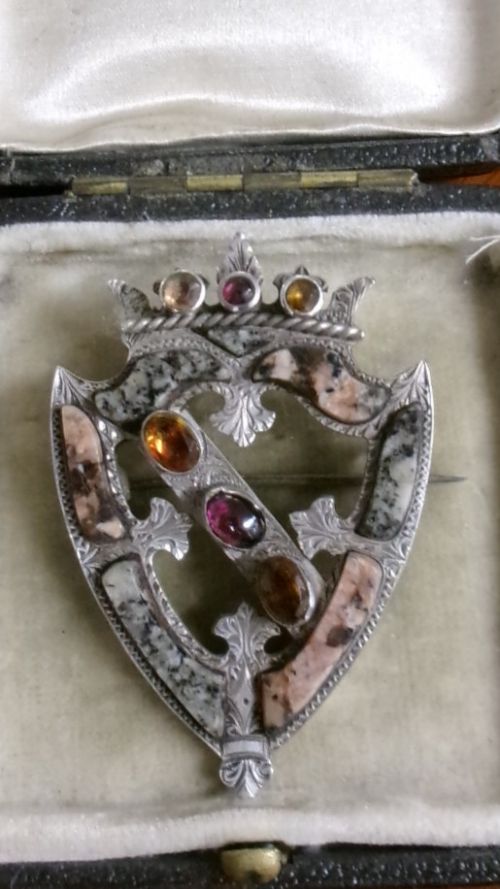
Makers incorporated faceted citrines as central focal points within multi-stone silver frameworks, adding warmth alongside the opaque banded agates and mottled jaspers. Construction techniques often involved robust pin stems, braided silver bands, and integrated hinge mechanisms designed for daily wear on heavy woollen tartans and garments.
Materials documented across the available pieces include silver, gold, agate, Montrose agate, jasper, bloodstone, citrine, and malachite.
Distinctions in execution
Quality in these ornaments rests upon the precision of the stone-cutting and the complexity of the metal mount. Tightly fitted hardstones with vibrant natural banding and minimal matrix lines separate superior examples from simpler designs.
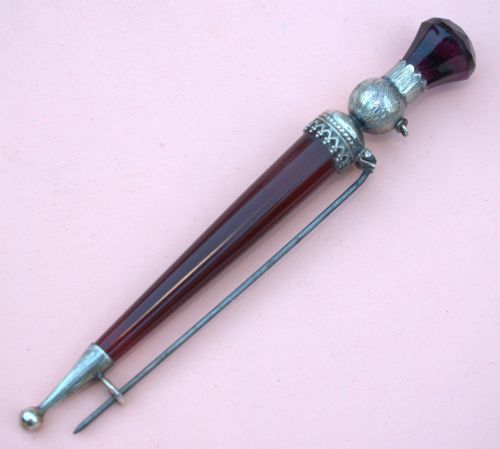
The depth and intricacy of the silverwork, particularly in dirk pins, broadswords, and braided plaid brooches, dictate the calibre of the piece. Heavier gauge silver mounts and the inclusion of well-matched citrines alongside diverse agates distinguish the more ambitious nineteenth-century productions.
The Antique Pebble Jewellery Glossary
- Agate
- A cryptocrystalline variety of quartz characterised by fine grain and bright colour bands. It forms the primary hardstone material across nineteenth-century Scottish brooches and bracelets.
- Citrine
- A yellow to orange variety of quartz often set as a central focal stone in silver pebble jewellery. These transparent gems complement the opaque banded agates.
- Dirk brooch
- A large pin modelled after the traditional Scottish dagger, utilised to fasten heavy plaids. These substantial pieces feature detailed silver hilts and mounted hardstones.
- Jasper
- An opaque, impure variety of silica that appears in various earthy colours within Victorian plaid brooches and pins. It provides a dense contrast to translucent agates.
Antique Pebble Jewellery: Frequently Asked Questions
What periods do these pieces date from?
The items listed on this page originate from the Victorian era, spanning the nineteenth century from roughly 1840 to 1900. Specific dates recorded in the evidence cluster around the middle and later decades of that period.
Craftsmen working during the Scottish Revival produced the majority of these silver and hardstone ornaments. The stylistic markers reflect this Victorian enthusiasm for regional British traditions.
How were these items worn originally?
Many of the larger silver pieces functioned as kilt pins, plaid brooches, or dirk brooches designed to secure heavy woollen garments. Smaller items included bracelets, earrings, and padlock locket pendants.
Jewellery suites also combined matching elements like brooches and earrings for coordinated daily dress. The robust construction allowed these ornaments to serve practical fastening purposes alongside decorative wear.
What metals support the stones?
Sterling silver serves as the predominant metal for mounting the polished hardstones in these collections. Silversmiths built supportive bezels and intricate wire frameworks to hold each mineral specimen securely.
Gold appears less frequently, usually reserved for specific bracelets, snuff boxes, and select brooches from the Victorian period. The combination of silver and gold provided a durable base for heavy agate displays.
Which stones appear most often?
Agate dominates the selection, appearing in numerous colour variations including Montrose agate and banded specimens. Jasper and bloodstone provide additional opaque mineral colours within the geometric arrangements.
Faceted citrines frequently occupy the centre of silver brooches surrounded by smaller hardstones. Malachite also appears occasionally in select Victorian earrings and multi-piece suites.