


Scottish Lapel Pin
These pieces are a scottish lapel pin, offering traditional fastening jewellery shaped by generations of silversmiths.
Scottish Lapel Pin
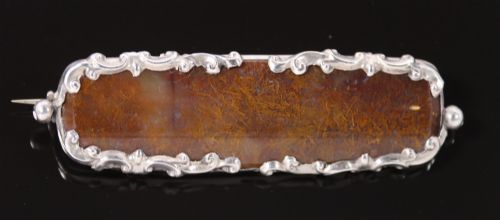
A scottish lapel pin brings together traditional Highland forms and regional materials in wearable silver pieces. When examining a scottish lapel pin on this page, buyers encounter various historical expressions from the Georgian period through to the mid-twentieth century.
How they were made
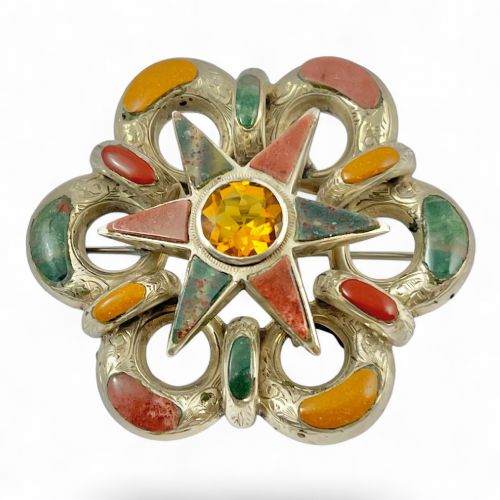
Makers shaped sterling silver and nine-carat gold into structural mounts that secure natural stones. Techniques combine traditional metalworking with the precise setting of local minerals.
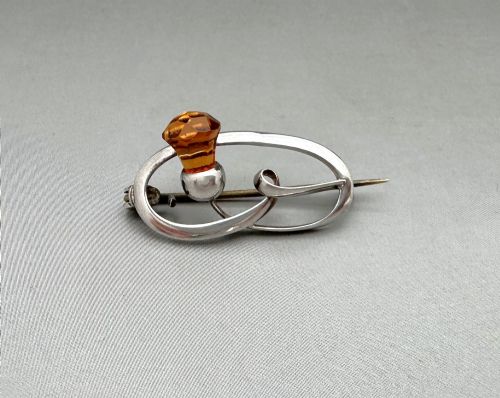
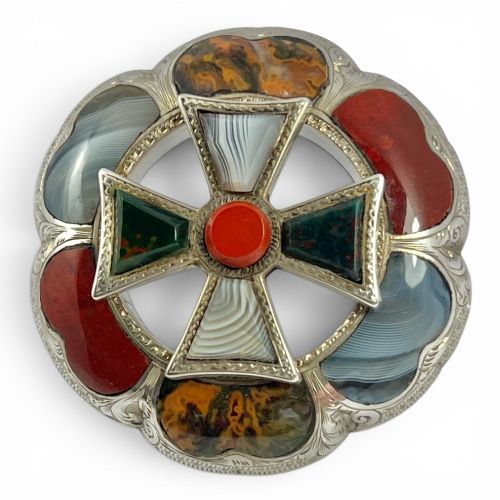
Stones such as agate, jasper, moss agate, and citrine are cut, polished, and arranged within braided or shield designs. Glass and amber glass also appear where makers sought alternative translucent effects.
Materials recorded across the page include silver, sterling silver, gold, agate, jasper, moss agate, citrine, and glass.
What varies in quality
Quality rests in the precision of the silver smithing and the selection of the stones. Pieces showing careful stone-cutting and well-defined metalwork stand apart from simpler work.
The integration of traditional motifs, such as thistles or swords, defines the character of each piece. Maker attribution, such as the work of Charles Horner or John Hart of Iona, marks a distinct level of execution.
Charles Horner·John Hart of Iona·Celtic Art Industries
The Scottish Lapel Pin Glossary
- Agate
- A variety of chalcedony used extensively in Scottish jewellery. It is cut and polished into pebbles to form colourful geometric patterns.
- Citrine
- A yellow quartz variety frequently mounted in silver or gold settings. It provides a bright focal point in traditional Highland brooches.
- Plaid brooch
- A large circular fastening pin historically used to secure a plaid or shawl. These pieces often feature intricate silverwork and concentric stone settings.
- Jabot pin
- A decorative pin designed to secure the lace jabot of a cravat. These long pins often terminate in detailed decorative finials.
Scottish Lapel Pin: Frequently Asked Questions
What is a scottish lapel pin used for?
These pieces function primarily as decorative fasteners for shawls, plaids, lapels, and hats. They combine traditional Highland utility with ornamental metalwork and polished stones.
Historically, larger examples secured heavy wool garments, while smaller pins adorned waistcoats or lapels. Today, they remain versatile accessories for contemporary wear.
How do I date a scottish lapel pin?
Dating relies on stylistic markers, materials, and associated workshop hallmarks. Victorian pieces often display heavy silver pebble work and braided bands, while twentieth-century examples reflect Celtic Revival or Art Deco lines.
Hallmarks stamped on the reverse provide specific assay office marks and years. Comparing these details against known periods helps establish the exact age.
What materials are typical in these pins?
Silver and sterling silver form the primary structural metal for the majority of these pieces, alongside occasional nine-carat gold. Stones are predominantly natural Scottish agates, jaspers, moss agates, and citrines.
Some twentieth-century designs incorporate glass or amber glass in place of natural gemstones. Each material reflects the prevailing taste of its specific era.
How should I care for my pin?
Maintenance requires gentle cleaning with a soft cloth to preserve the polished silver and stone surfaces. Avoid harsh chemical dips, which can damage softer stones like agate and jasper.
Store pieces separately in lined boxes to prevent scratches on the polished minerals. Secure the pin mechanisms carefully when not in use to avoid bending the pins.