


Antique Parlour Sideboard
An antique parlour sideboard is a reception room showpiece in burr walnut or rosewood that brings formal Victorian display to a dining or drawing space.
Antique Parlour Sideboard
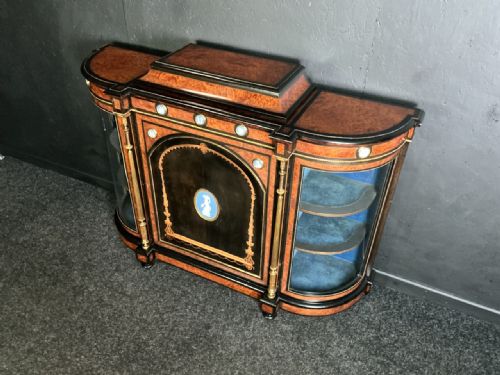
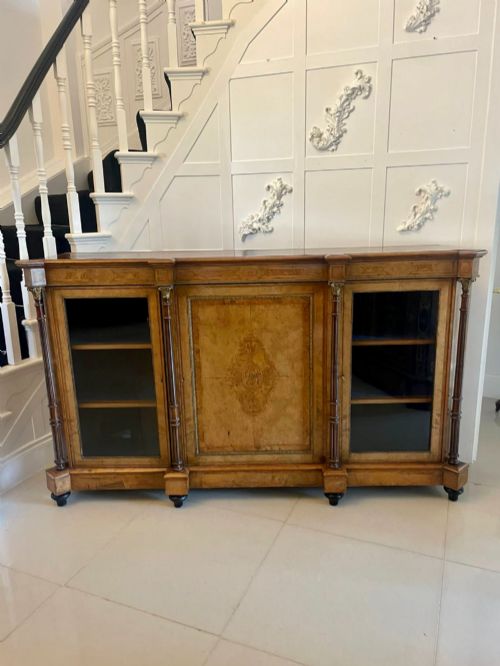
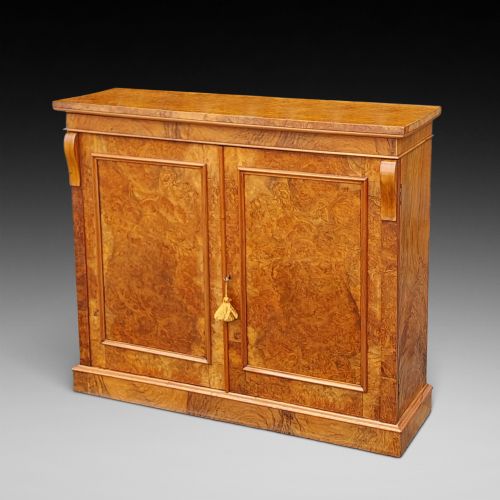
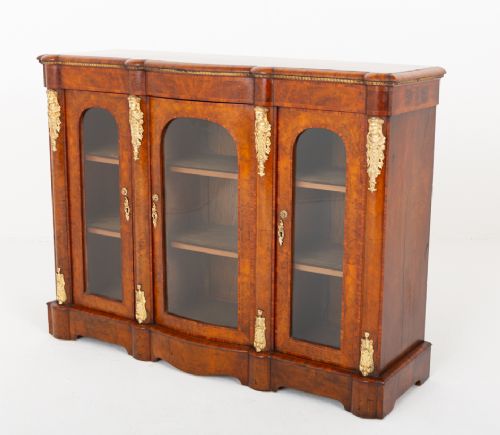
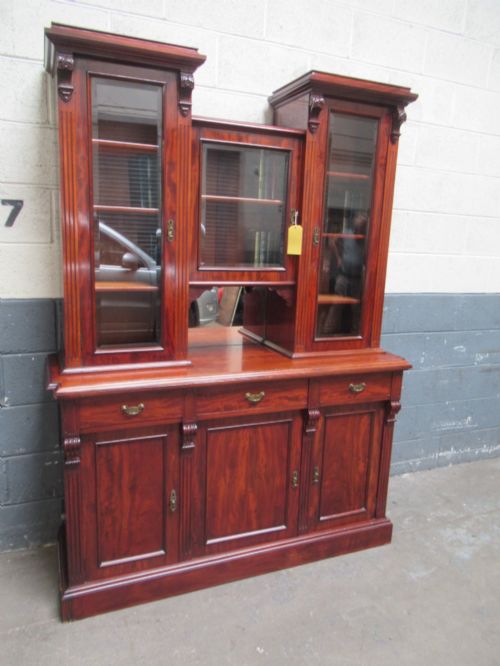
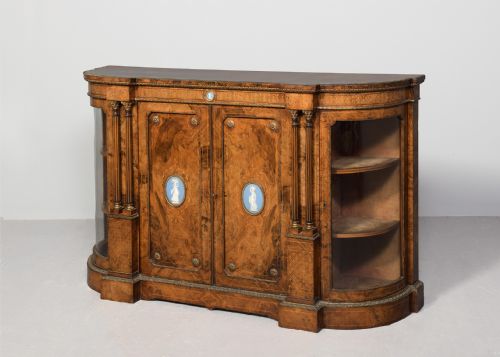
When searching for an antique parlour sideboard, a buyer meets credenzas, display cabinets, and chiffoniers dating primarily from the Victorian and Edwardian eras. These large reception room pieces functioned to display porcelain and silver behind glass doors while offering enclosed storage in polished timber bases.
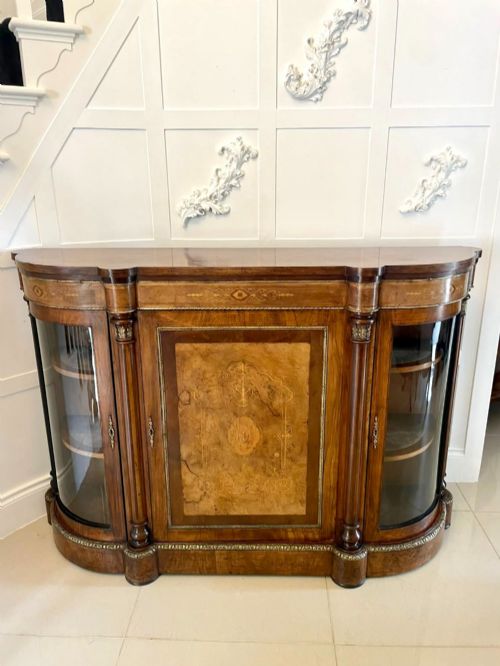
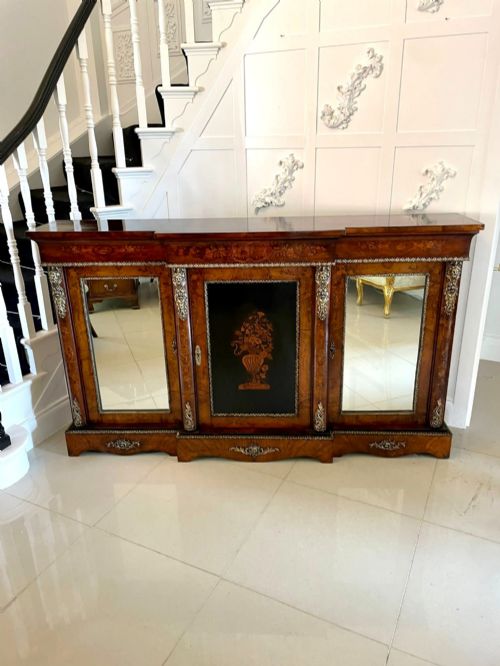
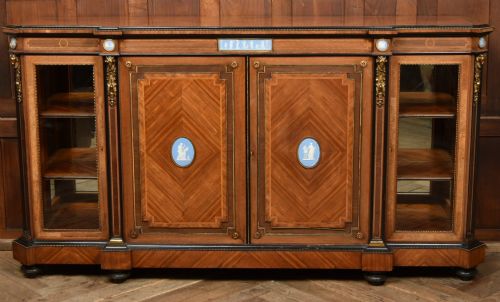
The most common version on this page is the Victorian credenza in burr walnut, often featuring inlaid marquetry and curved glass side compartments. Rosewood and mahogany variants also appear frequently, spanning the mid-nineteenth century through to Edwardian interpretations of Sheraton and French Louis XVI styles.
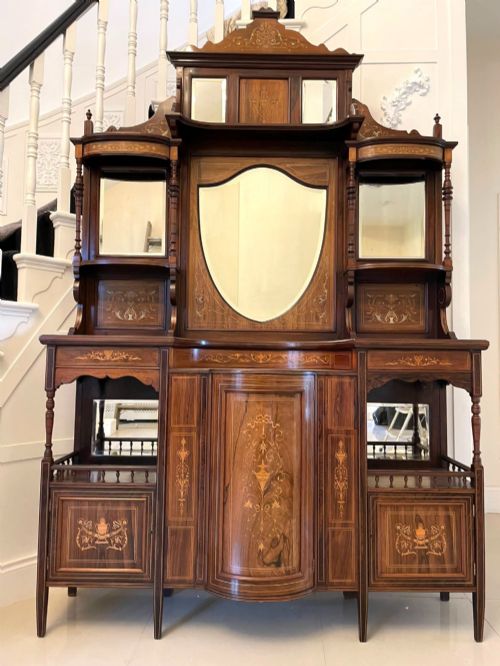
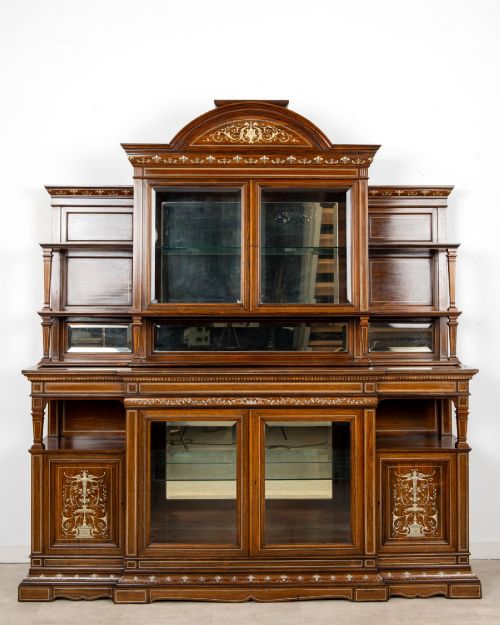
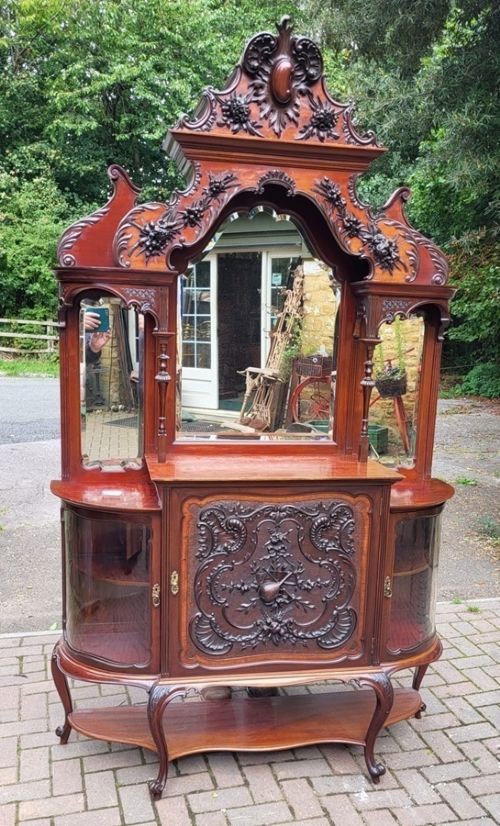
Makers such as Collinson & Lock and Garnett & Sons occasionally sign these high-status parlour pieces, though many surviving examples remain anonymous workshop productions. Their forms range from low, mirrored-back credenzas to tall, serpentine-fronted display cabinets mounted with ormolu.
Materials and construction methods
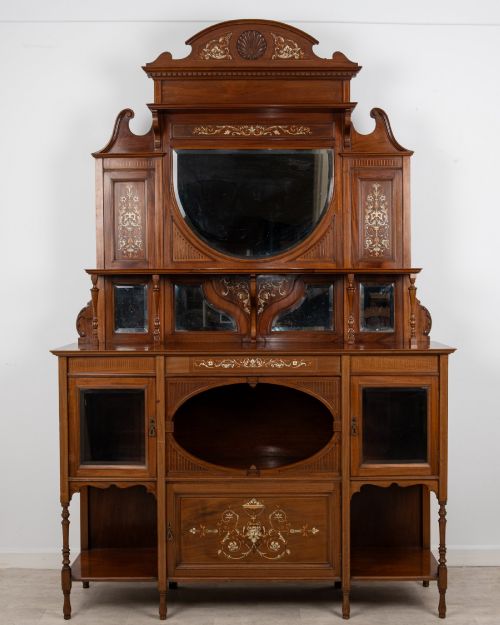
Cabinetmakers utilised expensive timber veneers, principally burr walnut, rosewood, and mahogany, laid over solid pine or oak carcases to create rich figured surfaces. Marquetry inlay in contrasting light woods added floral and geometric ornament to doors and friezes.
Metal mounts in brass and ormolu were cast and chased to edge glass panels, frame doors, and finish feet. Curved glass for bow-fronted credenzas required specialised heat-shaping techniques that defined advanced nineteenth-century cabinet workshops.
Distinctions in construction and design
The skill of the marquetry cutter dictates the crispness of the inlaid floral details against the burr walnut or rosewood ground. Superior examples integrate finely cast ormolu mounts that fit flush against curved timber doors without gaps.
Internal secondary timbers, drawer linings in solid mahogany, and original brass locks separate standard workshop pieces from exhibition-grade furniture. The presence of documented maker attribution or integrated secretaire drawers elevates certain credenzas above typical production.
Collinson & Lock·Garnett & Sons
The Antique Parlour Sideboard Glossary
- Credenza
- A low cabinet for formal rooms, typically featuring a central cupboard flanked by curved glass display sections. These pieces originated as side tables before developing enclosed storage in the nineteenth century.
- Marquetry
- Decorative veneer work forming pictures or patterns from different coloured woods. Craftsmen cut thin sheets of timber together to create interlocking floral or geometric designs.
- Ormolu
- Gilt bronze mounted onto furniture as decorative enrichment. The technique involves applying a gold amalgam to bronze before heating to drive off the mercury.
- Chiffonier
- A small sideboard featuring a combination of cupboards and shelves. Victorian examples often incorporated mirrored backs for displaying ceramics.
- Burr walnut
- Timber taken from walnut tree growths, producing swirling grain patterns prized by cabinetmakers. It was sliced into thin veneers for the principal surfaces of high-status parlour furniture.
Antique Parlour Sideboard: Frequently Asked Questions
What is an antique parlour sideboard?
An antique parlour sideboard is a formal nineteenth-century reception room cabinet designed for display and storage. These pieces combine wood veneers with glass panels to showcase ceramics in formal rooms.
Most surviving examples date from the Victorian period in burr walnut or rosewood. They stand low to the floor, often incorporating mirrored backs and marquetry inlay.
How do I identify a credenza?
A credenza is distinguished by its low profile and symmetrical layout, featuring a central cupboard flanked by curved glass end cabinets. These pieces lack the high raised back of a traditional dining room sideboard.
They frequently display intricate marquetry and ormolu mounts. The top surface serves as a display ledge for decorative objects rather than serving food.
What woods were used for these cabinets?
Makers relied on rich exotic timbers such as burr walnut, rosewood, and mahogany for external surfaces. These veneers were applied over sturdier secondary carcase woods.
Ebonised finishes also appear on Aesthetic Movement pieces, sometimes paired with gilt highlights. Lighter woods like satinwood were utilised for inlaid stringing and marquetry details.
Where were parlour sideboards placed?
These cabinets stood against the main walls of Victorian drawing rooms and formal parlours. Their mirrored backs helped reflect light around reception spaces.
They functioned as the visual centrepiece of the room, displaying the household's finest porcelain and glassware behind locked glass doors.