

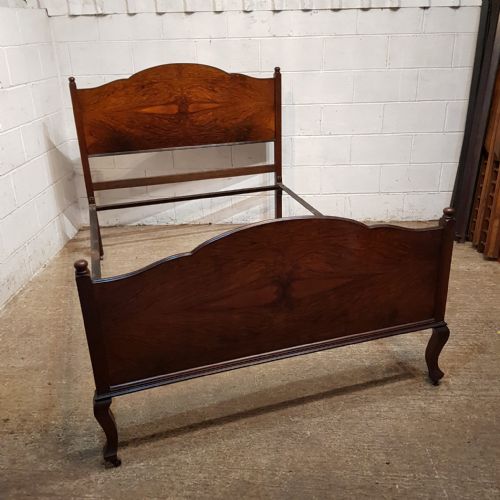

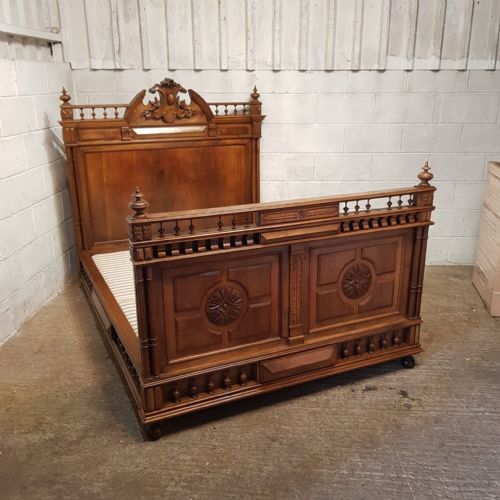


Antique Panelled Bedstead
An antique panelled bedstead brings structural timber and carved detail straight to the bedroom, offering substance that modern frames simply lack.
Antique Panelled Bedstead
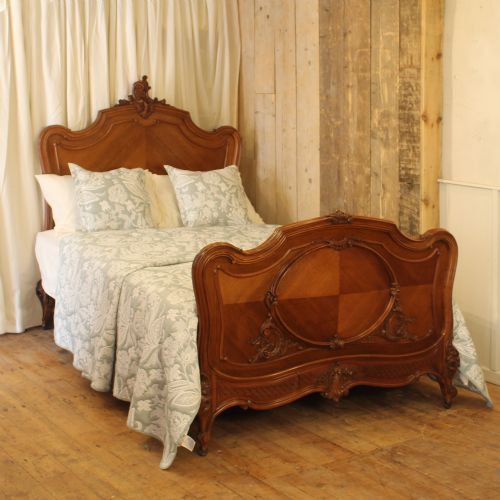
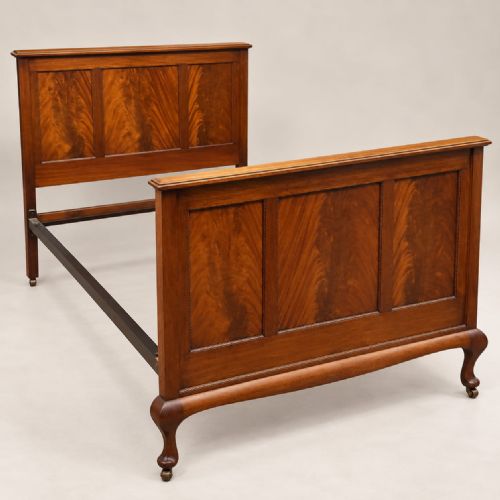
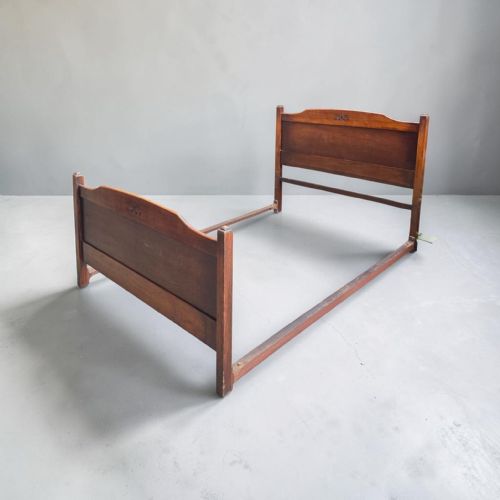
The most common examples on this page date from the Edwardian period and around nineteen hundred, often employing oak, walnut, or mahogany in double and single formats. Alongside standard bed frames, the listings contain four poster tester beds and French styles featuring decorative painted panels.
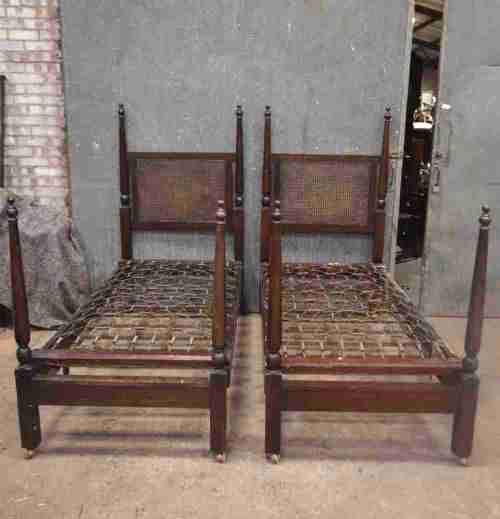
Makers such as Heal's and Maple and Co. appear among the Edwardian and late Victorian pieces, providing labelled examples of cabinetmaker output. Buyers also find pairs of single beds and larger emperor or king size proportions suited to modern mattresses.
Distinctions in Quality
Quality rests upon the selection of timber, such as figured burr walnut, rich mahogany, or solid seventeenth-century oak, paired with crispness in hand-carved details. Maker attribution via original labels or distinct workshop traits elevates certain pieces above standard vernacular output.
The integrity of the panel construction and the preservation of original painted surfaces or polished finishes dictate the standing of a bedstead. Proportions that accommodate standard modern mattress sizes without altering the antique framework also influence desirability.
Hand-painted floral portraits gaze serenely from the headboards of early twentieth-century French beds, ensuring nobody sleeps entirely alone.
Heals·Maple and Co
The Antique Panelled Bedstead Glossary
- Tester bed
- A bed featuring a wooden canopy or ceiling supported by posts above the frame. Seventeenth-century examples often display heavy oak carving.
- Bergere
- A type of enclosed armchair or bed end featuring cane work panels. This technique uses woven cane to create light, breathable sections within the wooden frame.
- Panelling
- Flat sections of wood set within a thicker frame to prevent warping. These panels form the decorative centrepieces of headboards and footboards.
- Polychrome
- Decorated in multiple colours, typically applied to hand-painted floral or portrait panels on French furniture. It adds pictorial detail to the timber structure.
- Satinwood
- A hard, durable timber with a golden sheen, prized for fine cabinetmaking. Late Victorian makers utilised it for smooth, pale bedroom suites.
Antique Panelled Bedstead: Frequently Asked Questions
Will an antique bedstead fit a modern mattress?
Many Edwardian and twentieth-century panelled bedsteads accommodate standard sizes such as double or king, though older seventeenth-century frames often require custom mattresses.
Sellers regularly provide precise internal dimensions within the listing details to confirm compatibility with contemporary bases.
How are four poster beds assembled?
Four poster tester beds utilise traditional tenon and mortise joints alongside heavy bed bolts to secure the headboard, footboard, and side rails. The upper tester canopy locks the vertical posts into a rigid structure.
Professional installation ensures the heavy timber frame remains square and stable during use.
What is the difference between French and English styles?
French bedsteads from the nineteenth and early twentieth centuries frequently showcase painted floral panels, shaped walnut, and lighter decorative flourishes. English equivalents lean towards solid oak and mahogany with formal carved panelling.
Both traditions offer distinct aesthetic choices depending on the intended bedroom interior.
How do I care for wooden bed frames?
Maintain finished timbers by dusting with a soft cloth and applying appropriate beeswax periodically to preserve the natural lustre of the wood. Avoid placing wooden frames near direct heat sources to prevent timber splitting.
Regularly check and tighten internal bolts to maintain structural rigidity over time.