




Carved Oak Four Poster
A carved oak four poster brings monumental presence and genuine history into a room, offering the structural ambition of earlier centuries.
Carved Oak Four Poster
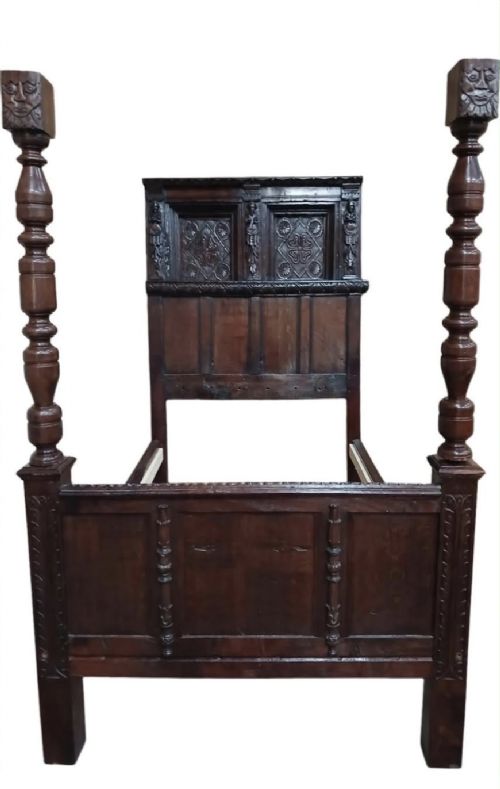
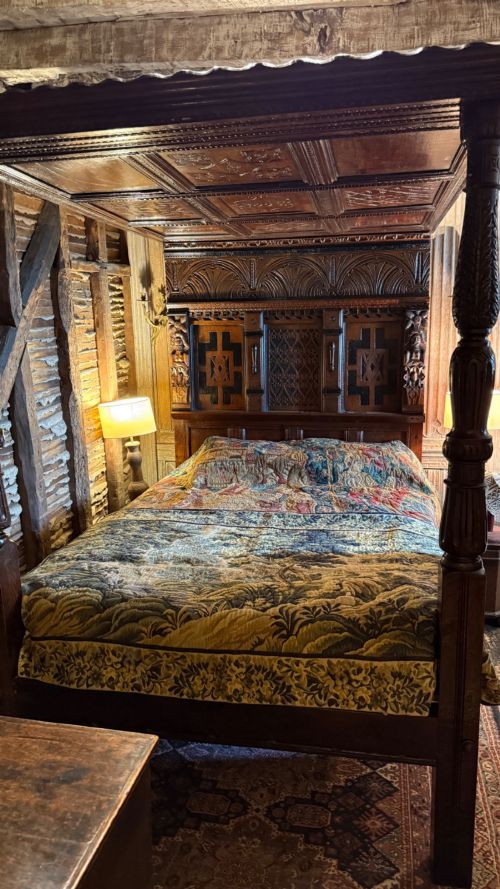
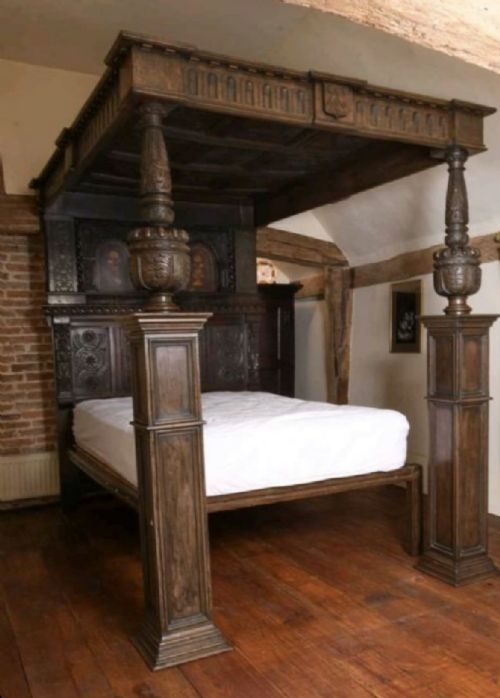
When you search for a carved oak four poster, you are looking at substantial sleeping structures defined by timber uprights and overhead testers. The examples found here span genuine seventeenth-century survivals alongside later nineteenth-century revivals and Arts and Crafts interpretations.
Most pieces you meet on this page lean heavily into seventeenth-century proportions, featuring panelled headboards and heavily carved posts. You will also encounter architectural salvage elements such as pairs of bed posts designed for larger architectural schemes.
How they were made
Construction relies upon solid oak timbers, occasionally incorporating secondary hardwoods and fruitwood inlay for decorative contrast. Joinery methods prioritise pegged mortise and tenon joints to bear the considerable weight of the tester frame.
Carving is executed directly into the dense grain of the wood, utilising gouges and chisels to create deep relief patterns. Textile elements, fabric, and brass hardware complete the upper tester and bedding configurations.
Carved Oak Four Poster Retail Price Guide 2026
Typical asking prices for carved oak four poster among the pieces listed under this phrase on Sellingantiques today, from the lower quarter to the upper quarter. They describe what is for sale here now, not the wider market.
At least one listing includes a pair of lonely bed posts looking for a grand reunion.
What varies in quality
The distinction between ordinary and exceptional pieces lies in the depth and crispness of the timber carving. Architectural confidence in the tester canopy and the proportion of the corner posts determine the overall visual success of the bed.
Originality of the structural timber greatly influences the standing of a piece. Beds retaining their early seventeenth-century components hold a different character compared to nineteenth-century Gothic revivals.
The Carved Oak Four Poster Glossary
- Half tester
- A canopy that extends only partway over the bed from the headboard, supported by two posts rather than four.
- Fruitwood inlay
- Contrasting lighter wood inserted into the oak background to create geometric or floral patterns.
- Architectural salvage
- Building elements rescued from older structures, such as individual carved bed posts or panels.
- Jacobean style
- Design aesthetic popular during the early seventeenth century, characterised by rigid symmetry and strapwork carving.
Carved Oak Four Poster: Frequently Asked Questions
How do I fit a modern mattress?
Many antique four poster beds were built to historical dimensions rather than standard modern sizing. You may need to verify the internal span between the posts and rails to accommodate contemporary mattresses.
Some examples have been adapted over time or built with enough tolerance to house standard double or king dimensions, but careful measurement remains essential before purchase.
Are these beds difficult to assemble?
Traditional construction relies on heavy interlocking wooden tenons and iron or wooden pins rather than modern mechanical screws. Assembling a tester frame usually requires at least two people and a methodical approach to the joints.
Professional installation is often recommended to ensure the overhead tester and heavy oak posts are correctly plumbed and structurally secure.
How do I tell seventeenth century from revival?
Distinguishing period work from later nineteenth-century revival pieces requires close inspection of the timber patination and tool marks. Seventeenth-century examples display wear patterns and construction methods consistent with early hand tools.
Revival pieces, including Victorian Gothic and Arts and Crafts interpretations, often show more uniform machine sawing behind the decorative surface carving.
What is the difference between full and half testers?
A full tester canopy covers the entire surface of the bed, supported by four substantial upright posts at each corner. This configuration creates a complete architectural enclosure.
A half tester projects only from the headboard and rests on two front posts, leaving the foot of the bed open to the room.