


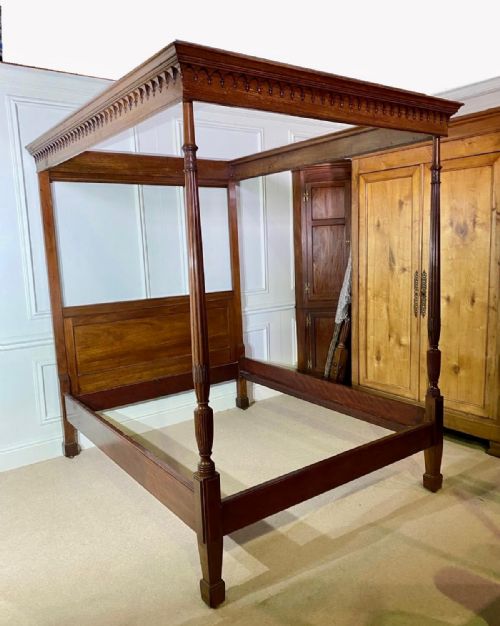

Full Tester Canopy Bed
A full tester canopy bed creates an immediate architectural presence in a room, offering the enclosed shelter and dramatic vertical lines that define historic sleeping quarters.
Full Tester Canopy Bed
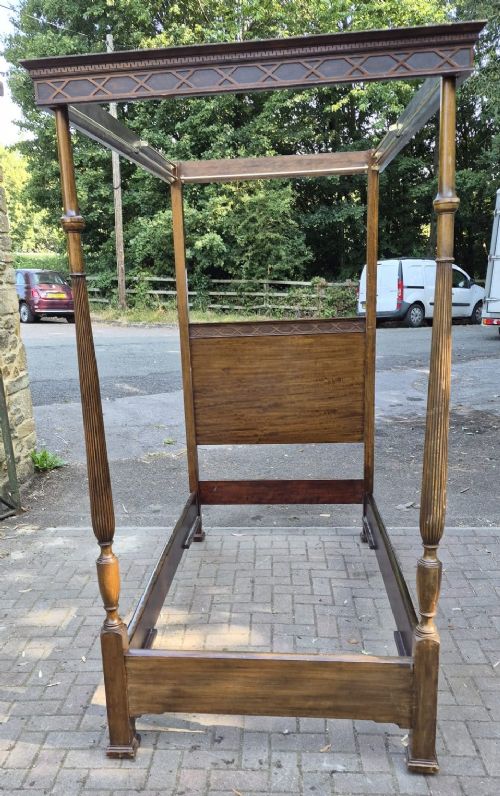
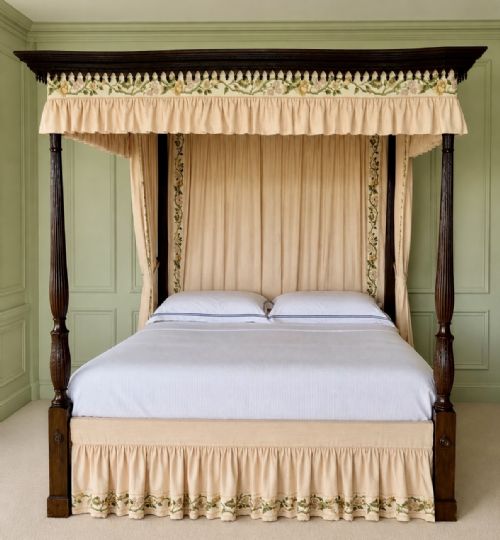
A full tester canopy bed is a substantial frame defined by four vertical posts supporting an overhead wooden or fabric tester canopy. When searching for a full tester canopy bed, buyers encounter pieces spanning multiple centuries, from early English oak constructions to later revival interpretations.
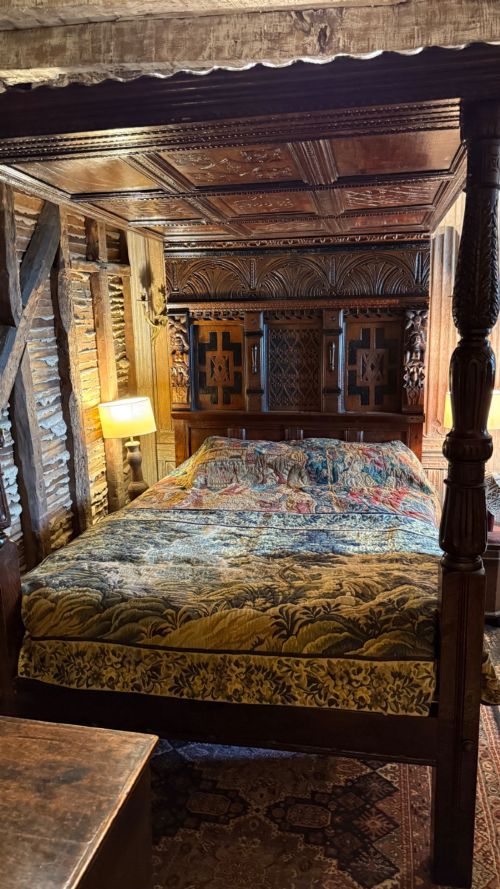
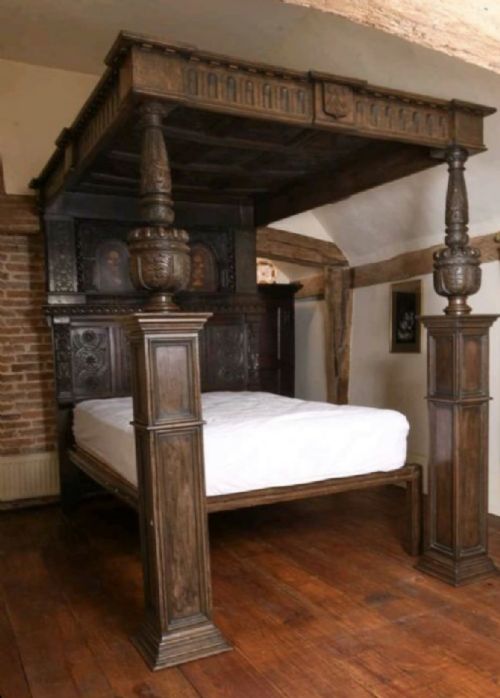
The selections on this page are most commonly represented by 17th Century oak examples featuring panelled testers and heavily turned posts, alongside 19th Century and Edwardian mahogany iterations built in Regency or Georgian revival styles.
Makers and craftsmen across these periods utilised architectural proportions, often incorporating carved headboards and cornices that anchor the entire bedstead within a large bedroom.
Materials and construction methods
Construction relies heavily on sturdy hardwoods such as oak and mahogany, occasionally complemented by fruitwood inlay or secondary timbers like pine. Early seventeenth-century frames utilise traditional mortise and tenon joinery secured with wooden pegs, creating a rigid structural skeleton for the heavy overhead tester.
Later nineteenth-century and Edwardian examples incorporate turned and reeded mahogany posts, while metal alternatives utilise brass and iron elements to achieve slender vertical supports without sacrificing stability.
Fabric and textiles form the upper canopy and drapery components, softening the hard architectural lines of the wooden or metal tester frame above.
Early wooden testers occasionally feature secret compartment mouldings, originally designed to conceal small valuables from midnight visitors.
Distinctions in construction and design
Quality in these beds rests upon the integrity of the timber and the depth of the carving on the posts and headboard. Superior examples display crisp, hand-chiselled detailing on the frieze and cornice, whereas lesser pieces rely on shallow machine cutting or later assembled elements.
The proportion between the height of the posts and the span of the tester canopy determines the visual balance of the bedstead. Original joinery and unblemished timber surfaces distinguish the finest period pieces from heavily restored or later constructed adaptations.
Howard & Sons
The Full Tester Canopy Bed Glossary
- Post
- The vertical timber or metal pillar supporting the tester canopy. These structural supports are frequently turned, carved, or reeded.
- Cornice
- The moulded horizontal projection that crowns the upper edge of the tester. This decorative wooden band frames the top of the bed.
- Headboard
- The upright panel at the back of the bedstead, frequently decorated with linenfold panelling, arches, or inlaid fruitwood motifs.
- Footpost
- The front two vertical pillars of a four-poster bed, typically more ornate than the rear supports to showcase the grain and carving.
Full Tester Canopy Bed: Frequently Asked Questions
How do I fit a modern mattress?
Many historic bedframes require custom mattress sizing or internal wooden slats to support modern dimensions properly. Checking the internal rail measurements ensures compatibility with contemporary bases.
Adjustment of the side rails or insertion of a modern platform base can often accommodate standard mattress widths without altering the historic exterior appearance.
Are these beds difficult to assemble?
Traditional frames utilise heavy timber components and pegged joints that require patience and multiple people for safe erection. The sheer weight of the tester canopy and posts demands careful alignment.
Professional installation is often recommended to ensure the vertical posts remain plumb and the overhead tester is securely anchored to the frame.
How do I tell oak from mahogany periods?
Oak construction predominantly aligns with 17th-century pieces, displaying open grain and darker patination suited to Jacobean and Elizabethan aesthetics. These pieces feature robust, structural joinery.
Mahogany frames typically emerge in 19th-century and Edwardian contexts, reflecting Regency and Georgian revival tastes with smoother reddish-brown surfaces and finer turned details.
Can I hang curtains from the tester?
The overhead wooden or metal tester framework is structurally designed to support traditional fabric draperies and pelmets. Iron rods or wooden rails are frequently integrated into the design for this purpose.
Selecting textiles appropriate to the period of the bed helps maintain historical balance, whether utilising plain linens or heavier patterned damasks.