
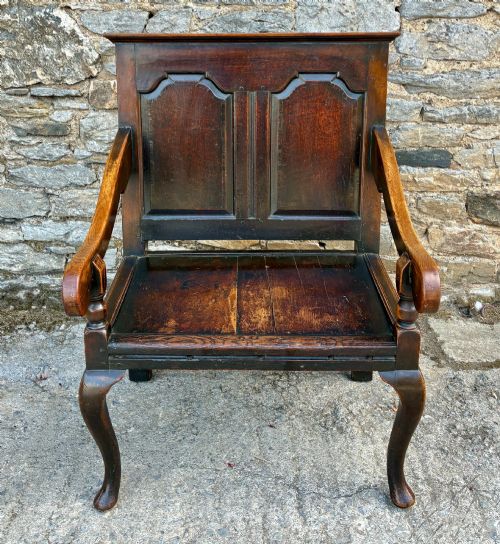
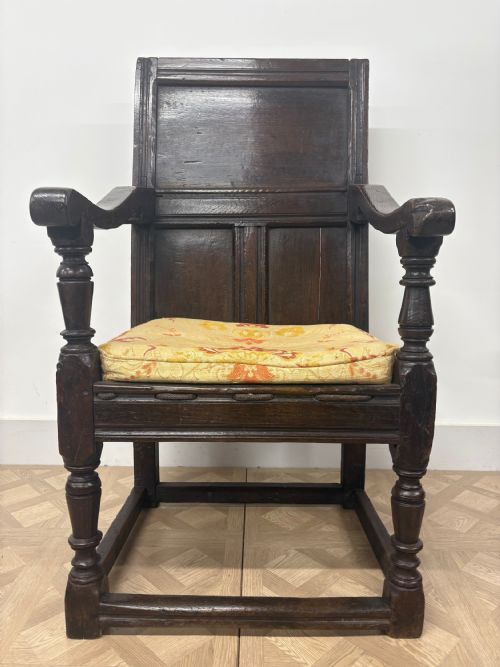
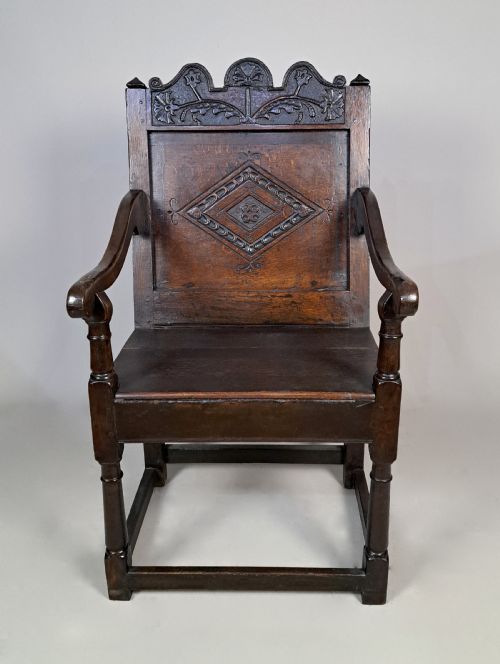
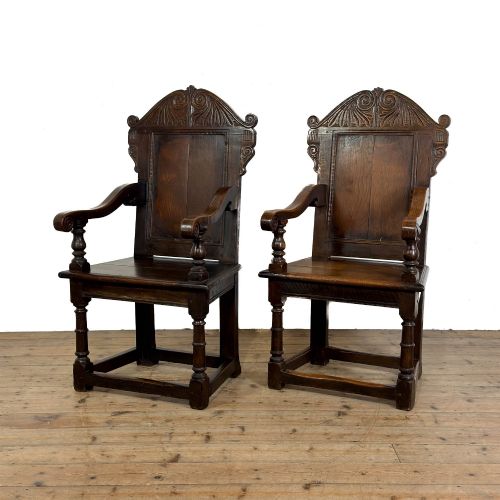

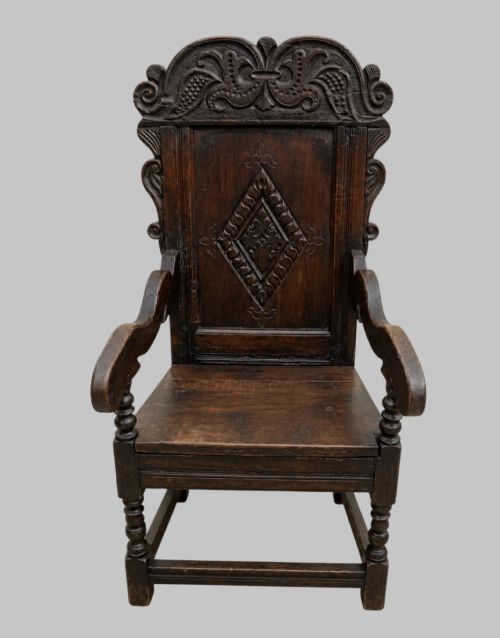


Antique Panelled Back Armchair
An antique panelled back armchair offers robust timber construction and historic joinery, serving as a commanding seat for any traditional interior.
Antique Panelled Back Armchair
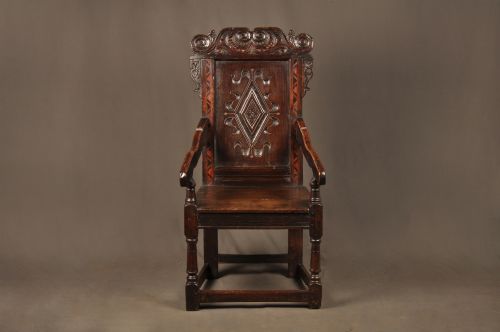
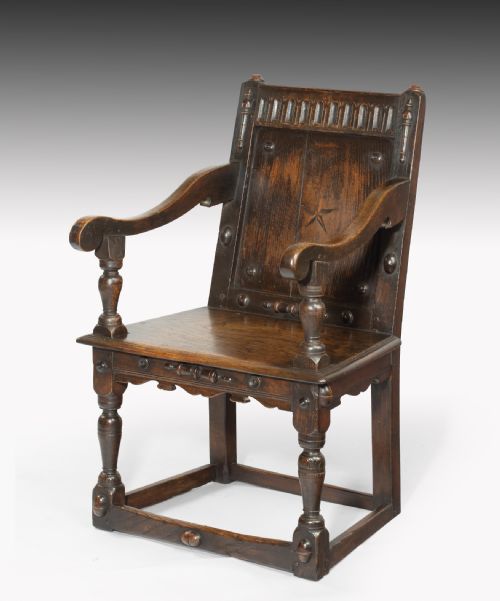
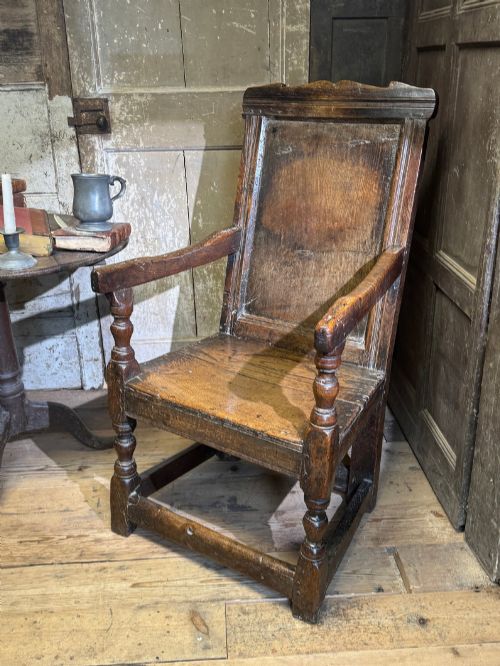
An antique panelled back armchair is a sturdy wooden seat distinguished by a flat, framed wooden back panel rather than open spindles or upholstery. These chairs derive from early vernacular and formal traditions, often appearing under names such as wainscot or great chairs.
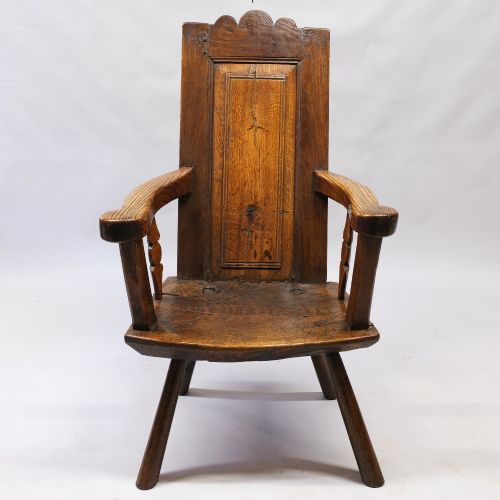
The pieces appearing on this page span several centuries, with origins recorded in the seventeenth, eighteenth, and nineteenth centuries. Alongside genuine early examples, the selection includes later revivals and regional variants like Lakeland and Welsh forms.
Makers shaped these chairs primarily for domestic and hall use, employing heavy timber framing to withstand daily wear. Buyers encounter distinct regional characteristics, particularly from Yorkshire and Wales, alongside continental forms including the caquetoire.
How they were made
Cabinet makers built these chairs using solid oak predominantly, alongside walnut, elm, and exotic hardwoods for specific regional or later examples. Joinery relied on mortise and tenon joints secured with wooden pegs, creating a rigid frame without metal fasteners.
Carving and panel construction defined the ornamentation, with woodworkers utilising gouges and chisels to apply strapwork, floral motifs, and geometric patterns directly onto the solid timber. Upholstery materials like leather, fabric, and velvet appear on select later pieces or subsequent additions.
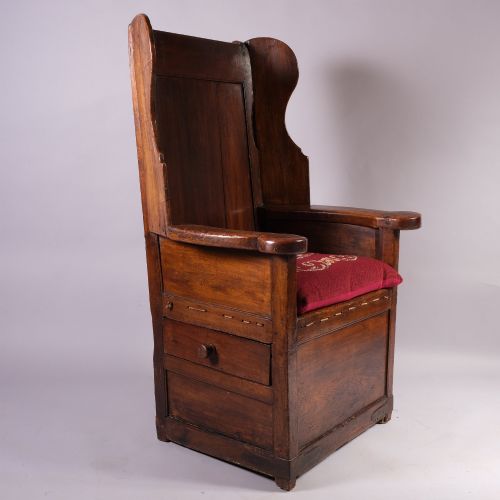
Early seat designs offered enclosed panelled wings specifically to trap hearth warmth and fend off winter drafts.
What varies in quality
Quality rests upon the proportion of original timber remaining in the frame and the crispness of the hand carving on the back panel. Early examples with intact, unreplaced structural members and genuine period surfaces command greater respect among collectors.
The integrity of the joinery and the balance between the arm supports, seat, and panelled back determine the structural merit of the piece. Subtle regional details and well-executed period carving elevate certain chairs above standard utilitarian workshops.
The Antique Panelled Back Armchair Glossary
- Wainscot
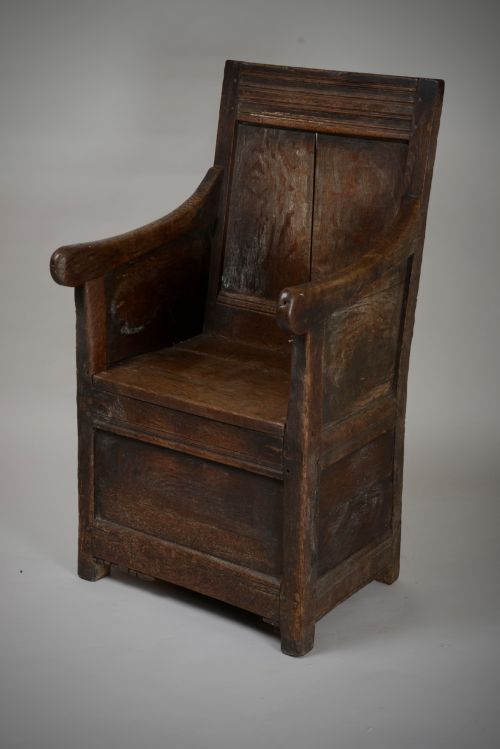
- A term originally describing fine oak panelling, applied to heavy wooden armchairs featuring a panelled back. These chairs date predominantly from the seventeenth century and earlier.
- Caquetoire
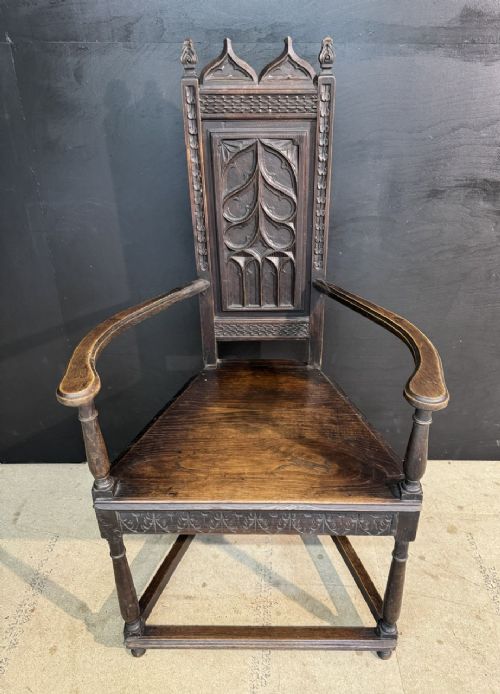
- A light, high-backed armchair originating in sixteenth-century France, designed to facilitate conversation. These typically feature a trapezoidal seat and santed arms.
- Lambing chair
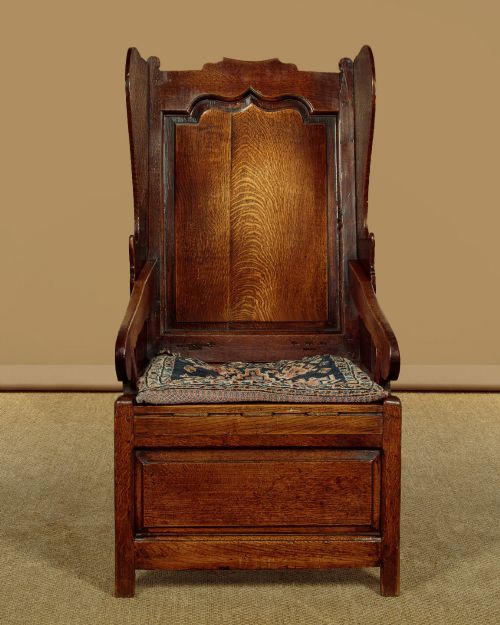
- An enclosed regional armchair featuring solid wooden wings or sides intended to block drafts. They often incorporate a box base or drawer beneath the seat.
- Settle
- A wooden bench with a high panelled back and arms, built to seat multiple people or provide a sheltered resting place. They share construction methods with panelled back armchairs.
- Mortise and tenon
- A fundamental woodworking joint where a projection on one board fits tightly into a corresponding cavity on another. Pegs often secure these joints through the face.
Antique Panelled Back Armchair: Frequently Asked Questions
How do I identify a seventeenth century wainscot chair?
Seventeenth century wainscot chairs exhibit heavy solid oak construction joined by pegged mortise and tenons, featuring flat panelled backs often decorated with shallow carved strapwork or scrolling foliage. The proportions tend to be stout, with boarded seats and thick arm supports.
Later nineteenth-century revival pieces often display machine-cut timber marks, looser patination, or proportions that mimic earlier examples without the matching wear patterns. Examining the underside and joint construction reveals the age of the timber and the methods used by the maker.
What is a caquetoire armchair?
A caquetoire is a conversational armchair developed in sixteenth-century France, characterised by a narrow trapezoidal seat and curved arms that accommodated wide skirts. The tall, slender panelled back allowed sitters to converse easily in formal chambers.
Examples found in later periods maintain these distinct proportions while utilising walnut or oak consistent with nineteenth-century revival tastes. Their lighter frames separate them from the heavier, boxy forms of English wainscot chairs.
Where were lambing chairs used?
Lambing chairs served as functional seating in farmhouses and rural dwellings across regions like the Lake District and Wales, where solid wooden wings protected occupants from cold drafts. The enclosed sides trapped heat from a hearth or body warmth.
These chairs often feature elm or oak timber combined with high wing backs and sometimes a storage compartment beneath the seat. Their vernacular design prioritised utility and durability over formal ornamentation.
How do I care for antique oak chairs?
Antique oak chairs require stable indoor humidity and protection from direct sunlight to prevent the timber from drying, warping, or splitting. Regular dusting with a soft cloth maintains the surface without the need for heavy modern polishes.
Applying a traditional beeswax occasionally helps nourish the aged wood and preserves the natural lustre of the surface. Avoiding placement near heat sources ensures the historic joints remain tight and secure.