
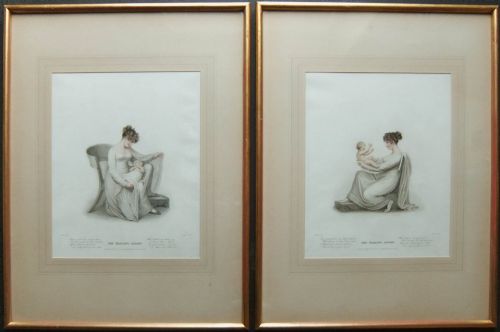
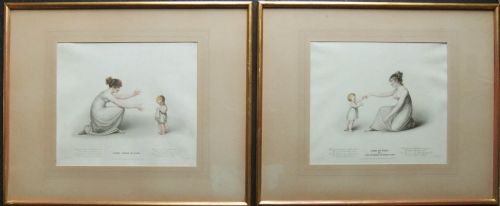
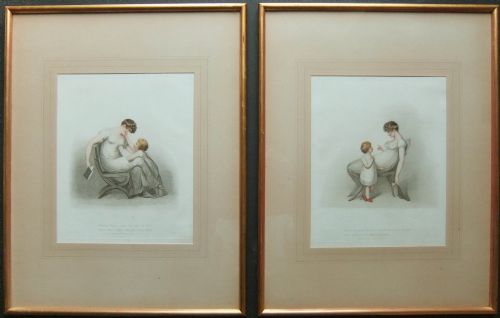

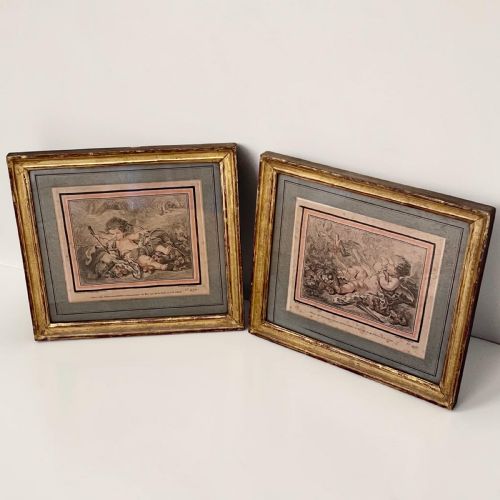
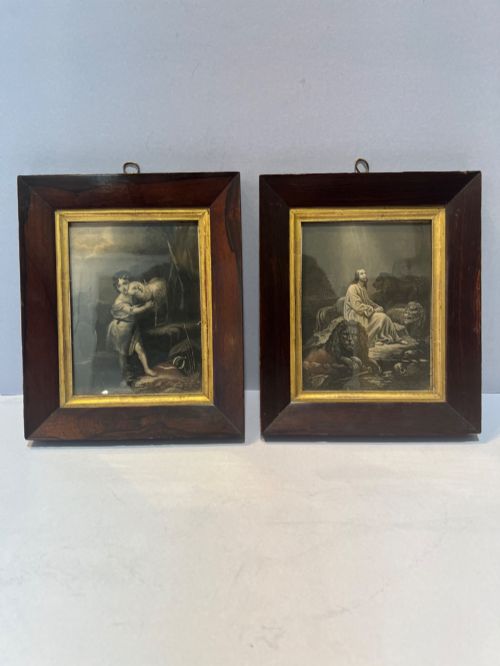


Antique Pair Engravings
Antique pair engravings deliver matched balance to a wall, pairing historical subjects from natural history to portraiture within unified frames.
Antique Pair Engravings
These works comprise matched sets of two printed plates, produced across the seventeenth, eighteenth, and nineteenth centuries. Buyers frequently encounter subjects spanning botanical and zoological studies, classical architectural scenes, and domestic portraiture. They commonly arrive ready to hang in period timber and gilt frames.
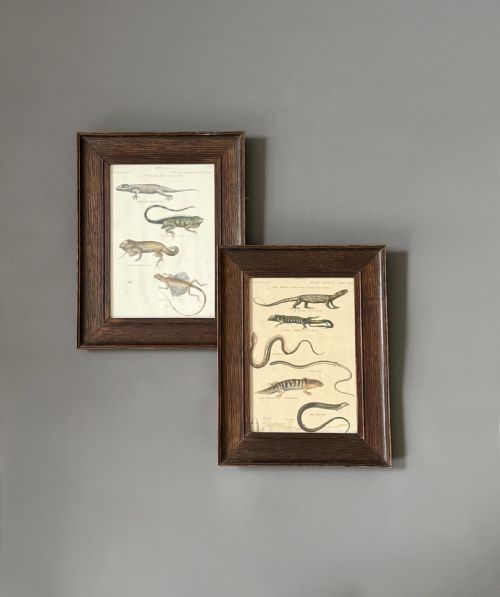
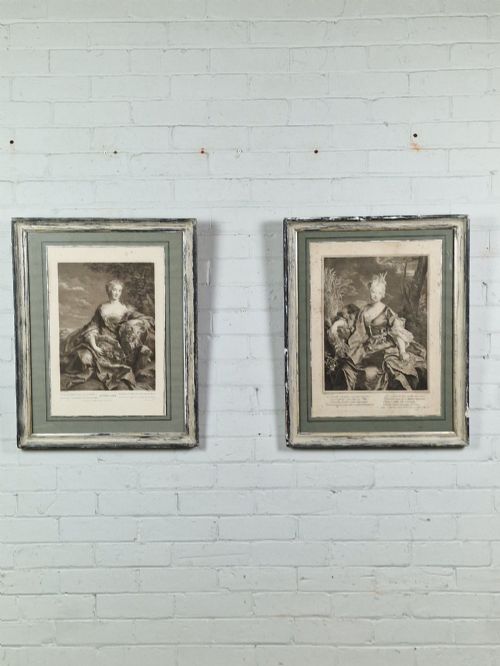
The selections on this page draw from Georgian and Victorian eras, alongside earlier French Rococo and Neoclassical movements. Examples range from hand-coloured reptile and bird studies to military formations and sporting scenes. Each matching pair preserves a specific narrative or visual symmetry intended for parallel display.
How they were made
Makers applied ink to engraved metal plates, pressing the image onto paper using heavy rolling presses. Many plates received subsequent hand-colouring in watercolours or washes to enrich the printed line.
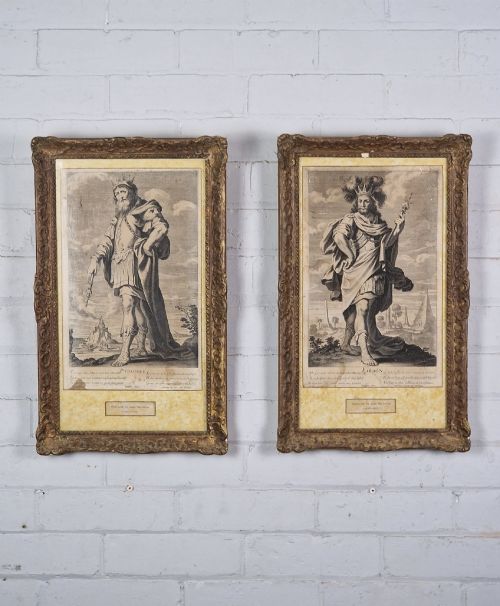
Framing utilised woods such as walnut or applied gold leaf, creating giltwood and gilt mouldings protected by glass. These materials secured the paper against atmospheric moisture while complementing the domestic interiors of their period.
Listings feature works spanning the seventeenth century through to 1900, rendered in ink and watercolours on paper within wood and gilt frames.
What varies in quality
Distinctions in quality rest upon the crispness of the impression transferred from the plate and the subtlety of any applied hand-colouring. Early strikes capture finer details in lines and cross-hatching before the metal plate undergoes wear.
The preservation of the original paper sheet, alongside the survival of period frames in wood and gold leaf, determines the overall integrity of the set. Matched provenance between the two companion pieces ensures a true historical pair rather than a later assembled grouping.
William Bird MD FLS·Jean Mariette·Thomas Frye·Richard Purcell·Adam Buck·Jacobus Houbraken·Huet·Demarteau·Robert Sayer·Buffon·Pierre Buillon·Henri Chatillon·David Roberts·G Morland·Herbert Dicksee·Georg Wolfgang Knorr·H. Alken·H. Singleton·Sam. Howitt·H. Strafford·Hans Holbein·Bartolozzi·Robert Havell·Hubert Cornish
The Antique Pair Engravings Glossary
- Engraving
- A printmaking technique where an artist cuts lines directly into a metal plate with a sharp tool. The resulting incisions hold the ink for transfer under pressure.
- Mezzotint
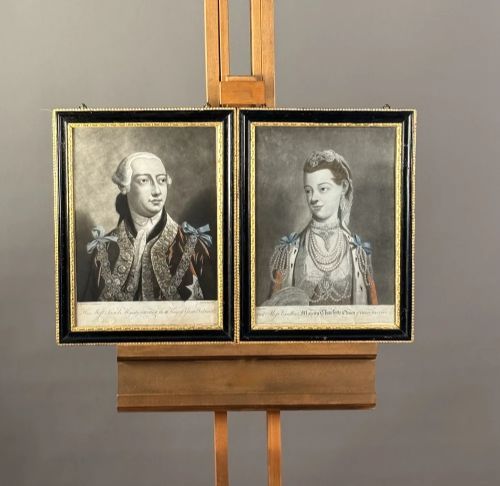
- A printmaking method that works from dark to light by roughening the metal plate to hold ink. It produces rich tonal gradations rather than hard lines.
- Stipple-engraving
- A technique using dots of varying density to create soft shadows and painterly effects. It gained popularity for domestic and portrait subjects.
- Giltwood
- Wood carved and covered with a thin layer of gold leaf. This material defined high-status frames across Georgian and Victorian interiors.
- Grand Tour
- A traditional trip through Europe undertaken by upper-class young men for education. Resulting prints often depicted classical antiquities and foreign architecture.
Antique Pair Engravings: Frequently Asked Questions
How should I hang antique pair engravings?
Hang the two pieces at eye level with equal spacing between them to maintain their visual balance. Keep them away from direct sunlight to prevent the paper and any hand-colouring from fading.
Ensure the wall fixings match the weight of the timber and gilt frames. Consistent lighting from above highlights the fine lines of the printing process.
What subjects are common in these pairs?
Common subjects include natural history studies such as birds, reptiles, and anatomical skeletons. Other frequent themes feature classical architecture, military formations, and sporting scenes.
Many sets depict companion narratives, such as morning and evening scenes or matching portraits of historical figures. This dual format offers a structured display for domestic walls.
How do I identify the period of the frame?
Period frames often show hand-carved wooden construction, sometimes finished with genuine gold leaf over a gesso base. Look at the backboards and fixings for signs of age, such as hand-cut screws or old nails.
Matching frames that show uniform wear consistent with the print dates suggest original housing. Alterations or modern backing boards indicate the prints were reframed later.
Are all these prints hand coloured?
Not all prints feature added colour; many rely entirely on black ink or sepia tones. When colour is present, it was applied by hand using watercolours after the printing process.
Close examination under magnification reveals brushstrokes within the coloured areas. Monochrome impressions depend entirely on the precision of the engraved lines.