

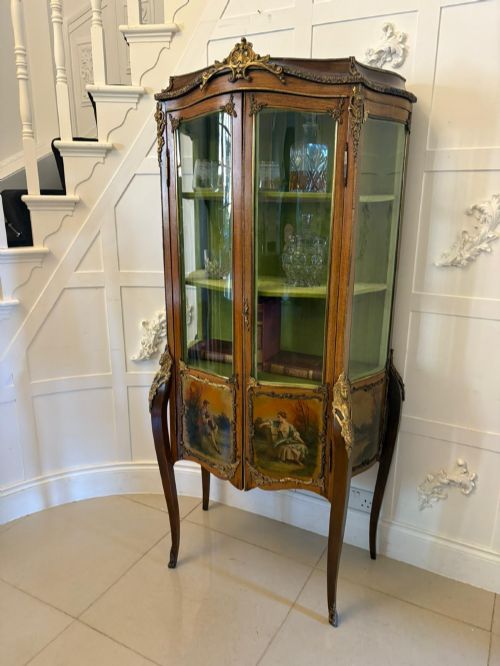
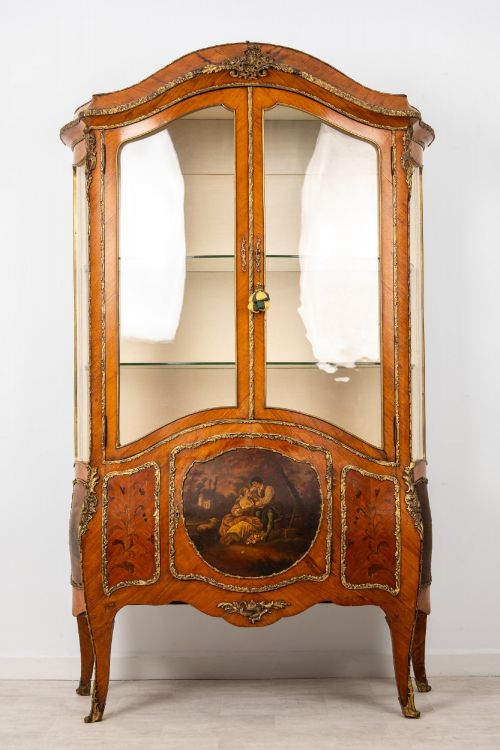


Antique Painted China Panel
These antique painted china panel pieces bring delicate porcelain artistry and rich cabinetwork into a room.

Antique Painted China Panel
When you search for an antique painted china panel, you encounter items ranging from standalone porcelain portrait plaques and vases to larger pieces of furniture featuring decorated porcelain and painted panels. The selection spans the nineteenth century, including Victorian examples alongside pieces dated around eighteen eighty, nineteen hundred, and nineteen twenty.
The most common forms on this page include French display cabinets and vitrines fashioned from kingwood, mahogany, and giltwood, often fitted with ormolu or gilt bronze mounts and integrated painted decoration. Alongside these cabinets appear individual ceramic works, notably Rockingham porcelain jugs with floral panels and Japanese Imari vases, as well as distinct porcelain portrait plaques.
Stylistically, the pieces lean heavily toward French Rococo revival and Louis the Fifteenth designs, alongside nineteenth century European and Japanese Imari influences. These varied objects combine utilitarian furniture and decorative ceramic arts into cohesive items designed for display.
How they were made
The construction of these items relies on cabinet timbers such as kingwood and mahogany, which form the structural carcasses for vitrines and display cabinets. Craftsmen integrated decorative elements like ormolu, gilt bronze mounts, and lacquer work to frame the visual focal points.
Surface decoration involves hand-painted porcelain panels and ceramic bodies, seen in floral motifs on Rockingham jugs and detailed portrait plaques. Glazing, gilding, and fine brushwork finish the ceramic components, while glass panels are fitted into doors to showcase the interiors.
Antique Painted China Panel Retail Price Guide 2026
Typical asking prices for painted china panel among the pieces listed under this phrase on Sellingantiques today, from the lower quarter to the upper quarter. They describe what is for sale here now, not the wider market.
Some cabinets hide their painted panels behind curved bombe glass, as if shy about showing off their porcelain faces to the room.
What varies in quality
The refinement of the painted detail on the porcelain panels and plaques dictates much of the visual merit across these items. Crisp brushwork, delicate facial expressions in portraits, and precise floral rendering separate superior examples from simpler decorative work.
In the cabinetry, the integration of ormolu mounts, the selection of kingwood veneers, and the execution of Vernis Martin decoration determine the overall standard. Pieces that maintain a harmonious balance between the woodwork, bronze mounts, and inset painted china panels represent the higher end of the range.
The Antique Painted China Panel Glossary
- Vernis Martin
- A simulated Japanese lacquer technique developed in eighteenth-century France and emulated later in nineteenth-century furniture. It uses successive layers of translucent varnish to create polished decorative surfaces.
- Ormolu
- Gilded bronze mounts applied to furniture and decorative objects for ornamentation. The finish provides a rich metallic contrast against woods like kingwood and mahogany.
- Vitrine
- A glass-fronted cabinet designed for the display of porcelain, curiosities, and small decorative arts. These pieces often feature glass sides to maximise light exposure.
- Kingwood
- A dense, richly grained timber frequently used as a veneer in fine cabinetmaking. Its dark brown tones and lighter figuring suited elaborate nineteenth-century furniture.
- Rockingham Porcelain
- English ceramic ware produced during the nineteenth century known for ornate gilding and hand-painted floral panels. It represents a significant tradition of British pottery.
Antique Painted China Panel: Frequently Asked Questions
What is an antique painted china panel?
An antique painted china panel is a hand-painted ceramic plaque or tile, or a decorated ceramic insert integrated into larger decorative objects and furniture.
These panels feature floral scenes, portraits, or traditional motifs, serving as visual centrepieces on vitrines, cabinets, or as standalone wall art.
How were these display cabinets used?
Display cabinets and vitrines were built to house and protect valuable collections of porcelain, glassware, and small ornaments.
The glass doors and sides allowed owners to showcase their collections safely while keeping dust away from delicate items in nineteenth-century drawing rooms.
How do I date a painted china panel cabinet?
Dating these cabinets involves examining the timber species, such as kingwood or mahogany, alongside the style of the ormolu mounts and the construction methods used.
Nineteenth-century examples frequently employ French Rococo revival forms and specific varnishing techniques like Vernis Martin to recreate earlier aesthetic periods.
Where were these pieces made?
The pieces listed originate primarily from European workshops, with a strong emphasis on nineteenth-century French cabinetmaking and English porcelain production.
Influence also extends to Japanese Imari styles, reflecting the widespread international exchange of decorative arts motifs during the period.