




Antique Outdoor Urn Pair
These antique outdoor urn pair selections bring architectural rhythm to garden paths and terraces, offering enduring structure built from heavy iron, stone and terracotta.
Antique Outdoor Urn Pair
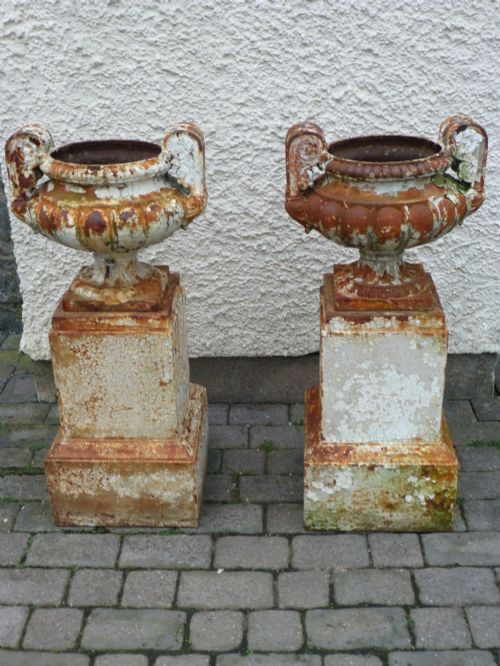
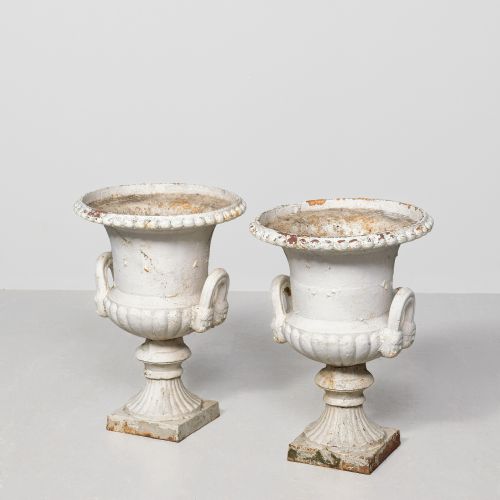
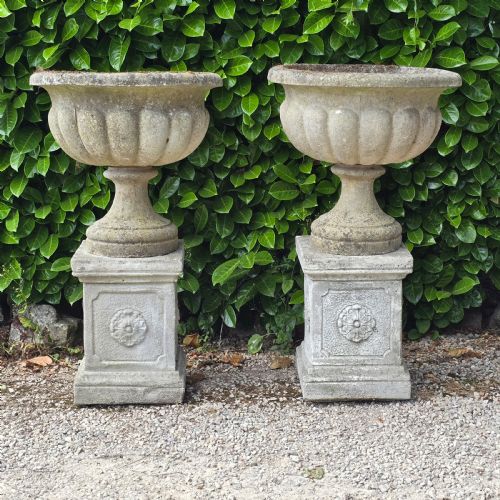
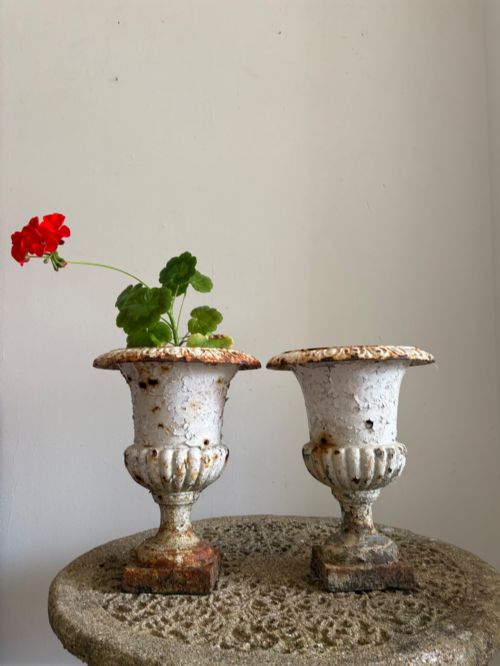
An antique outdoor urn pair comprises matched vessel forms designed to anchor landscape layouts, border formal lawns or punctuate terrace entrances. You encounter these most frequently cast in iron or moulded from stone and terracotta, often retaining traces of old paint or weathering from decades outdoors.
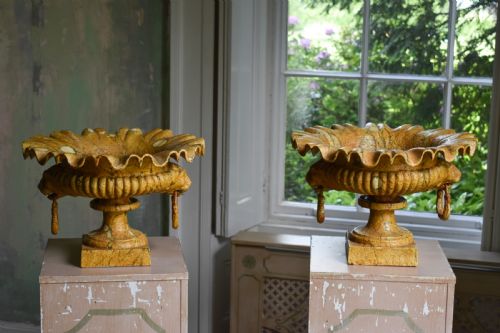
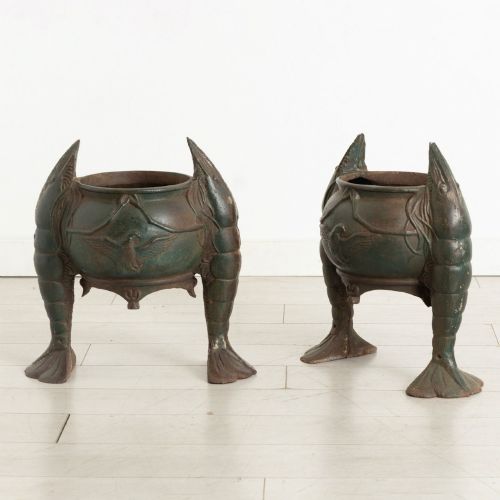
The selections span the nineteenth century through the mid-twentieth century, drawing heavily on classical vocabulary such as Campana shapes and tazza silhouettes. Makers also produced playful novelty variants alongside traditional urns, giving gardens a sculptural focal point that balances utility with classical dignity.
How they were made
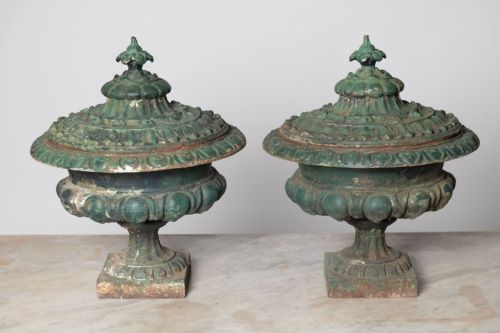
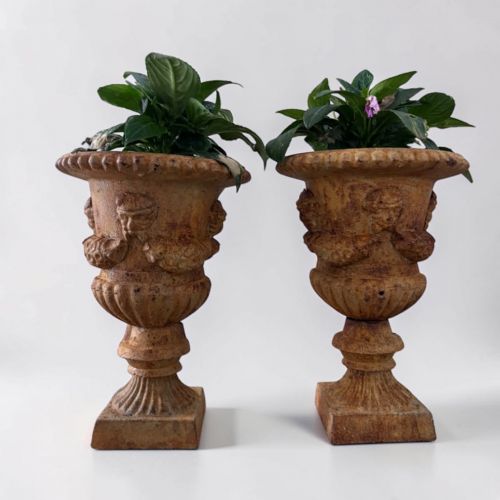
Foundries produced iron vessels by pouring molten metal into sand moulds, often assembling bodies and bases separately to form robust garden ornaments. Cast iron versions frequently display crisp relief detailing along the rim and handles, designed to withstand frost and heavy use.
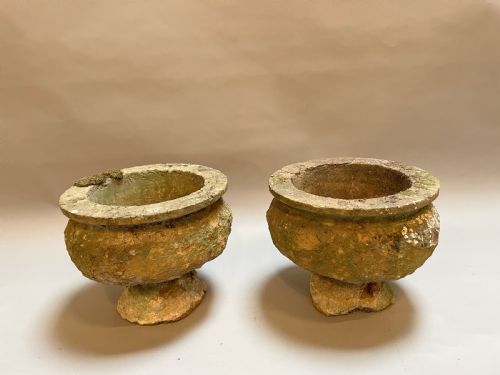
Moulders worked stone, composite mixes and terracotta by hand pressing or casting materials into forms before firing or curing. Terracotta and soft stone variants rely on porous earth or natural minerals, taking on varied patinas as moisture and moss settle into the surfaces over time.
Shrimp-form planters prove that Victorian garden designers possessed a delightfully specific sense of maritime whimsy.
What varies in quality
Quality rests on the crispness of the casting and the proportional harmony between the vessel and its base. Stronger examples exhibit deep, well-defined relief moulding on handles and fluting rather than softened edges from worn production moulds.
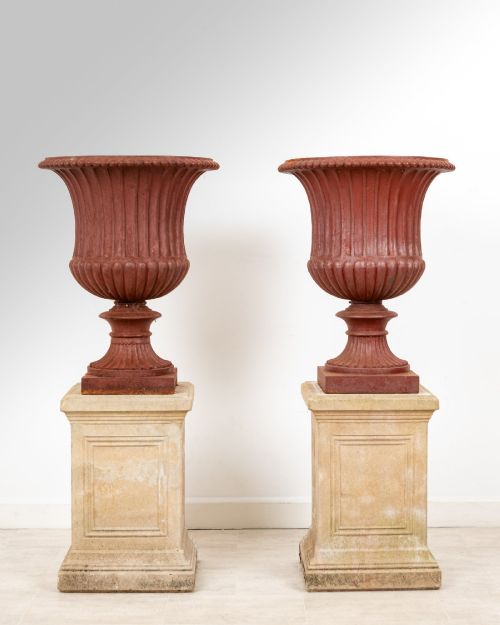
The integrity of the material and the presence of original matching pedestals elevate certain pieces above standard gardenware. Surviving historic paint finishes or untouched surfaces provide a depth of character that replacement coats or modern casting methods cannot replicate.
Falkirk Carron foundry·Coalbrookdale·Compton Pottery
The Antique Outdoor Urn Pair Glossary
- Campana
- A bell-shaped garden vessel with a flaring rim and a footed base, frequently cast in iron or formed in terracotta. This classic silhouette originates from classical antiquity and dominated nineteenth-century garden design.
- Tazza
- A shallow saucer-shaped vessel raised on a central stem and foot, used in gardens for planting or architectural display. These pieces emphasise width over depth, creating a distinctive profile on terraces.
- Plinth
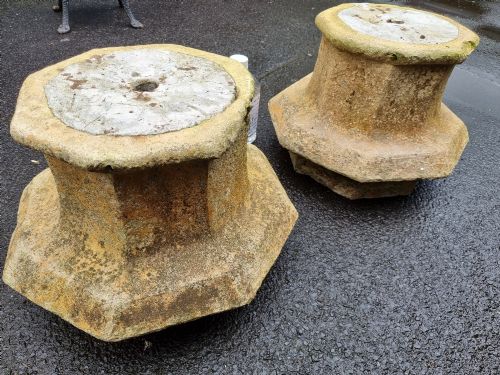
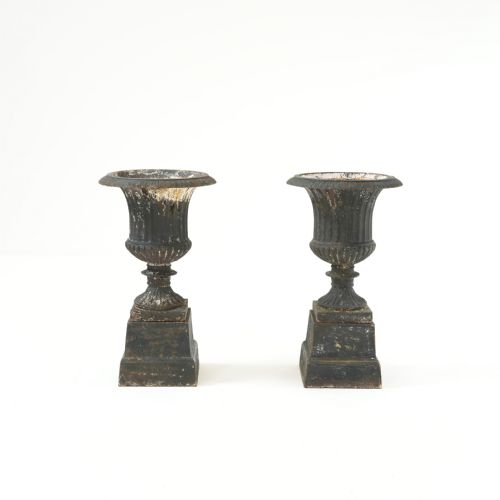
- An architectural block or pedestal that elevates a garden urn above ground level. Matching plinths provide structural support and alter the visual proportion of the display.
- Terracotta
- Fired unglazed clay exhibiting warm reddish-brown tones, used widely for garden pots and urns. The porous material breathes and absorbs moisture, encouraging gradual weathering.
- Composite stone
- A durable mixture of stone dust, aggregate and binder moulded into architectural garden ornaments. This material mimics quarried stone while allowing consistent replication of traditional decorative motifs.
Antique Outdoor Urn Pair: Frequently Asked Questions
How do I protect iron urns from frost?
Iron vessels generally endure winter weather outdoors without severe damage, provided drainage holes remain clear of debris. Lifting containers slightly off the ground on feet prevents standing water from freezing against the base.
For stone and terracotta variants, lining the interior or emptying wet soil during freezing spells guards against cracking. Positioning them in sheltered spots reduces exposure to harsh seasonal winds and extreme temperature swings.
What plants suit classic garden urns?
Trailing ivies, cascading lobelia and structured box balls complement the formal silhouette of traditional bell-shaped vessels. The elevated position allows trailing foliage to spill gracefully over the rim and soften the metal or stone.
Seasonal displays work well when rotated through spring bulbs and hardy summer flowering varieties. Ensuring adequate compost depth supports healthy root growth throughout the growing season.
How do I identify a nineteenth-century casting?
Nineteenth-century metal pieces typically feature heavier weights, seam lines from multi-part sand moulds and deep patinas accumulated over decades. Examining the underside and interior often reveals tactile evidence of historic hand finishing.
Stylistic cues such as Neoclassical handles, gadrooning and classical friezes align with Victorian and Regency design periods. Surface textures usually show genuine weathering rather than artificial distressing.
Can these heavy vessels stand directly on grass?
Placing heavy iron or stone vessels directly on turf causes the soil to compress and leads to sinking over time. Grass also traps moisture underneath, which accelerates corrosion on iron bases and encourages rotting on wooden decking.
Setting the pieces on flagstones, gravel beds or dedicated stone plinths provides a stable, level foundation. This approach also improves drainage and protects the surrounding landscape from dampness.