
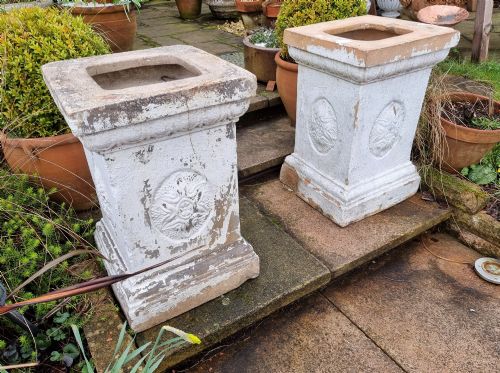
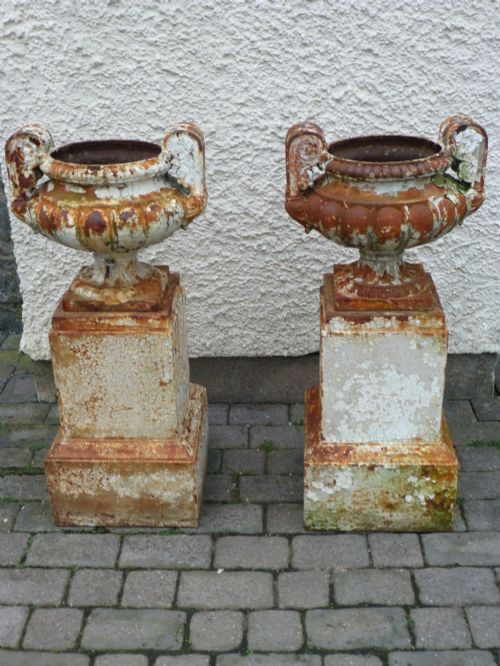
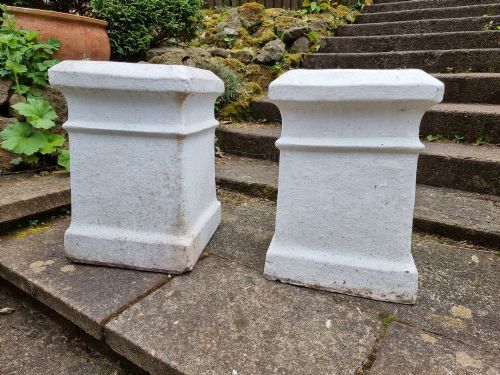
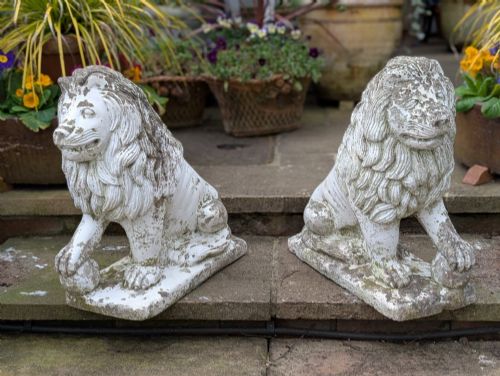





Pair of Garden Plinths
A pair of garden plinths raises statues and urns above the ground, anchoring a formal layout with architectural weight.
Pair of Garden Plinths
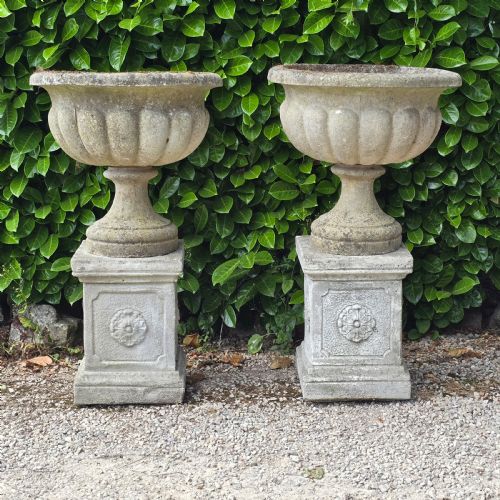
A pair of garden plinths provides stable, elevated platforms designed to support outdoor urns, statues, and planters in grounds and terraces. When you search for a pair of garden plinths, you find supporting pedestals that range from straightforward columns to decorative bases often paired directly with matching vessels.
The pieces appearing here span the 19th Century, Georgian, Victorian, Edwardian, and mid-twentieth century periods, alongside specific styles such as Regency, Gothic Revival, and Neoclassical. These items frequently display classical architectural motifs and serve to punctuate garden pathways or terrace corners.
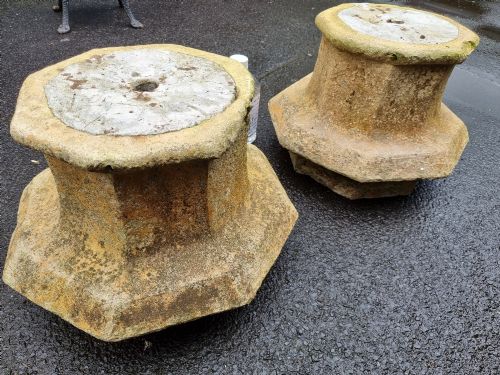
Most examples originate as dedicated garden pedestals or columns, though some listings include architectural elements like chimney pots adapted for similar display purposes. Their primary function remains the elevation of decorative garden statuary and planting urns to improve sightlines in outdoor spaces.
Materials and construction methods
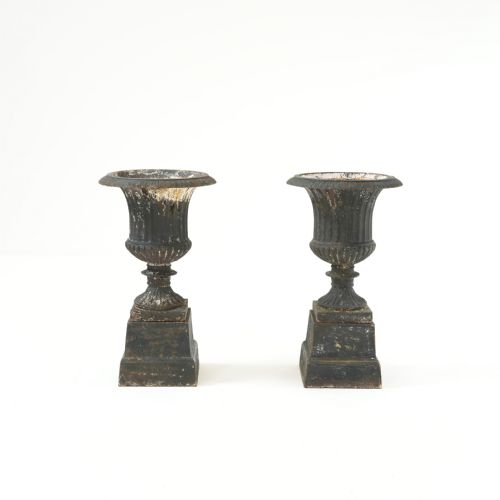
Makers utilised heavy, durable substances suited to permanent outdoor exposure, most notably cast iron, reconstituted stone, composite stone, terracotta, and salt-glazed stoneware. Cast iron examples often emerge from foundry production, yielding crisp surface detail and robust structural frames.
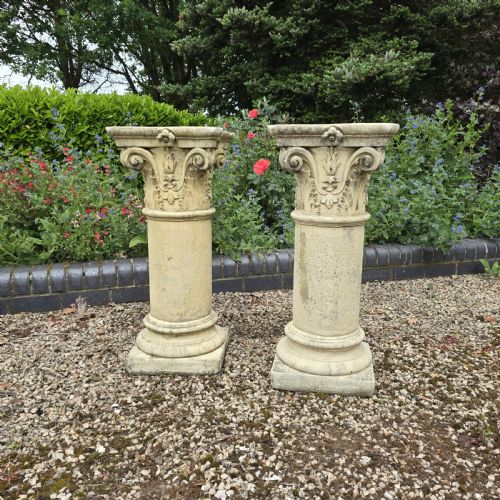
Stone and terracotta versions rely on carving, moulding, or casting techniques to achieve architectural profiles such as Corinthian columns and Gothic pedestals. Many surfaces retain layers of historic paint or display natural weathering accumulated across decades in the garden.
Several pairs have spent more time weathering under ivy than they ever did inside a foundry or showroom.
What separates the best examples
Quality rests upon the crispness of the original moulding or carving, especially where acanthus leaves, fluting, or classical capitals define the architectural style. Sharp, deeply undercut details indicate superior foundry work or skilled masonry rather than soft, worn casts.
The integrity of the material dictates longevity, with dense cast iron and high-fired salt-glazed stoneware holding their structural form against frost better than degraded composite mixes. Original surface patination and honest weathering add visual depth without compromising the underlying strength of the plinth.
Dunfermline Clay Company·Falkirk Carron foundry
The Pair of Garden Plinths Glossary
- Campana urn
- A bell-shaped garden vessel often mounted directly onto a plinth or pedestal base. This classic form dates back to antiquity and remains popular in Victorian and Regency garden design.
- Reconstituted stone
- A durable material made from crushed stone bound with cement and cast in moulds. It replicates the appearance of natural quarried stone at a more accessible scale.
- Salt-glazed stoneware
- Pottery fired at high temperatures where salt is thrown into the kiln to produce a vitreous, glossy finish. This dense material resists moisture and frost damage.
- Corinthian column
- An architectural support characterised by ornate capitals decorated with carved acanthus leaves. It represents the most decorative of the classical orders seen in garden architecture.
- Gothic Revival
- A design style drawing inspiration from medieval architecture, featuring pointed arches and vertical emphasis. This aesthetic appears on 19th-century garden plinths and stone ornaments.
Pair of Garden Plinths: Frequently Asked Questions
How do I choose the right height?
Consider the scale of the urn or statue intended for the top, ensuring the combined height matches the surrounding garden geometry and sightlines.
Lower plinths suit broad planting bowls, while taller columns work best when framing doorways or terminating formal garden vistas.
Can these stay outside in winter?
Most heavy cast iron, stone, and salt-glazed stoneware tolerate winter weather well, provided drainage holes remain clear of debris.
Composite stone and terracotta pieces benefit from protection against severe frost to prevent cracking from trapped moisture expansion.
How do I clean weathered surfaces?
Gentle brushing with water removes loose dirt while preserving the desirable patination accumulated over decades outdoors.
Avoid harsh chemical cleaners or pressure washers that strip away historic paint layers and erode softer stone or terracotta surfaces.
Are they stable on grass?
Heavy cast iron and stone plinths require a level, firm foundation such as stone paving, gravel, or a compacted pad to prevent sinking.
Placing them directly on bare soil can lead to uneven settling over time, which compromises the alignment of paired pieces.