





Antique Oriental Wall Tapestry
An antique oriental wall tapestry brings woven or embroidered artistry from nineteenth and early twentieth century traditions directly into a modern interior.
Antique Oriental Wall Tapestry
When you search for an antique oriental wall tapestry, you encounter a diverse selection of textiles, embroideries, rugs and wall hangings originating from Central Asia, Persia, the Caucasus and China. These pieces span periods from the mid nineteenth century into the early twentieth century, reflecting distinct regional textile traditions and decorative arts.
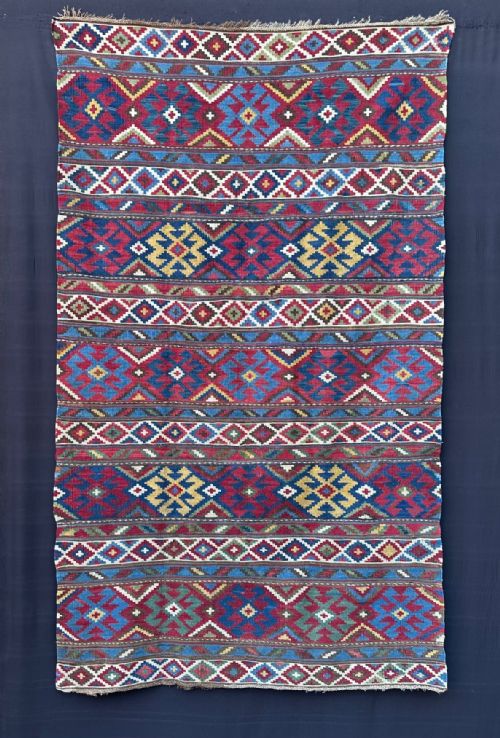
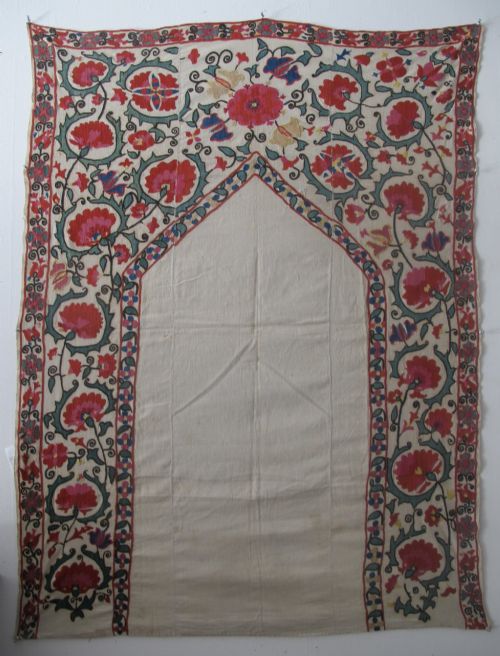
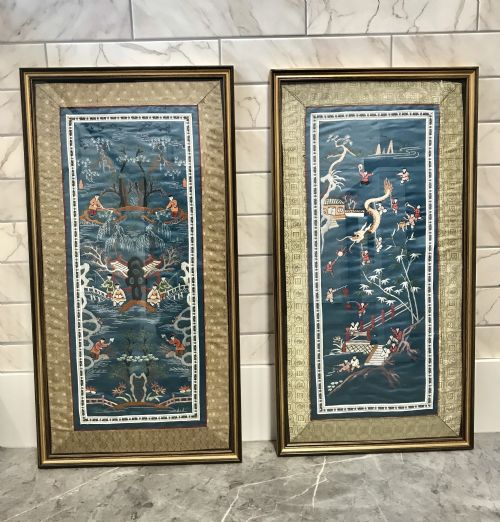
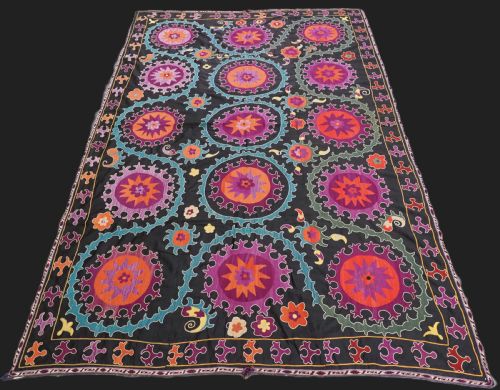
The selection on this page is heavily represented by Uzbek suzanis, Turkmen tribal face pieces, Chinese silk embroideries under glass and Persian pictorial or floral rugs adapted for hanging. Each item demonstrates traditional motifs such as guls, architectural designs, dragons, figures and floral patterns executed in varied formats.
Buyers will find both large scale room pieces and smaller embroidered panels, some retaining original hanging loops or mounted for display. The variety encompasses flatweaves like kilims and sumacs alongside complex needlework on cotton, felt and wool grounds.
Materials and construction
Makers utilised natural fibres including wool, silk, cotton and felt to construct these textiles, often combining materials within a single piece such as silk thread and felt applique on a cotton ground. Water-based pigments and hand-sewn techniques defined the surface ornamentation of embroideries and suzanis.
Weaving techniques varied widely by region, encompassing fine pile knots in Persian and Turkmen rugs, flatwoven kilim structures, and intricate hand-embroidered stitches on suzani panels. Wood and glass frequently form part of the framing or mounting for delicate Chinese silk panels.
Listings feature textiles from the nineteenth and early twentieth centuries, spanning periods from 1850 to 1930.
Assessing quality and execution
The distinction between tiers of work rests upon the density of the weave or embroidery and the precision of the needlework. Finer execution is evident in tightly packed guls, detailed figurative depictions such as portraits or architectural elements, and intricate pictorial composition.
Material selection also dictates standing, with superior examples employing finely spun silk thread, balanced natural dyes, and substantial cotton or wool foundations that retain structural integrity. The complexity of regional designs, from multi-gul chuval faces to pictorial Kashan compositions, elevates the character of the piece.
The Antique Oriental Wall Tapestry Glossary
- Suzani
- An embroidered tribal hanging from Uzbekistan, traditionally worked in silk thread on a cotton or linen ground with bold floral and geometric motifs. These textiles were often made as part of a bride's dowry.
- Chuval
- A large tent bag made by Turkmen tribes, the face of which is frequently collected and displayed as a wall hanging. They are distinguished by repeated geometric medallions known as guls.
- Kilim
- A flatwoven carpet or rug produced without a pile, using a tapestry weaving technique. They originate across the Caucasus, Anatolia and Central Asia.
- Engsi
- A tribal wall hanging used as a door hanging within a Turkmen yurt, featuring a characteristic candelabra or cross-like division of the field.
- Applique
- A sewing technique where pieces of fabric, such as silk and felt, are stitched onto a larger background ground to create layered patterns. This method is particularly prominent in Persian Rasht embroideries.
Antique Oriental Wall Tapestry: Frequently Asked Questions
How do I hang an antique textile safely?
Displaying textiles requires distributing the weight evenly across the piece to prevent tearing or stretching over time. Many items feature original loops, but professional mounting using a concealed velcro sleeve and a padded wooden batten provides optimal support.
Keep hung textiles away from direct sunlight and heat sources to protect natural dyes and delicate silk or wool fibres from fading and embrittlement.
What is the difference between a suzani and a rug?
A suzani is a decorative needlework embroidery, typically created with silk threads on a lightweight cotton or linen foundation, designed primarily for hanging or domestic display. In contrast, rugs and carpets are generally heavier pile or flatwoven floor coverings built for durability.
While certain rugs and saddle bag faces are repurposed as wall art due to their visual impact, suzanis are inherently textile panels made for vertical presentation.
How are regional styles identified?
Regional attribution relies on distinct motifs, colour palettes and structural techniques native to specific weaving centres and nomadic tribes. For instance, Turkmen pieces feature repeating guls, while Uzbek suzanis display large sunburst and floral roundels.
Persian workshops often present refined floral or pictorial compositions, and Chinese panels incorporate characteristic iconography such as dragons, trees and figures under glass.