
Antique Oriental Lamps
Antique oriental lamps bring hand-painted lacquer, cast bronze and rich porcelain into a room as lighting with genuine age and history.
Antique Oriental Lamps
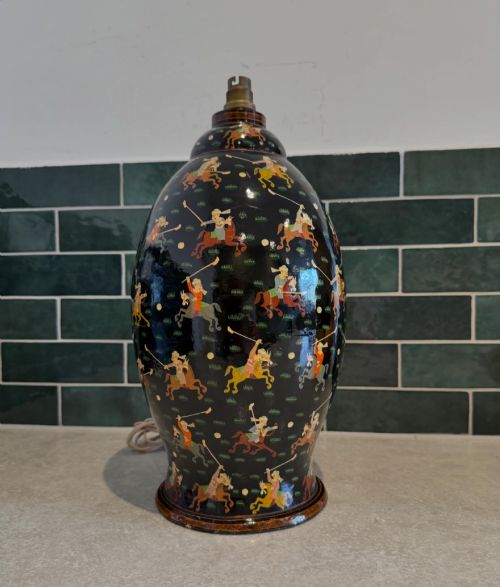
When you search for antique oriental lamps, you meet items spanning the Victorian era through to the nineteen-thirties, alongside earlier vessels later adapted for lighting. These pieces encompass table lamps, floor standards and converted vases or ginger jars originating from Japanese, Chinese and Indian workshops.
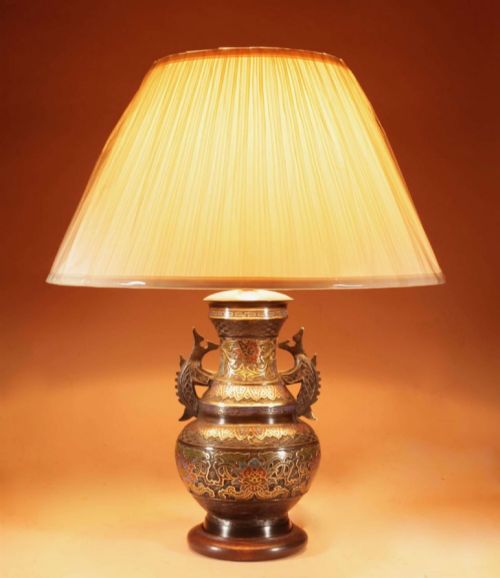
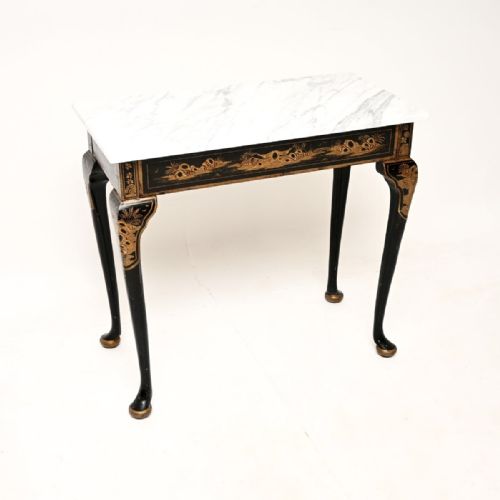
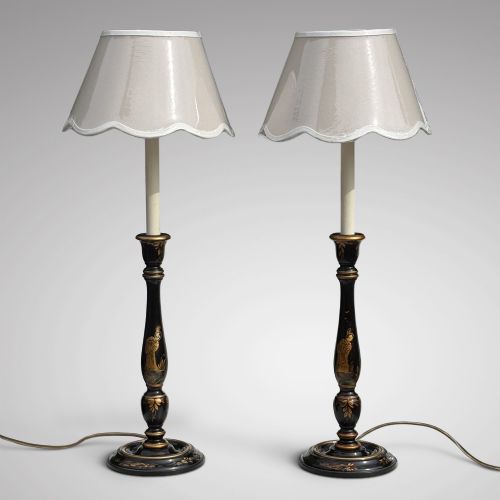
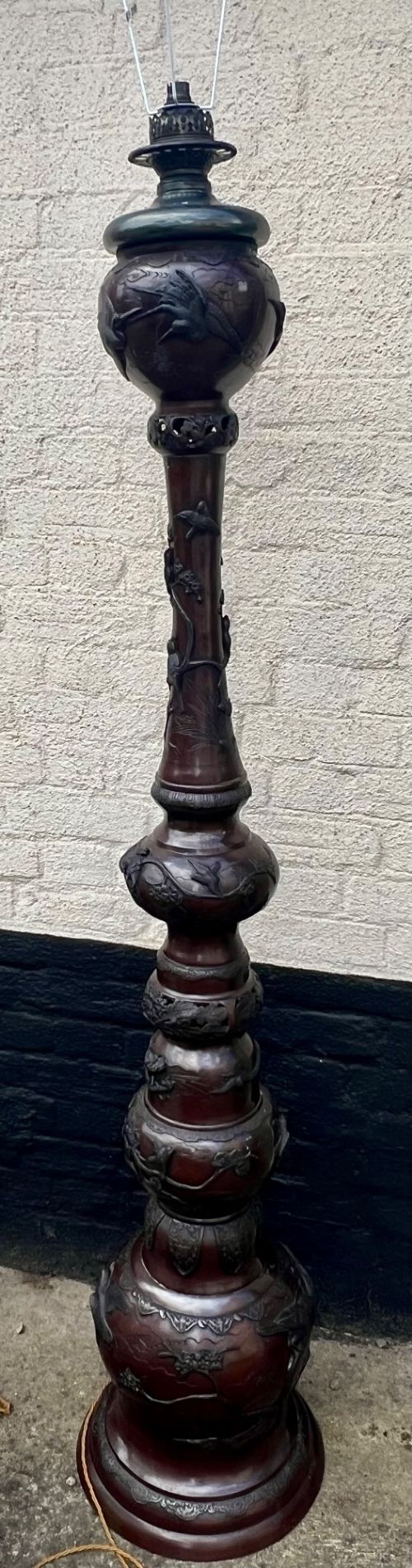
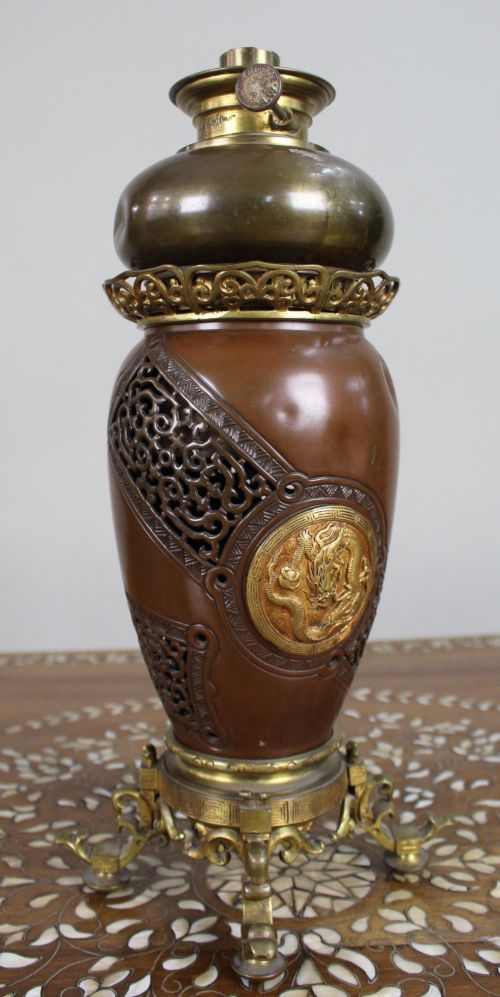
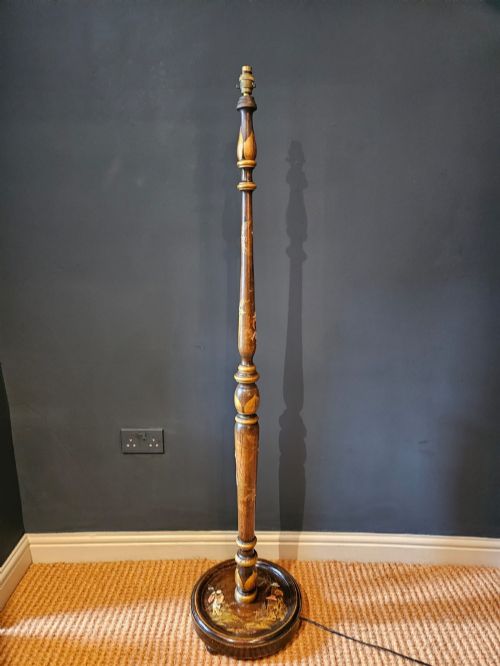
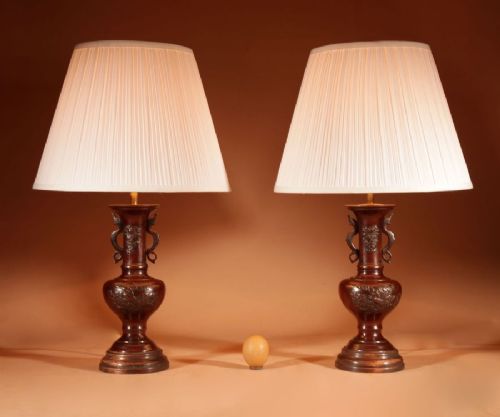
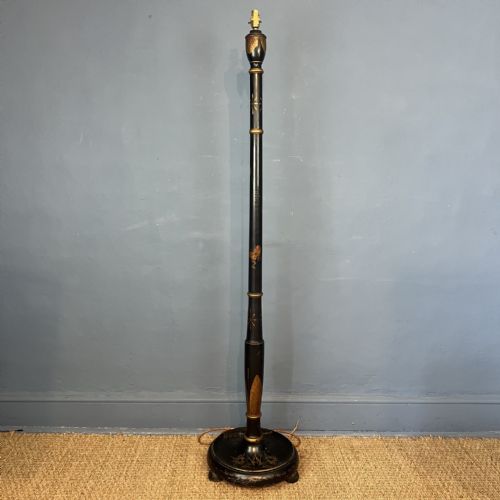
The most frequent examples on this page are table lamps and standard lamps finished in Chinoiserie lacquer or cast in Japanese bronze. Many items reflect the Meiji period or Edwardian interpretations of eastern design.
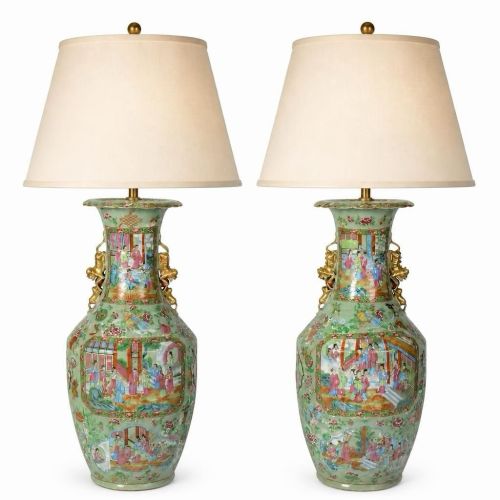
Vessels such as Rose Medallion porcelain and Satsuma pottery appear frequently, having been wired for electricity alongside traditional brass and enamel champlevé work.
What varies in quality
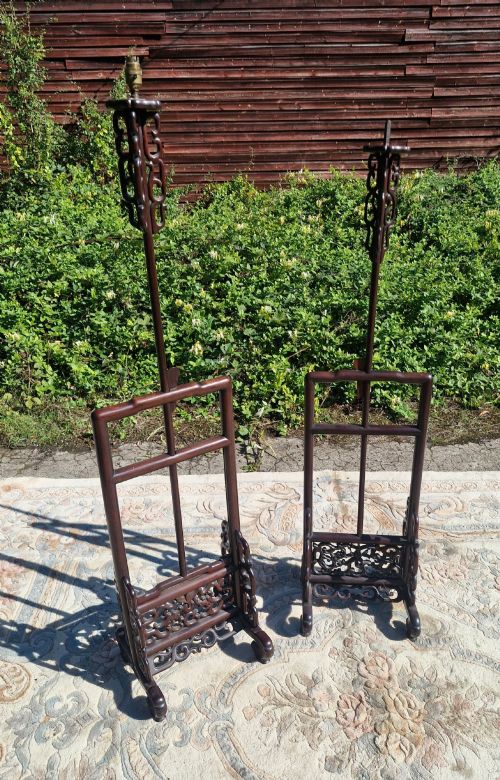
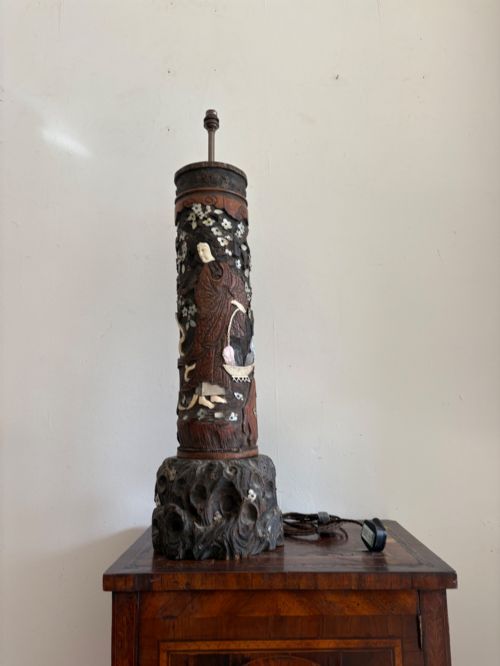
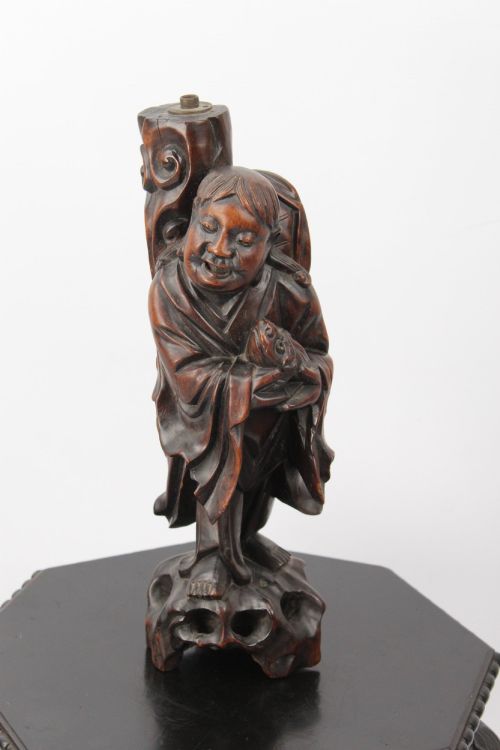
The distinction between standard examples and the finest pieces lies in the crispness of the bronze casting and the depth of the hand-painted lacquer. Pieces carrying detailed champlevé enamel or intricate carving on rosewood demonstrate superior workshop execution.
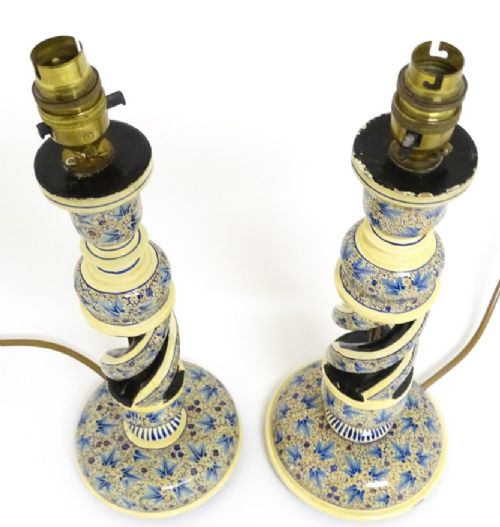
Original matching pairs and items retaining their early decorative schemes command greater appreciation than single converted vessels. The integrity of the surface finish and the subtlety of the hand-applied gilt and colour determine the standing of the piece.
Several centuries-old vases found a second career standing guard beside armchairs as electrified brass-mounted luminaires.
Liberty's·Hicks and Meigh
The Antique Oriental Lamps Glossary
- Chinoiserie
- European artistic interpretation of Chinese and East Asian artistic traditions, commonly applied to lacquered furniture and lamp standards. This style gained particular popularity during the Edwardian era.
- Champlevé
- Enamelling technique where troughs are dug into a metal surface and filled with vitreous enamel before firing. Japanese bronze lamps frequently display this colourful decorative method.
- Meiji Period
- Japanese historical era lasting from 1868 to 1912, noted for highly detailed bronze work and pottery exported to the West. Many table lamps and floor standards originate from this timeframe.
- Satsuma
- Type of Japanese pottery with a ivory-coloured, crackle-glaze earthenware body decorated with enamels and gilt. These ceramic pieces are frequently found converted into table lamps.
- Cloisonné
- Decorative metalwork technique using thin wire soldered to a metal base to create compartments filled with enamel paste. Fine pairs of vases utilising this method often appear as converted lamps.
Antique Oriental Lamps: Frequently Asked Questions
How do I date an oriental lamp?
Dating relies on examining the materials, wiring style and manufacturing techniques visible on the body. Victorian and Edwardian pieces often show distinct lacquer applications or specific brass mountings.
Comparing the style against known production periods like the Meiji era helps narrow down the decade of manufacture. Original conversions also offer clues through the age of the weighted base and internal components.
Were these lamps originally made for electricity?
Many antique oriental lamps began life as vases, ginger jars, bronze vessels or decorative altar pieces before receiving later electrical fittings. Vases and porcelain jars were commonly drilled and mounted for modern use during the twentieth century.
Purpose-built lamp standards in wood and metal did appear in Edwardian and later workshops. Assessing the base and interior wiring access points reveals whether the item is a conversion.
What is the difference between Chinese and Japanese pieces?
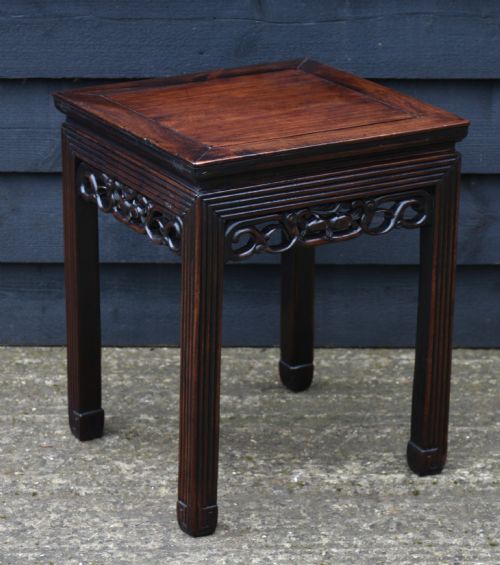
Chinese pieces often feature porcelain such as Rose Medallion or carved hardwoods like rosewood and low tables. Japanese items frequently showcase Meiji bronze casting, cloisonné enamel and Satsuma pottery.
Stylistic motifs also help distinguish origin, with Japanese bronzes often depicting dragons and natural fauna while Chinese items incorporate classical figures and floral arrangements.