



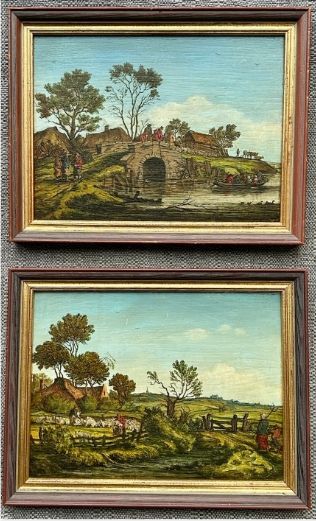
Antique Oil Landscape Art
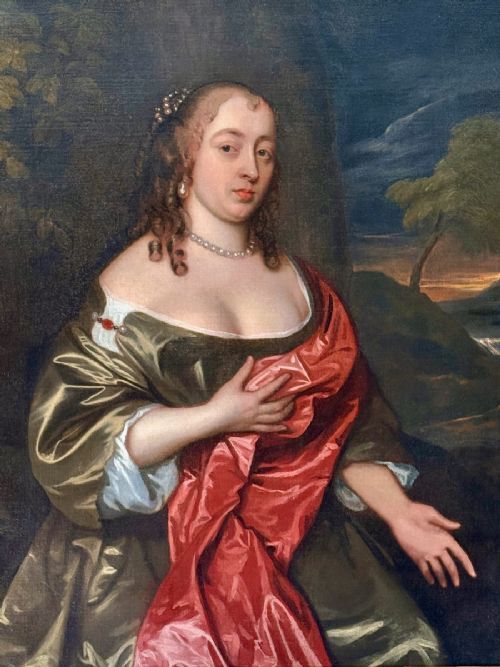
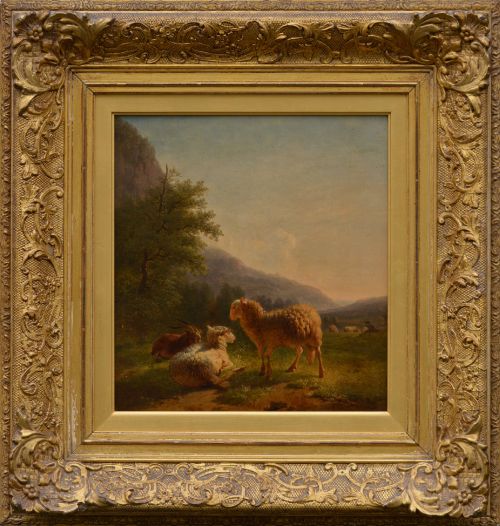
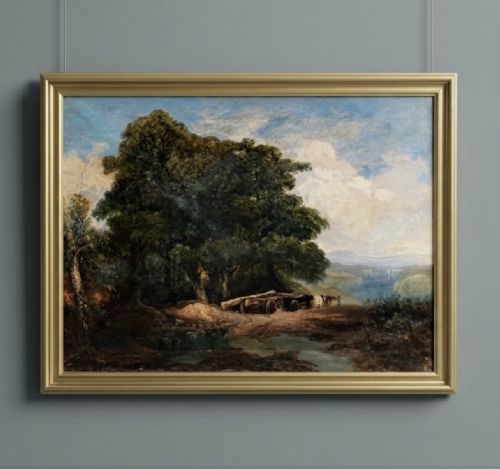
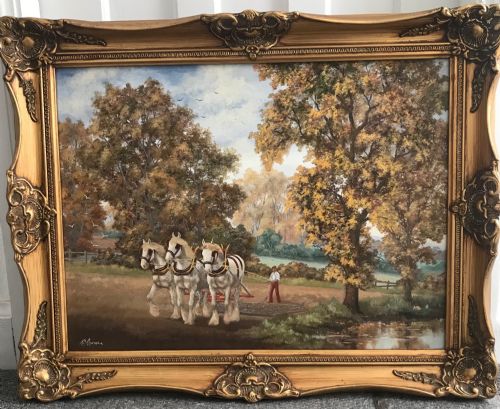
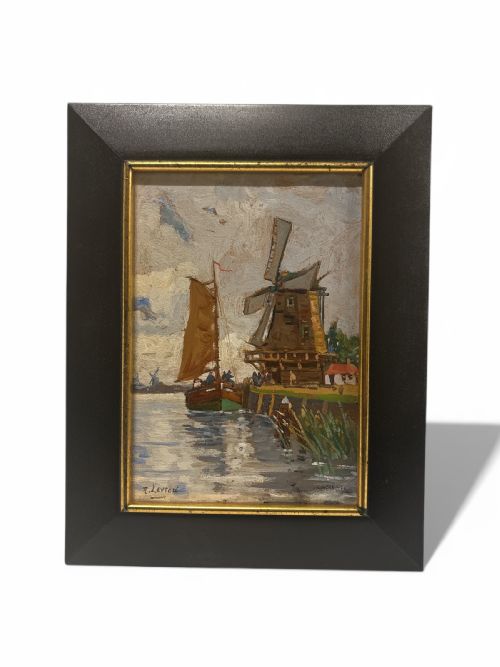
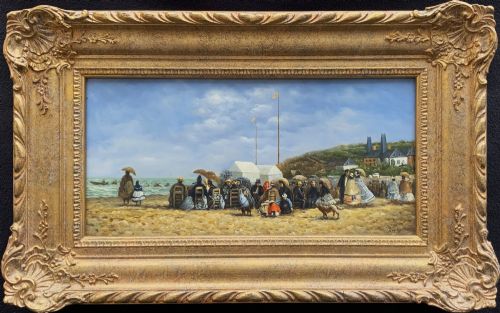
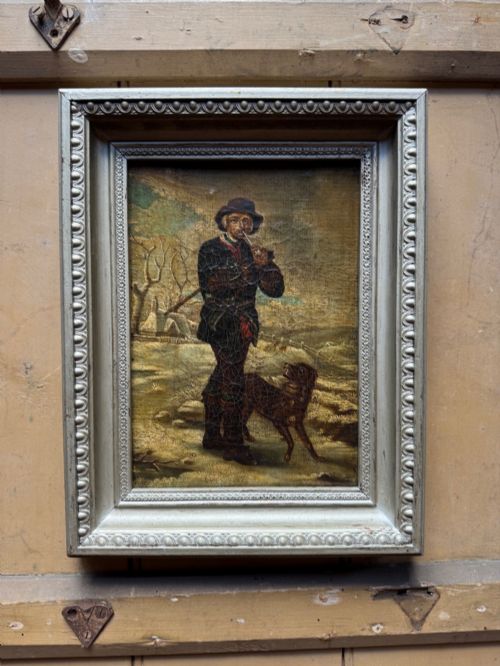
Antique oil landscape art spans centuries of painted countryside, marine views, and pastoral river scenes rendered in oil paint on canvas or wood panel.
Antique Oil Landscape Art
Antique oil landscape art encompasses paintings created from the seventeenth century through the twentieth century, featuring natural scenery, coastal views, and rural life. These works capture changing light, seasonal moods, and topographical views across British, French, Dutch, and Flemish traditions.
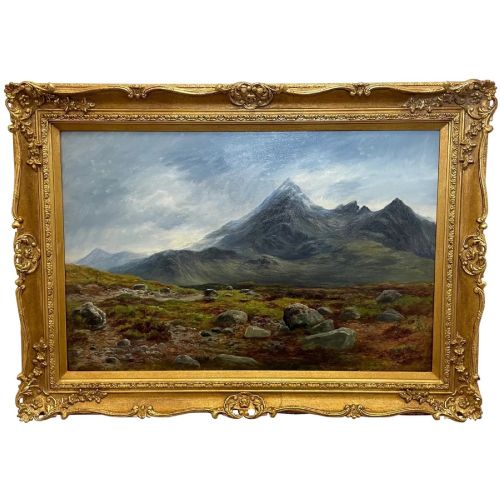
The selections on this page appear on canvas, wood panels, and board supports. Common formats include nineteenth-century pastoral river views, Edwardian woodland scenes, and Scottish highland vistas framed in period giltwood or gesso mouldings.
How They Were Made
Artists apply oil paint directly onto stretched canvas, prepared wooden panels, or board using bristle brushes and palette knives. This medium allows for rich impasto textures, subtle blending of atmospheric skies, and deep tonal variations.
Finished works find housing in frames constructed from wood and finished with gesso and gilt leaf. These frames range from simple carved mouldings to elaborate swept decorative borders suited to the period of the painting.
Antique Oil Landscape Art Retail Price Guide 2026
Typical asking prices for oil landscape art among the pieces listed under this phrase on Sellingantiques today, from the lower quarter to the upper quarter. They describe what is for sale here now, not the wider market.
Materials documented across the inventory include oil paint, canvas, wood, gesso, and giltwood.
What Varies in Quality
Quality rests upon the artist's handling of perspective, light, and anatomical accuracy within natural settings. Superior works demonstrate confident brushwork and balanced composition, whereas weaker pieces display rigid forms and muddy colour mixing.
The preservation of the original paint surface and the matching period frame significantly influence the standing of a piece. Retaining legible signatures, stable panel or canvas supports, and minimal retouching marks the upper tier of works.
JOHN HAYLS·Eugène Verboeckhoven·Richard Sebastian Bond·William Beattie-Brown·William H Myers·Tom Campbell·William Howard Hardy·Frederick Marriott·Arthur Wardle·Angelo Maria Crivelli·John Horace Hooper·Reginald Arthur Borstel·William Joseph Shayer Senior·Hendrik Willem Schweickhardt·Alfred Fontville de Breanski Jr·Kershaw Schofield·George Houston·Herbert Royle·Thomas Barker of Bath·Thomas W Lascelles·Arthur W Newsholme·Heinrich Gogarten·Robert T Stuart·Jacob Van Der Does II·J Lawrence Hart
The Antique Oil Landscape Art Glossary
- Impasto
- Paint applied thickly to a canvas or panel, leaving visible brush or palette knife strokes that stand in relief. This technique adds tactile depth and catches light across foliage or water.
- Gesso
- A plaster-like mixture applied to wood or canvas as a base for paint or gilding. It provides a smooth surface for ornate frame mouldings.
- Giltwood
- Wood carved and covered with a thin layer of gold leaf. Frames finished in this material surround many traditional paintings.
- Panel
- A flat piece of wood used as a rigid support for painting instead of stretched canvas. Artists often utilised panels for smaller cabinet-sized works.
Antique Oil Landscape Art: Frequently Asked Questions
What periods do these paintings cover?
The works span from the seventeenth century through the nineteenth and twentieth centuries, incorporating Victorian, Edwardian, and post-impressionist eras.
Individual pieces reflect the shifting artistic styles and regional schools of British, French, and Dutch painting traditions.
How are these artworks supported?
Painters utilised canvas stretched over wooden frames, solid wood panels, and sturdy boards as foundations for their oil compositions.
Panel supports frequently appear in earlier or smaller works, while larger canvases dominate nineteenth-century gallery pieces.
How do I identify a regional school?
Regional characteristics emerge through the specific topography, vegetation, and atmospheric conditions depicted by the artist.
Scottish highland scenes, English pastoral riverways, and French rural farmyards each carry distinct palettes and compositional traits.