
Antique Office File Drawers
Antique office file drawers are practical storage solutions built to organise correspondence, and oak examples from the Edwardian period appear most frequently here.
Antique Office File Drawers
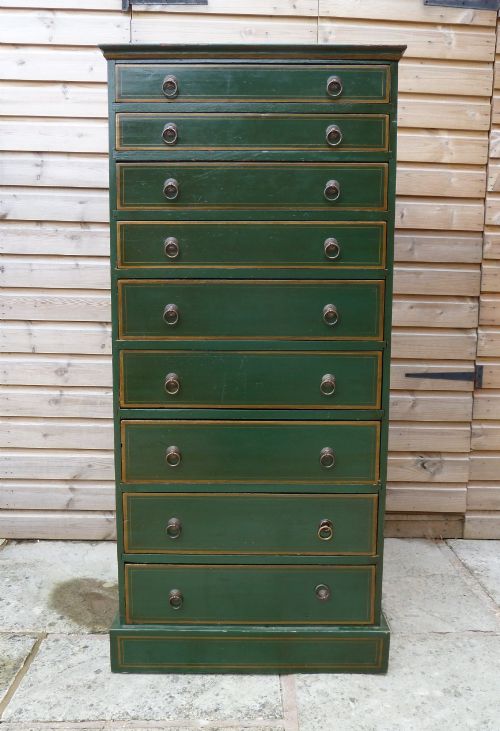
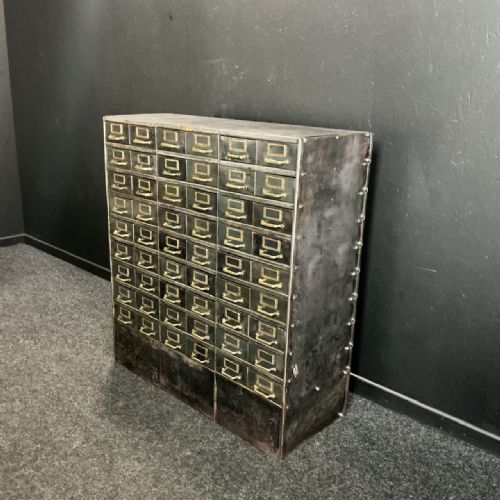
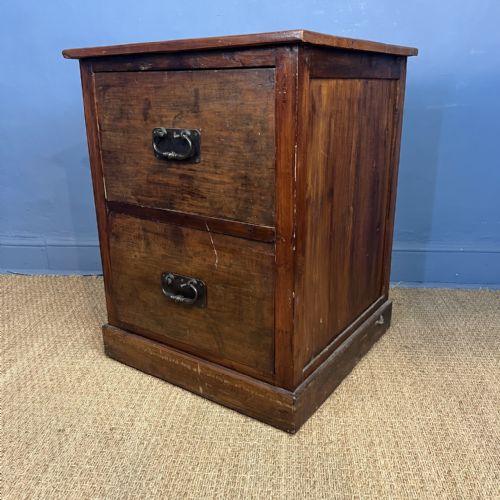
Antique office file drawers comprise functional storage units designed for workplace organisation, ranging from compact desk organisers to multi-drawer industrial banks. Buyers searching for antique office file drawers will encounter substantial vertical filing cabinets, shallow pine compartments, and specialised stationery chests.
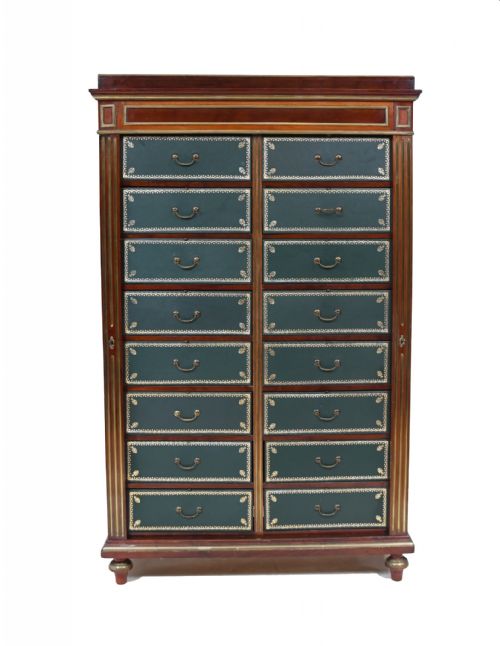
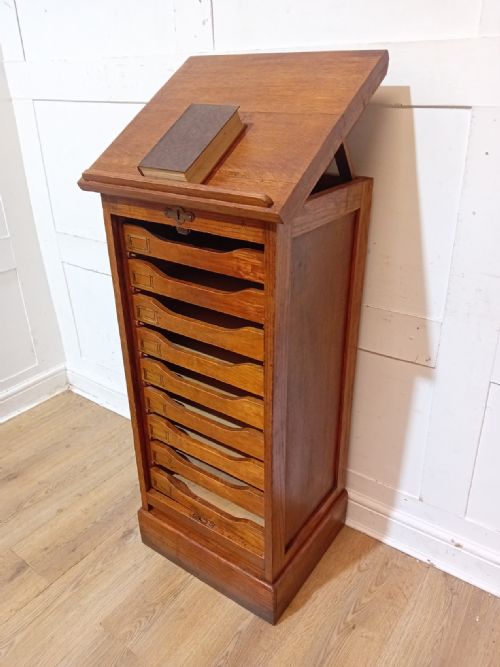
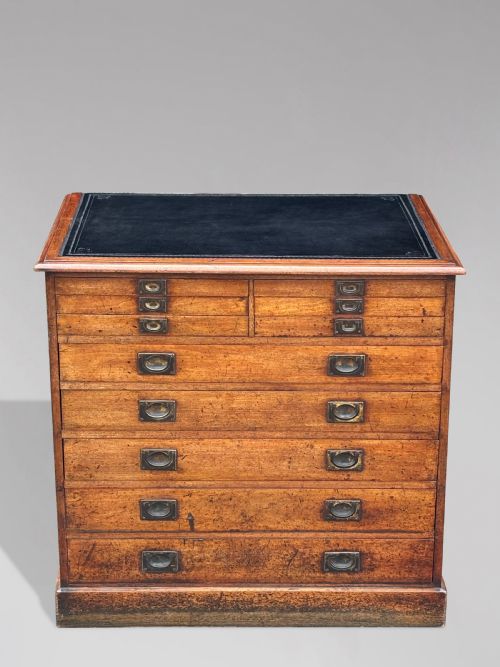
The selections span the nineteenth century through the 1930s, taking forms such as tambour front cabinets, campaign pieces, and French cartonnier cabinets. Oak and mahogany versions from the Edwardian era and the 1920s dominate the offerings currently available for daily use.
How They Were Made
Cabinetmakers utilised hardwoods like oak, mahogany, walnut, and rosewood alongside utilitarian pine and steel, often incorporating tambour slats or leather accents. Construction relied on sturdy joinery to support heavy paper loads within multiple banks of drawers.
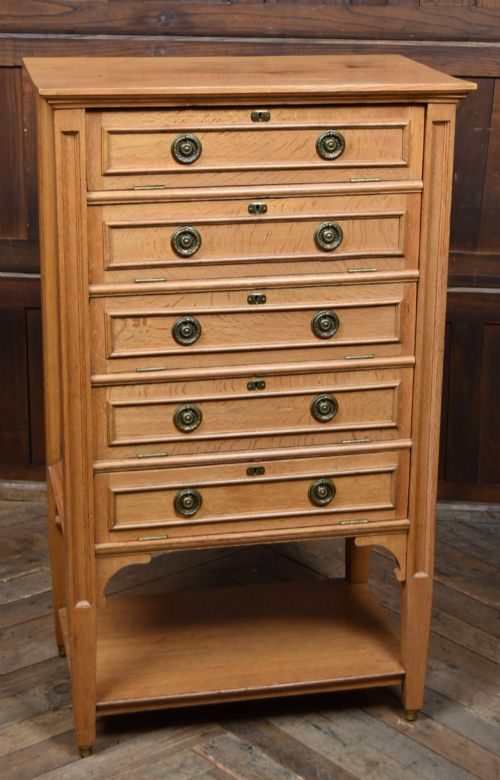
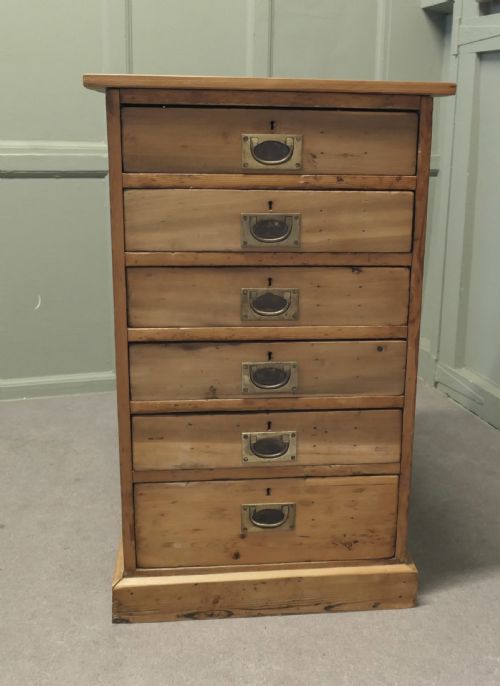
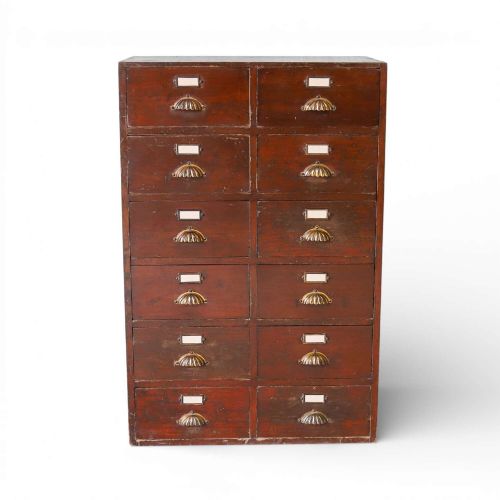
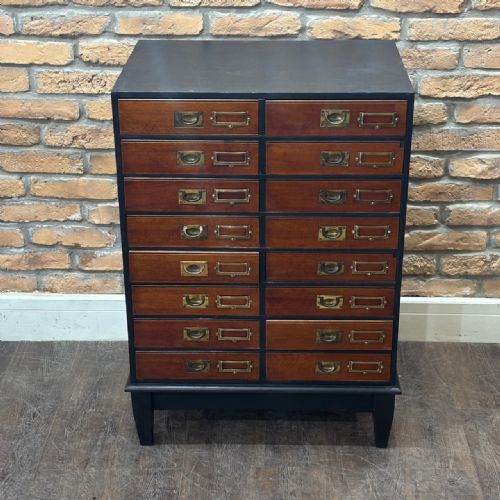
Functional hardware defines these pieces, with brass shell pulls and integrated label holders fitted to individual drawer fronts for efficient filing. Ormolu mounts and polished finishes appear on high-status French cartonnier chests.
Listings feature filing cabinets and banks of drawers produced across the nineteenth and early twentieth centuries in oak, mahogany, walnut, and pine.
What Varies in Quality
The standard of timber selection and internal mechanism design dictates the overall quality of each piece, distinguishing utilitarian workshop furniture from refined library pieces. Superior examples feature well-figured grains, smooth drawer runs, and intact proprietary mechanisms such as tambour doors.
Original hardware, including marked brass pull handles and label holders, elevates the integrity of a filing unit. The complexity of the cabinetry, from simple banks of pine drawers to elaborate French kingwood cartonnier cabinets, reflects the original commissioning purpose.
Maple & Co
The Antique Office File Drawers Glossary
- Tambour
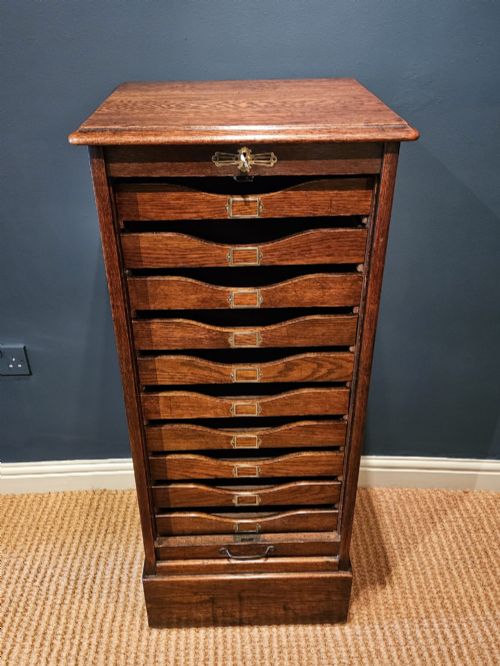
- A flexible shutter door formed of narrow strips of wood glued to canvas, allowing access to fitted filing compartments behind a rolling track.
- Cartonnier
- A stationary cabinet fitted with horizontal compartments or drawers designed specifically to hold loose papers, documents, and cartons.
- Campaign
- Portable furniture constructed for travel, typically fitted with recessed brass handles and corner brackets for protection during transit.
- Haberdashery cabinet
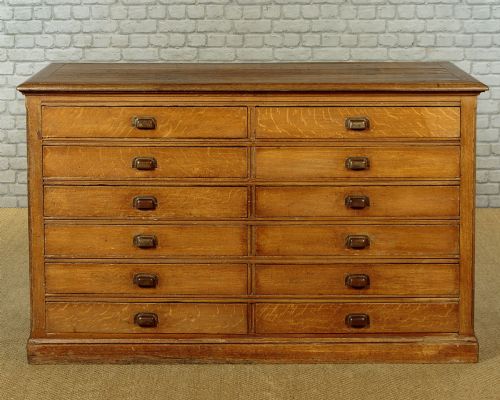
- A multi-drawer retail or office unit featuring shallow glazed or panelled drawers originally used for small goods.
- Shell pull
- A stamped or cast metal handle shaped like an inverted half-shell, frequently incorporating a pocket for paper index labels.
Antique Office File Drawers: Frequently Asked Questions
How do I use an antique filing cabinet today?
These multi-drawer units integrate easily into modern home offices for storing stationery, craft supplies, or documents.
Many vintage drawer depths accommodate standard paper sizes while adding distinct character to a room.
What is a tambour front filing cabinet?
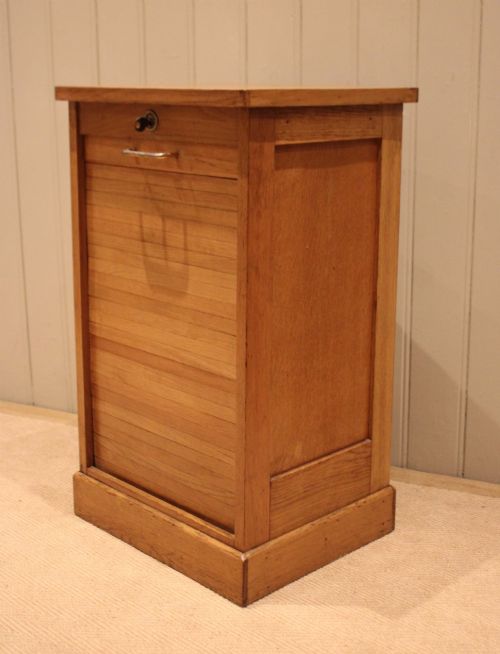
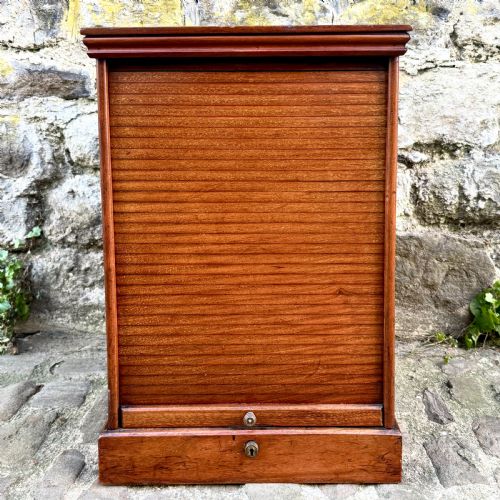
A tambour front utilises narrow wooden slats attached to fabric backing that slide smoothly around a track to conceal the interior.
This clever mechanism allows the cabinet door to vanish into the sides when opened.
How do I identify an Edwardian filing cabinet?
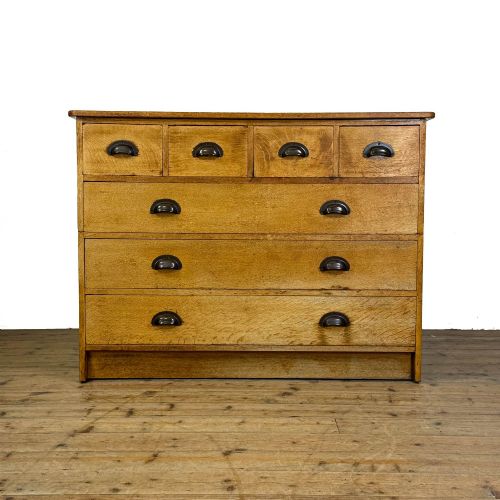
Edwardian examples typically feature light oak construction, simple linear proportions, and functional brass label holders on the drawer faces.
They reflect the expanding administrative needs of early twentieth-century offices.
Are French cartonnier cabinets different from English ones?
French cartonnier cabinets often employ exotic woods like kingwood and mahogany, sometimes accented with leather surfaces and ormolu mounts.
English equivalents tend to favour solid oak or mahogany with a more straightforward architectural presence.