



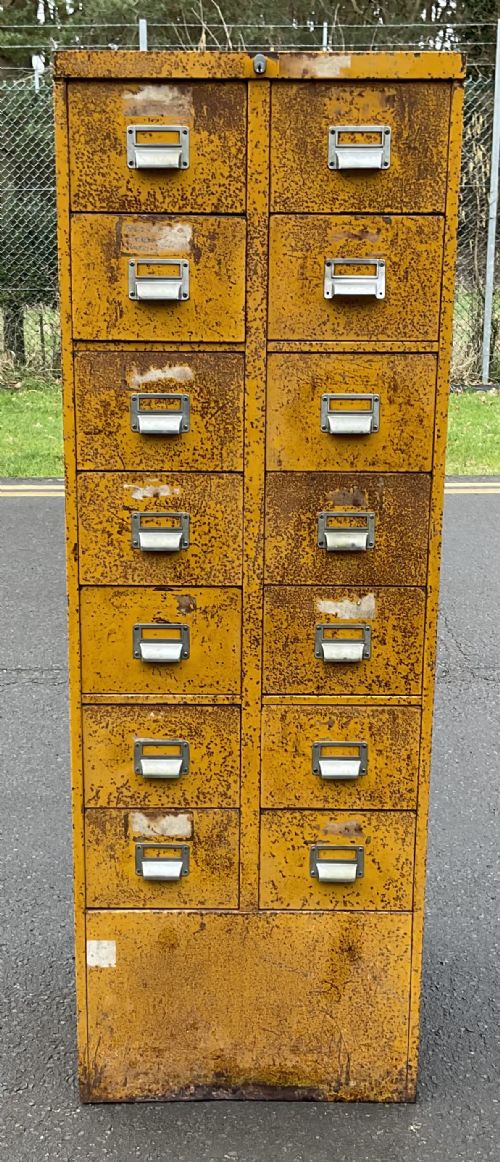


Vintage Workshop Chest
A vintage workshop chest brings utilitarian character and robust storage to a room, built to survive decades of heavy trade.
Vintage Workshop Chest
A vintage workshop chest encompasses banks of drawers, portable tool cabinets, and filing cabinets built for trade use. When searching for a vintage workshop chest, buyers encounter utilitarian forms originating from Victorian, Edwardian, and twentieth-century workshops.
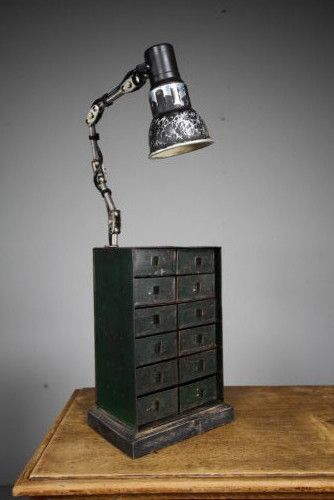
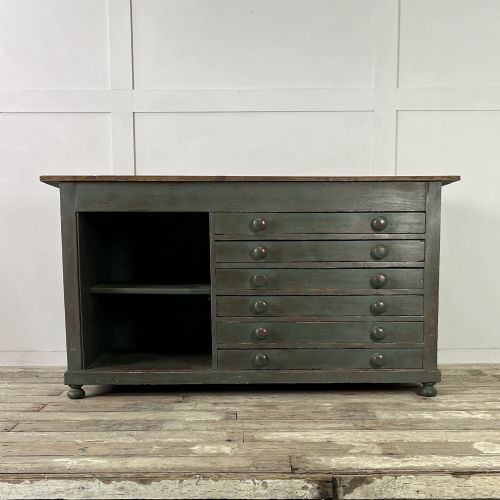
The inventory on this page shows pieces ranging from carpenters and joiners toolboxes to watchmakers banks and ironmongers drawers. Materials span from sturdy pine and pitch pine to iron, steel, and mahogany, reflecting the practical demands of their origins.
Industrial styles dominate the selection, alongside rustic country and Victorian utility pieces. Forms include banks of multiple drawers, spice cabinets, and tall metal chests designed for sorting and storage.
How they were made
Construction relies heavily on durable timbers like pine, pitch pine, elm, and mahogany, chosen for strength in daily trade use. Carpenters and cabinet makers joined these woods with robust joints to withstand heavy tools and frequent handling.
Metal components such as iron, steel, and brass provide structural reinforcement and functional hardware. Original paint finishes and metal fittings remain visible on many pieces, showing the utilitarian manufacturing methods of the nineteenth and twentieth centuries.
Listings feature pieces spanning the Victorian period, Edwardian era, and the 1920s and 1930s.
What varies in quality
Quality in a workshop chest rests on the integrity of the timber and the retention of original hardware. Examples built from solid pine, elm, or mahogany with intact brass and iron fittings display superior craftsmanship compared to heavily altered utilitarian pieces.
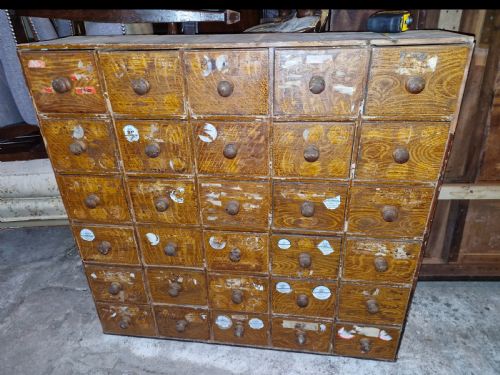
The scale and complexity of the internal configuration also set pieces apart, such as a large bank of twenty-four drawers or a fitted watchmakers cabinet. Original paint finishes and untouched structural surfaces carry more historical interest than heavily refinished examples.
The Vintage Workshop Chest Glossary
- Bank of drawers
- A multijoined cabinetry unit featuring numerous small compartments designed for systematic sorting. These were commonly used by ironmongers, watchmakers, and joiners.
- Pitch pine
- A resinous and durable softwood frequently employed in nineteenth-century utilitarian furniture. It offers high resistance to wear and deep grain patterns.
- Tool cabinet
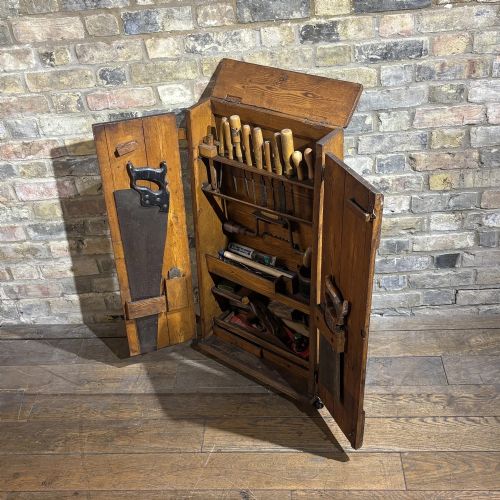
- A specialised chest or box fitted with internal compartments to secure hand tools. Portable versions feature robust carrying handles and locking mechanisms.
- Industrial
- A design style characterised by exposed metals, unadorned wooden surfaces, and functional forms originating from factories and workshops. It prioritizes utility over decoration.
- Victorian utility
- Furniture produced during the Victorian era focused on practical function rather than ornate display. These pieces were built for everyday service in trade environments.
Vintage Workshop Chest: Frequently Asked Questions
What is a workshop chest used for?
These chests provide practical storage for small items, documents, and tools using multiple compartments. In a modern setting, they serve as storage units in studies, kitchens, or living spaces.
Their robust construction allows them to hold substantial weight while adding industrial character to a room.
How do I identify the period of a chest?
Dating relies on observing construction methods, wood types, and metal hardware. Victorian and Edwardian examples often feature solid pine or pitch pine with hand-cut joints.
Later pieces from the 1920s and 1930s incorporate more metal elements and filing configurations typical of early office and factory environments.
Are these chests made of solid wood?
The pieces listed utilise solid timbers such as pine, pitch pine, elm, and mahogany. These woods were chosen by makers for their strength and durability under daily workshop conditions.
Metal components like iron and steel are frequently integrated for structural support and handles.
How do I care for a vintage wooden chest?
Keep the wood conditioned with appropriate wax or polish to prevent drying out. Avoid placing the chest in direct sunlight or near heat sources to protect the vintage finish.
Regular dusting with a soft cloth preserves the original surface texture and patina.
What is the difference between a bank of drawers and a tool cabinet?
A bank of drawers consists of multiple stacked tiers designed for sorting small goods in a shop or workspace. A tool cabinet is typically an enclosed box, sometimes portable, built to house a specific set of tradesman tools.