

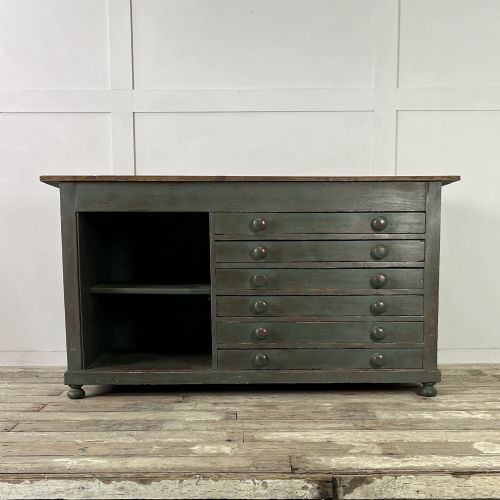


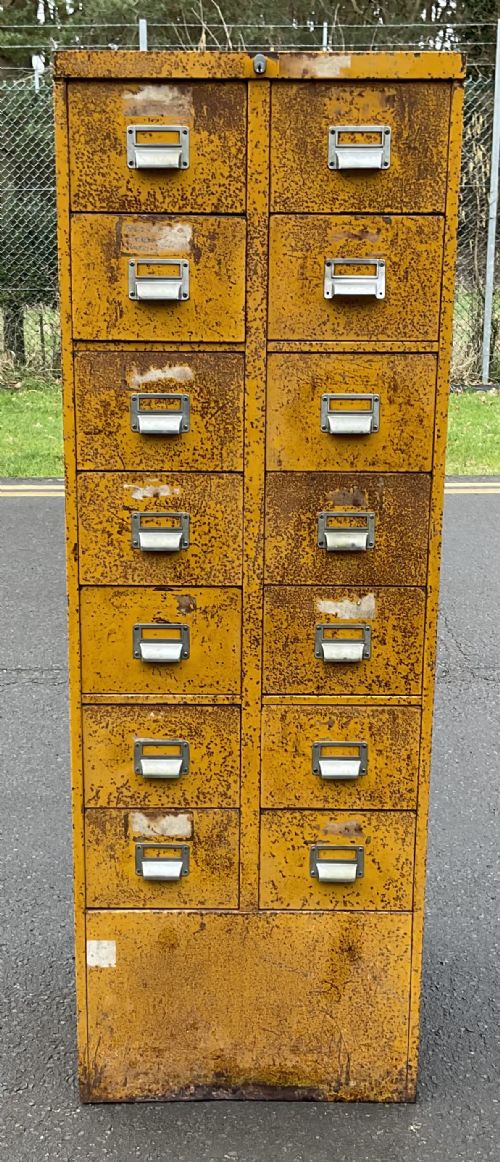


Antique Workshop Drawers
Antique workshop drawers are utilitarian storage units designed for trades and professions, offering robust construction and enduring character that suit modern interiors.
Antique Workshop Drawers
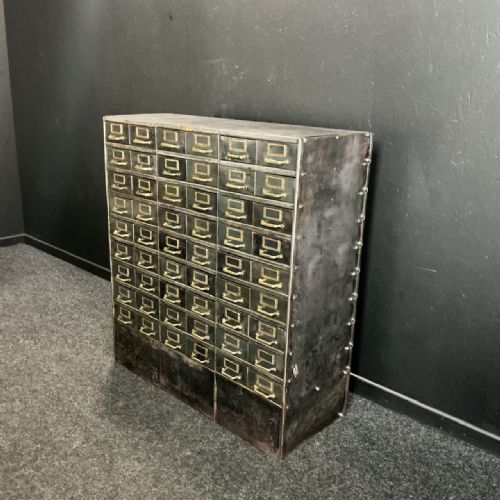
When you search for antique workshop drawers, you encounter a specialised category of functional storage spanning the Victorian, Edwardian, and 1920s periods. These pieces originate primarily from workshops, factories, and commercial establishments, taking forms such as banks of drawers, filing cabinets, and jewellers or watchmakers chests.
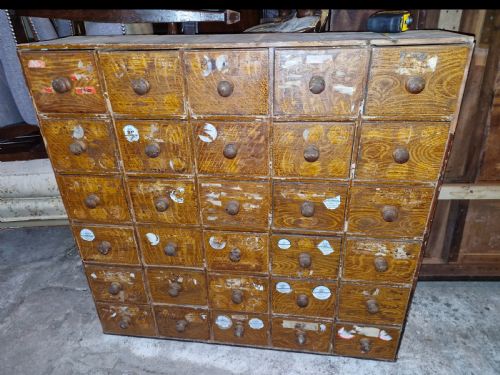
The items most frequently met on this page are sturdy banks of drawers and chest of drawers configurations built from pine or walnut, alongside specialised ironmongers and carpenters chests. Industrial and commercial styles dominate the selection, reflecting their original purpose in trade environments.
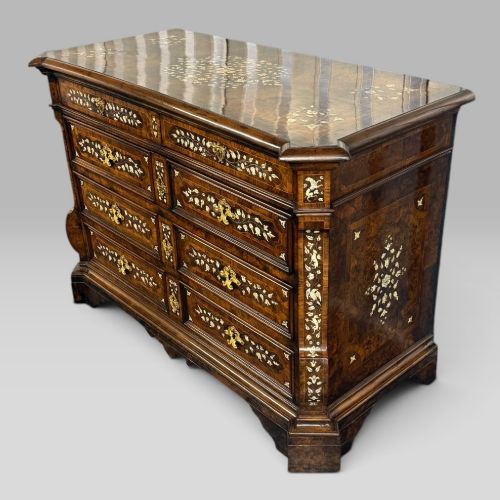
Origin points vary across English, French, and Italian traditions, ranging from utilitarian British utility pieces to grander continental commodes and specimen cabinets. Each piece retains the marks of its working past, whether through industrial metal fittings or timber patination.
How they were made
Makers constructed these storage units predominantly from solid timber such as pine, walnut, and mahogany, chosen for strength and durability. Metal components, including brass, steel, and iron, appear extensively in handles, fittings, and specialised filing or cabinet structures.
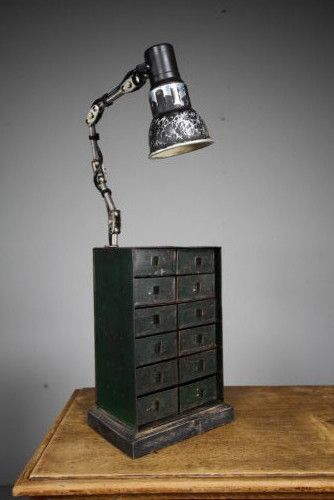
Surface treatments range from natural waxed wood to original paint finishes, often paired with functional additions like integrated light fittings or specialised internal compartments for watchmakers and jewellers.
Some chests arrive with original light fittings, proving that Victorian tradesmen preferred to work long after the sun went down.
What varies in quality
Quality in workshop furniture rests on the integrity of the timber selection and the robustness of the original construction methods used by trade cabinetmakers. Pieces built for specific professions, such as watchmakers banks or ironmongers cabinets, often display more intricate internal partitioning and superior hardware.
The distinction between standard utility items and finer examples lies in the preservation of original elements like brass pulls, fitted lighting, and uncompromised structural timber.
The Antique Workshop Drawers Glossary
- Bank of drawers
- A multi-drawer storage unit arranged vertically or horizontally, typically housing numerous small compartments for trade use. These formations are characteristic of industrial and commercial workshops.
- Specimen drawers
- Shallow compartments designed for holding geological, botanical, or entomological samples. They are frequently found in cabinets built for detailed cataloguing and display.
- Wellington chest
- A tall, slender chest of drawers secured by a hinged locking side-bar that fastens with a key. This style provides secure containment for papers or valuables.
- Commode
- A low decorative chest of drawers originating from continental furniture traditions. Italian Baroque examples demonstrate carved detail distinct from utilitarian British workshop pieces.
Antique Workshop Drawers: Frequently Asked Questions
What were antique workshop drawers used for?
These units served tradesmen, jewellers, watchmakers, and ironmongers for storing small tools, components, and materials.
Their compartmentalised design kept busy workshops organised and efficient.
How do I date an industrial bank of drawers?
Dating relies on materials, construction techniques, and stylistic markers associated with Victorian, Edwardian, and 1920s eras.
Original brass hardware and timber types also help establish the period of manufacture.
Are workshop drawers suitable for modern homes?
Their compact footprints and deep storage capacity make them practical for organising office supplies, kitchen goods, or clothing.
Industrial and pine finishes integrate easily into contemporary domestic interiors.