

Antique Office Cupboard
An antique office cupboard brings orderly British working history into a modern room, offering sturdy storage fashioned from rich timbers.

Antique Office Cupboard
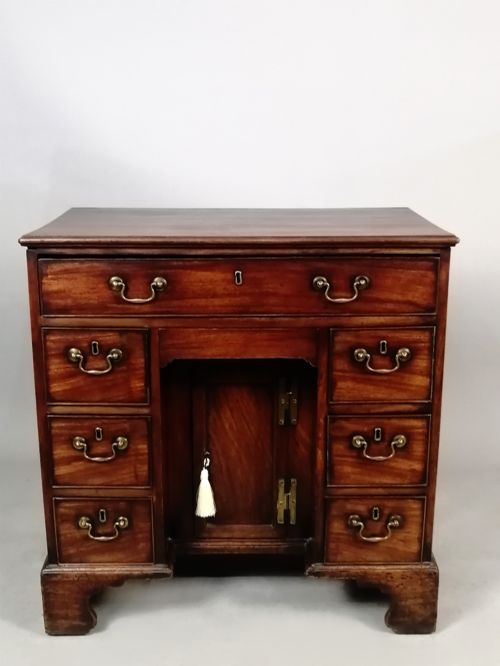
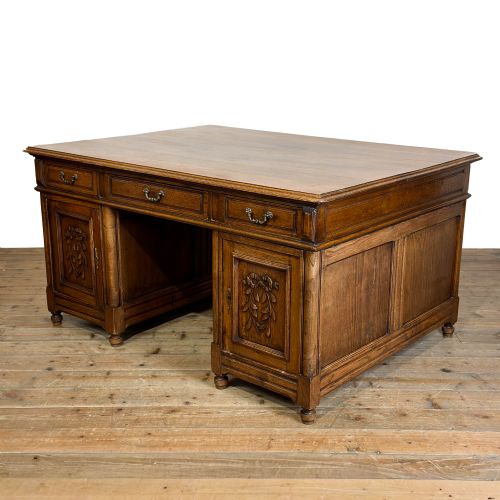
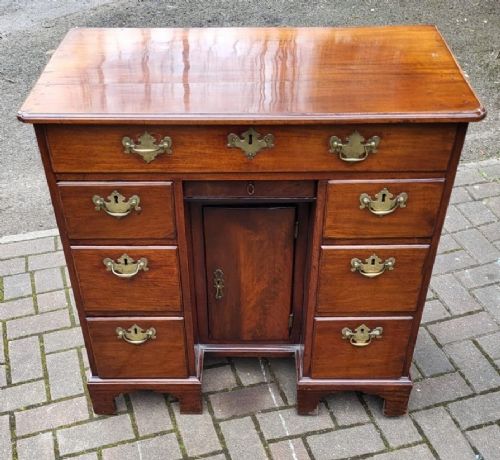
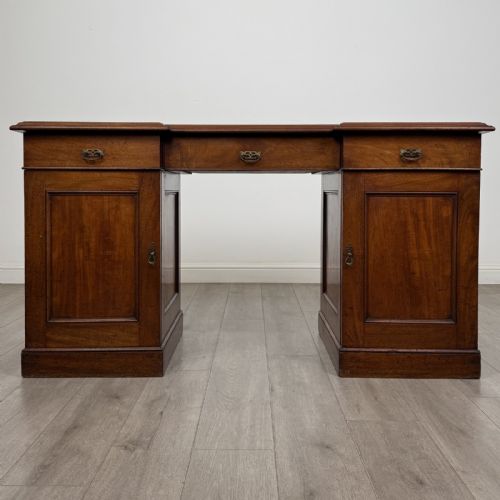
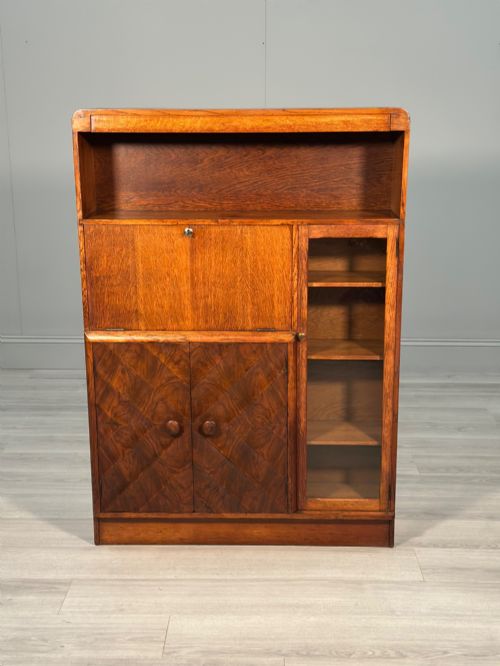
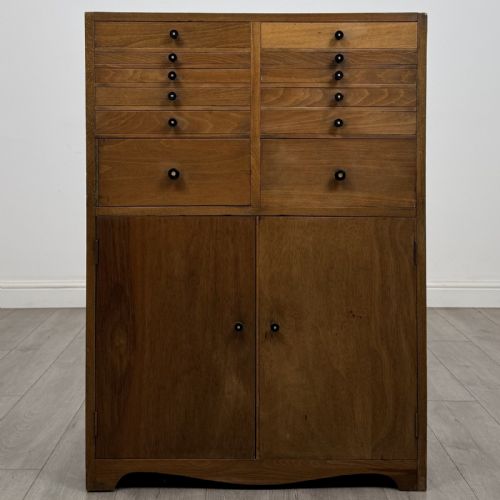
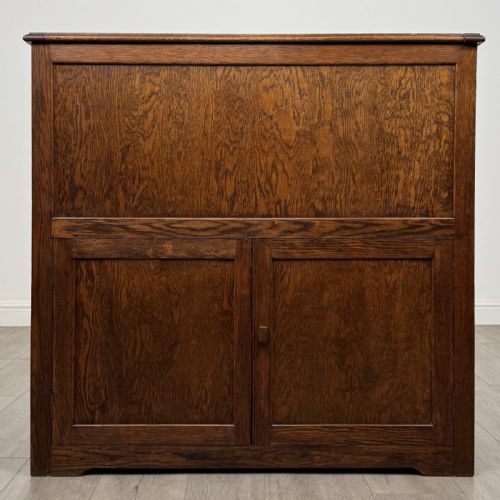
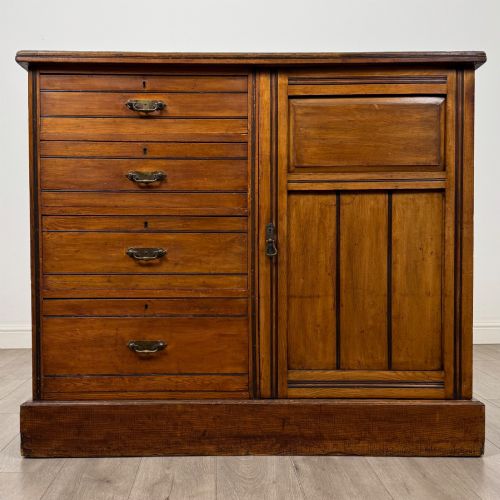
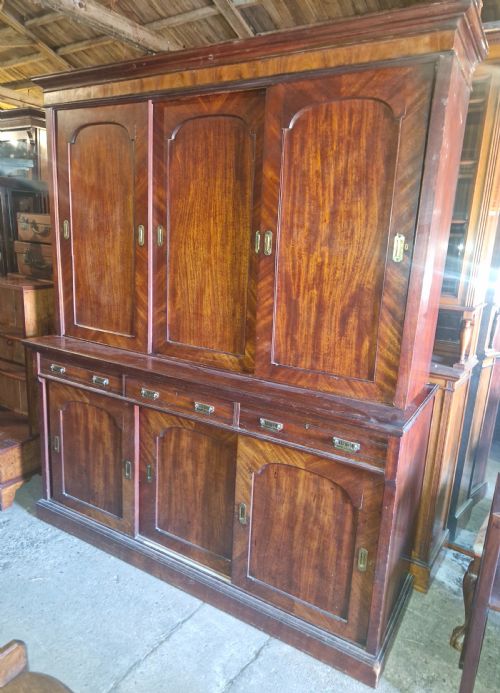
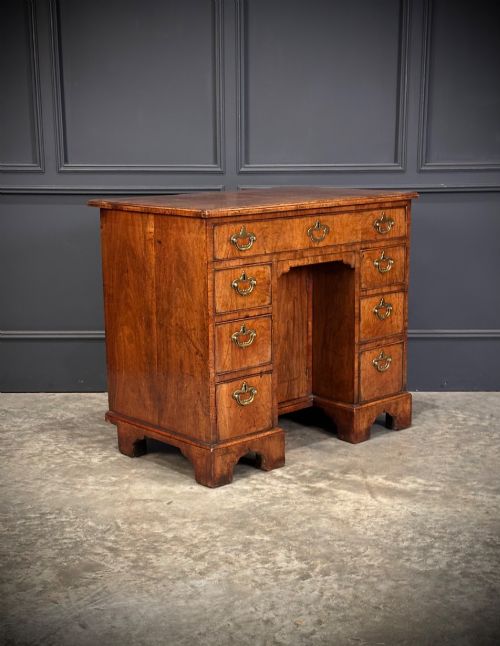
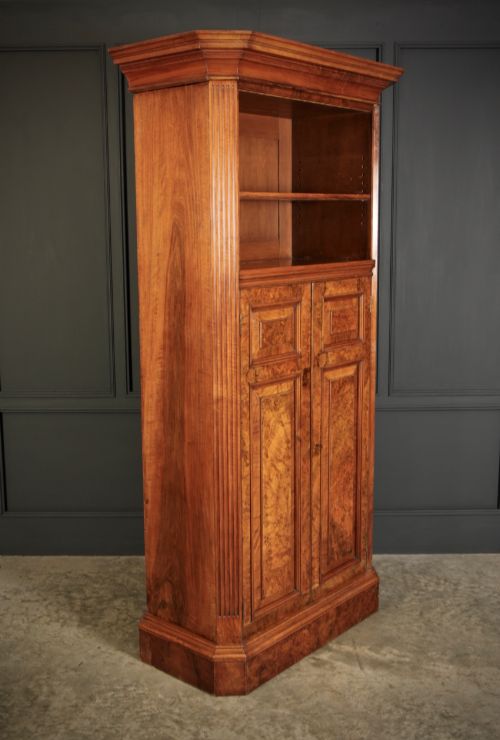
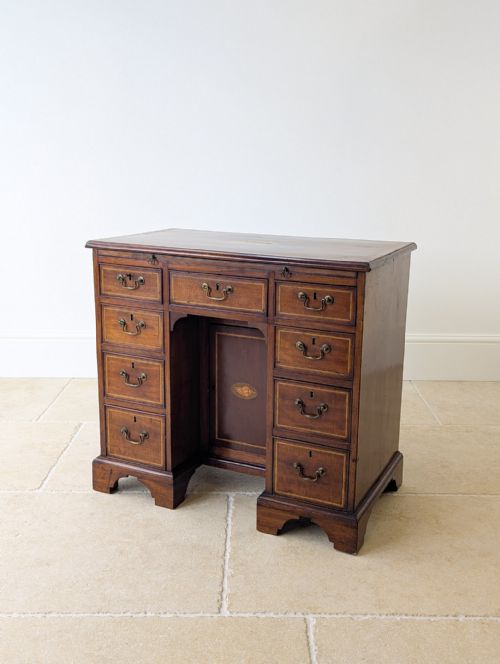
An antique office cupboard encompasses practical storage pieces designed for workspace organisation, ranging from pedestal desks and kneehole formats to dedicated filing drawers and stationery cabinets. These utilitarian items emerge from periods spanning the Georgian era through the Victorian and Edwardian decades into the early twentieth century.
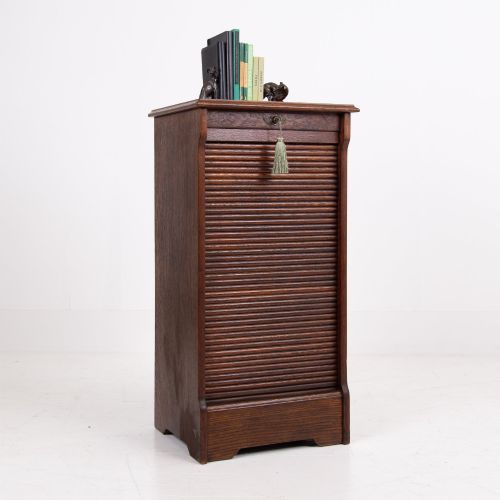
Examples frequently integrate specialised storage compartments, such as folio sections, barrister drawers, or double tambour fronts designed for sliding shutter access. Each configuration reflects the specific filing and clerical practices of its respective period.
Materials and Construction
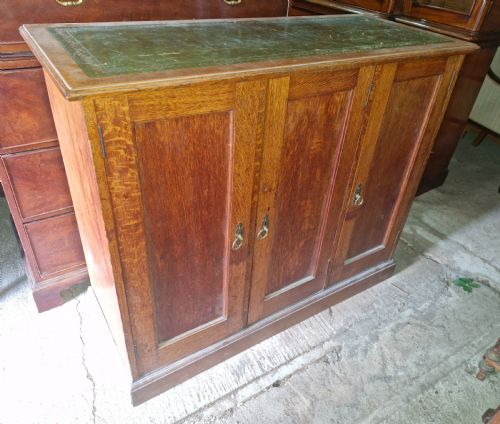
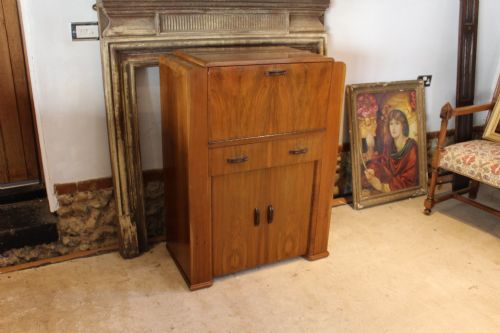
Cabinet makers utilised dense hardwoods, primarily mahogany, oak, and walnut, frequently selecting flame mahogany veneers for prominent surfaces to create striking grain patterns. Solid pine frequently forms the internal secondary framing and drawer linings.
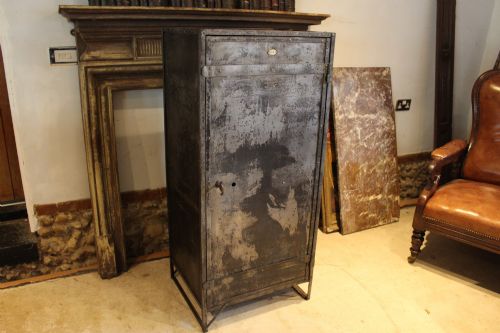
Metal components such as brass handles, campaign mounts, and iron mechanisms provide structural reinforcement and functional operation, particularly on military and industrial filing formats. Tambour doors rely on closely fitted wooden slats glued to canvas backings to slide smoothly within curved grooves.
Antique Office Cupboard Retail Price Guide 2026
Typical asking prices for office cupboard among the pieces listed under this phrase on Sellingantiques today, from the lower quarter to the upper quarter. They describe what is for sale here now, not the wider market.
Gamekeepers stored ledgers and estate notes within specialised cabinetry designed to withstand country house drafts and damp muddy boots.
Craftsmanship and Proportion
Superior pieces display meticulous timber selection, where grain patterns align across drawer fronts and doors, paired with hand-cut dovetail joints that ensure structural integrity over centuries of daily use. Lesser examples employ plain secondary timbers and simpler butt joints with minimal regard for visual symmetry.
Hardware execution marks the division between standard commercial output and workshop masterworks, evident in the weight of cast brass handles and the smooth resistance of sliding tambour mechanisms. Proportion and the retention of original locks and keys further distinguish finer examples from altered items.
F.H. Marshall & Co Glasgow·Johnstone & Jeanes·Maple & Co·Gillows·S&H Jewell of London
The Antique Office Cupboard Glossary
- Tambour
- A flexible sliding door constructed from narrow vertical strips of wood attached to a fabric backing. It allows access to narrow compartments without requiring clearance for swinging doors.
- Kneehole desk
- A compact writing table featuring a central recess for the user's legs, flanked by pedestals containing banks of small drawers. This form became standard in Georgian and Victorian offices.
- Cartonniere
- A freestanding cabinet or desk accessory containing stacked open compartments or pigeonholes designed for sorting papers and correspondence. They are frequently wrapped in leather or fine paper.
- Book press
- A heavy mechanical device utilising a large screw press to flatten or bind documents and books. These devices were frequently integrated into sturdy wooden cabinetry.
- Pedestal desk
- A heavy double-sided writing desk supported by two independent pedestals of drawers. They often incorporate matching cupboard compartments at the reverse.
Antique Office Cupboard: Frequently Asked Questions
How do I care for antique wood?
Maintain timber surfaces by applying natural beeswax sparingly and buffing with a soft cloth to nourish the grain. Avoid placing antique cupboards near direct heat sources or strong sunlight, which cause the wood to dry and split.
Ensure spills are wiped away promptly to protect antique polish finishes. Regular dusting with a dry lint-free cloth preserves the natural patina without damaging the historic surface.
Were these used in homes?
Many office cupboards originated in domestic libraries, country house studies, and estate offices. Owners utilised them to manage personal correspondence, household accounts, and estate ledgers.
Compact kneehole desks and music cabinets were routinely placed in private sitting rooms. Their refined timber finishes ensured they blended seamlessly with residential interior decoration.
How do I date an office cupboard?
Examine construction methods such as hand-cut dovetails on drawer interiors, which indicate work executed prior to mass-machining methods. Secondary timbers like oak or pine inside the piece often provide clues to regional origin and age.
Hardware styles, including brass drop handles and escutcheons, correspond directly to specific manufacturing periods. Comparing the locking mechanisms and overall proportions against documented examples clarifies the decade of production.
What is a tambour door?
A tambour door consists of narrow wooden slats glued side-by-side onto a canvas or leather backing. This flexible construction allows the door to curve along a track and slide completely out of sight.
Invented to save space in crowded office environments, this mechanism requires precise joinery to operate smoothly. It remains a hallmark of clever spatial engineering in early twentieth-century furniture.