

Antique Office Bureau
An antique office bureau is a hardworking workspace disguised as fine furniture, offering fitted interior compartments and a drop-down writing flap.
Antique Office Bureau
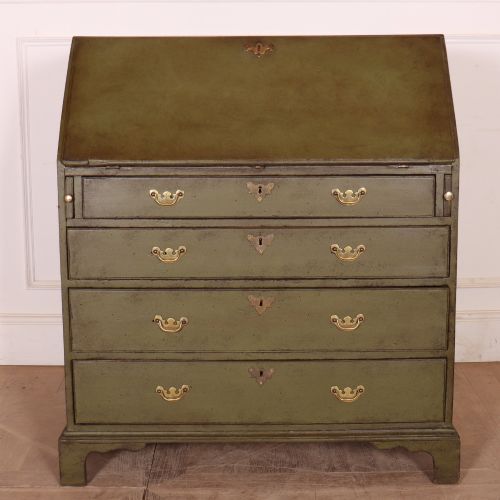
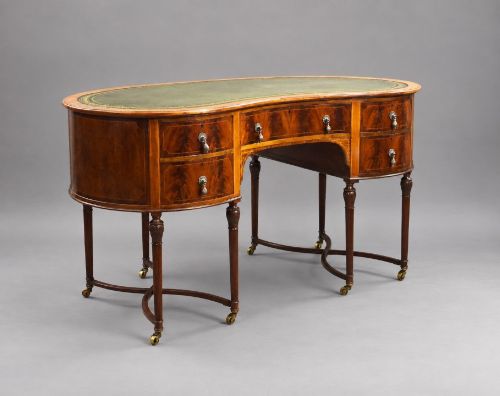
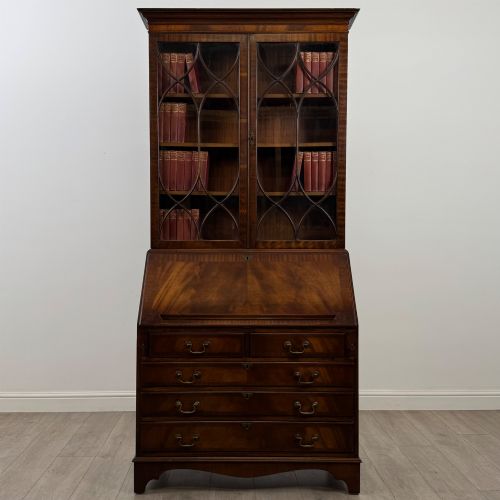
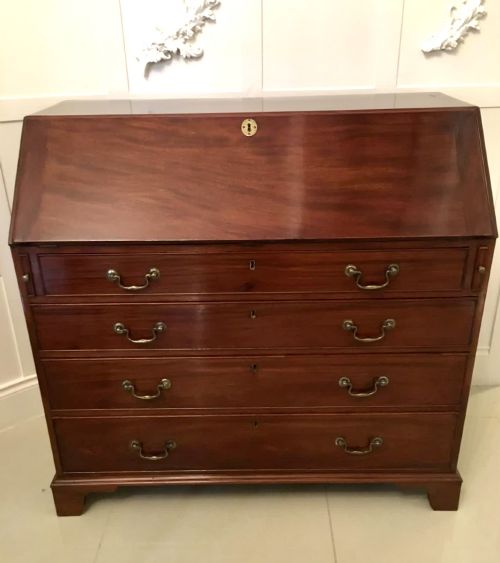
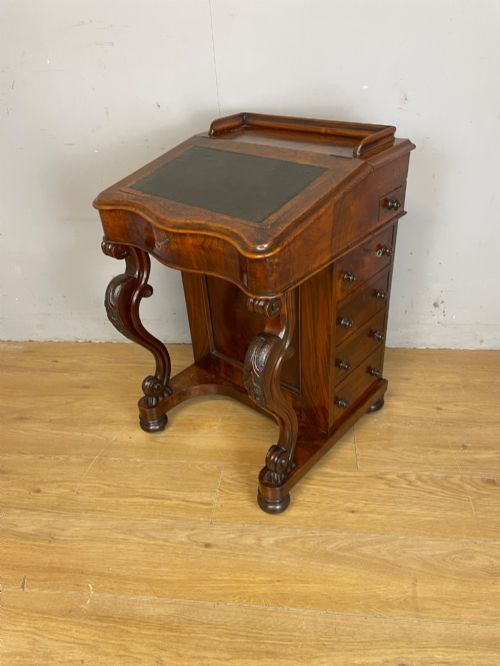
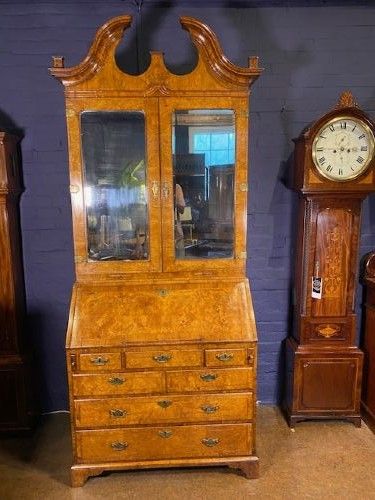
When you search for an antique office bureau, you encounter a lineage of writing furniture spanning from the eighteenth century through to the Art Deco period. The primary form combines a slant-front writing flap with internal pigeonholes and small drawers, sitting above a chest of drawers.
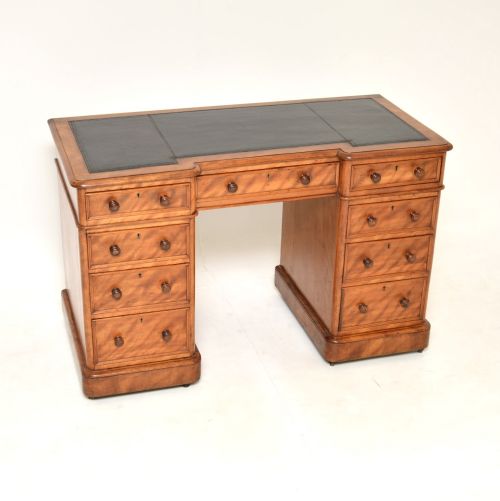
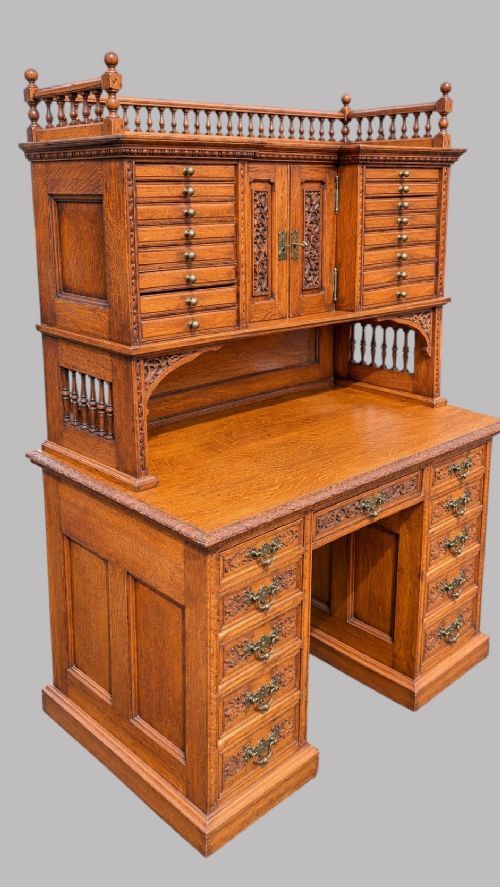
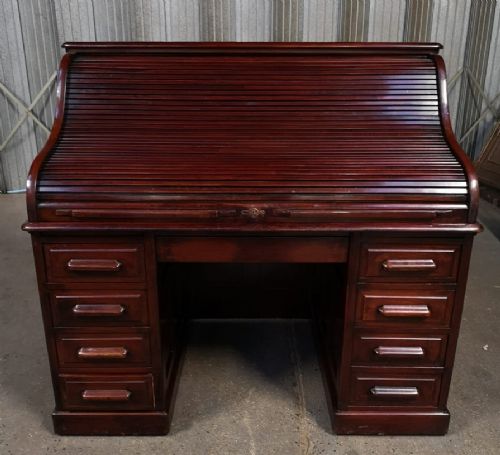
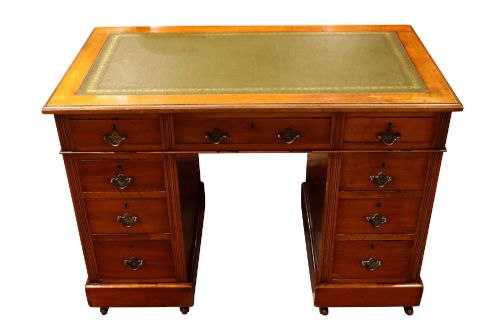
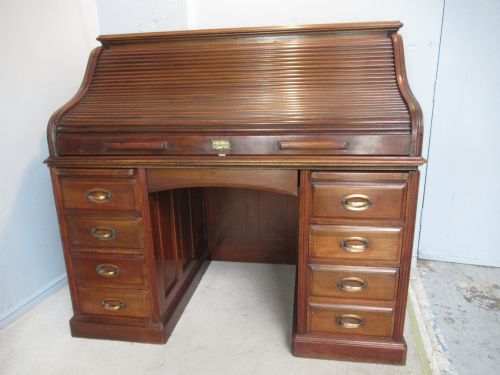
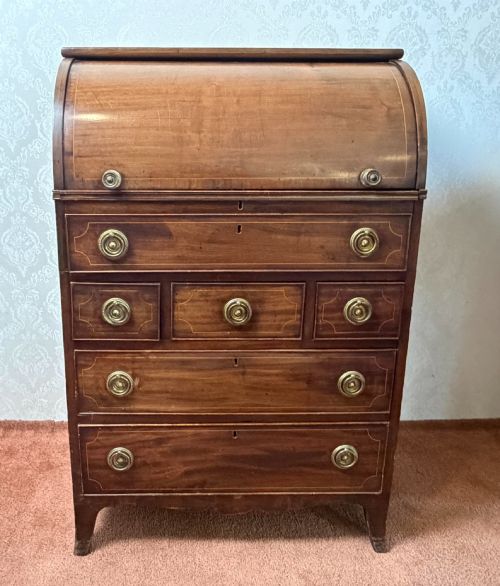
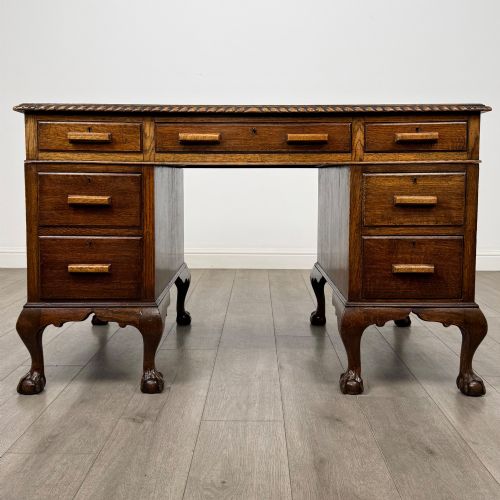
Pedestal desks and cylinder desks also appear frequently under this category, utilising oak, mahogany, and walnut timbers. Pieces originate primarily from British workshops, though variations like the French bureau plat widen the stylistic range.
Edwardian and Victorian iterations dominate the selection, bringing lighter satinwood and darker burr walnut finishes to the domestic study.
Materials and Construction
Cabinetmakers constructed these pieces using solid hardwoods such as oak and mahogany, frequently applying figured veneers like burr walnut or flame mahogany to the primary surfaces. Secondary timbers like pine often appear on drawer linings and internal divisions.
Tooled leather writing surfaces were commonly inset into the top of pedestal desks, bordered by subtle blind tooling. Brass handles, key escutcheons, and occasional glass elements complete the structural hardware.
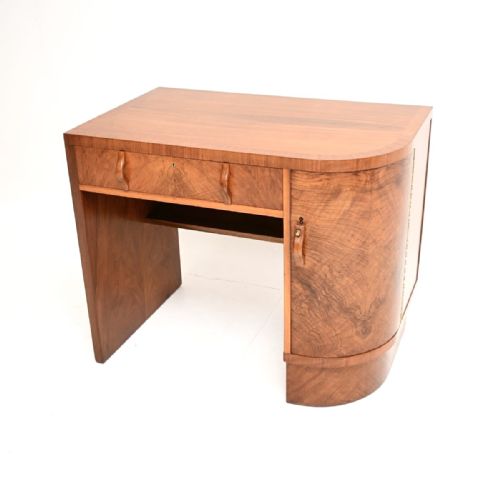
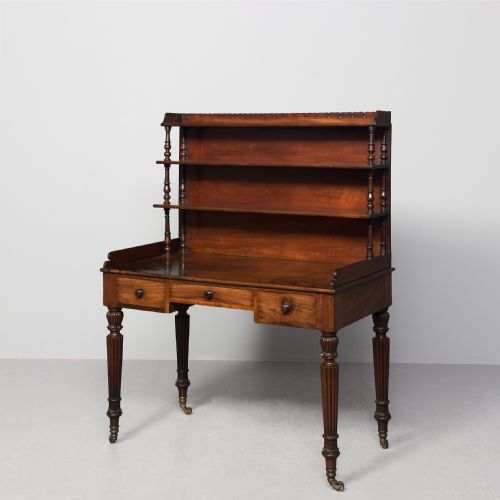
The selection encompasses formats from Georgian slant-front furniture to Art Deco pedestal desks and Edwardian writing tables.
Evaluating the Build
The distinction between standard commercial pieces and finer cabinetwork lies in the selection of timbers and the precision of the joinery. Matched veneer grains across drawer fronts and internal compartments demonstrate careful planning by the maker.
Original hardware, including working locks and patinated brass pulls, preserves the integrity of the piece. The structural stability of the fall-front hinges and the smooth operation of internal secret drawers reveal the underlying standard of manufacture.
James Mein of Kelso·Maple & Co.
The Antique Office Bureau Glossary
- Bureau
- A writing desk featuring a sloping hinged lid that opens to reveal a fitted interior of small drawers and pigeonholes.
- Pedestal Desk
- A heavy freestanding writing table supported by two banks of drawers reaching down to the floor.
- Cylinder Desk
- A desk characterised by a curving quarter-circle wooden shutter that rolls back to expose the writing surface.
- Kneehole Desk
- A compact form of pedestal desk featuring a central recessed space for the user's legs.
- Tambour
- A sliding door or shutter constructed from narrow vertical strips of wood glued to a canvas backing.
Antique Office Bureau: Frequently Asked Questions
What is an antique office bureau?
An antique office bureau is a traditional wooden writing cabinet featuring a sloping lid that folds down to create a writing surface. Inside, small drawers and pigeonholes organise correspondence and stationery.
Beneath this writing section, standard drawer tiers provide storage space for household or professional documents. These pieces evolved from simple chest designs into dedicated domestic workstations.
How do I use a bureau in a modern room?
A bureau serves as a compact workspace that conceals laptop computers and paperwork when the writing flap is closed. This hides everyday clutter while adding period character to a bedroom or living area.
The fitted interior compartments accommodate stationery and small modern accessories. Placing the desk against a well-lit wall establishes a functional study zone within a larger room.
How do I identify Victorian examples?
Victorian office furniture frequently utilises dark mahogany, walnut, or oak timbers with substantial proportions. Many pieces incorporate carved details, panelled sides, and heavy brass drawer pulls characteristic of the nineteenth century.
Cylinder desks and kneehole variations became widespread during this era. Interiors often display secondary softwoods alongside hand-cut dovetails on the drawer construction.